Crypto Relief Calculator
1 Input Your Scenario
Estimate how many families and children would be affected by a cryptocurrency ban using real data from Afghanistan's economic crisis
Estimated Impact
Enter values to see the humanitarian impact of cryptocurrency restrictions
In 2021, after the Taliban took control of Afghanistan, ordinary people turned to cryptocurrency not out of curiosity, but out of desperation. With banks frozen, international sanctions cutting off access to global finance, and cash disappearing from ATMs, Bitcoin and USDT became lifelines. Families relied on remittances from relatives abroad. Small businesses used peer-to-peer crypto trades to buy food and medicine. For many, digital money wasn’t a speculative asset-it was survival.
The sudden ban
By June 2022, the Taliban’s central bank issued a formal ban on cryptocurrency trading. The official reason? It violated Islamic law. Authorities called it ‘fraudulent,’ ‘uncertain,’ and ‘a form of gambling.’ But behind the religious language was a simpler truth: the Taliban couldn’t control it. Cryptocurrency moved money outside their reach, bypassing state-run banks and foreign exchange restrictions. And that was dangerous to a regime trying to assert total authority.
The ban didn’t come with clear rules. Was it only about exchanges? What about personal wallets? Could you still receive Bitcoin from a brother in the U.S.? No one knew for sure. That ambiguity made everyone vulnerable. One wrong transaction could land you in jail.
Crackdown in Herat
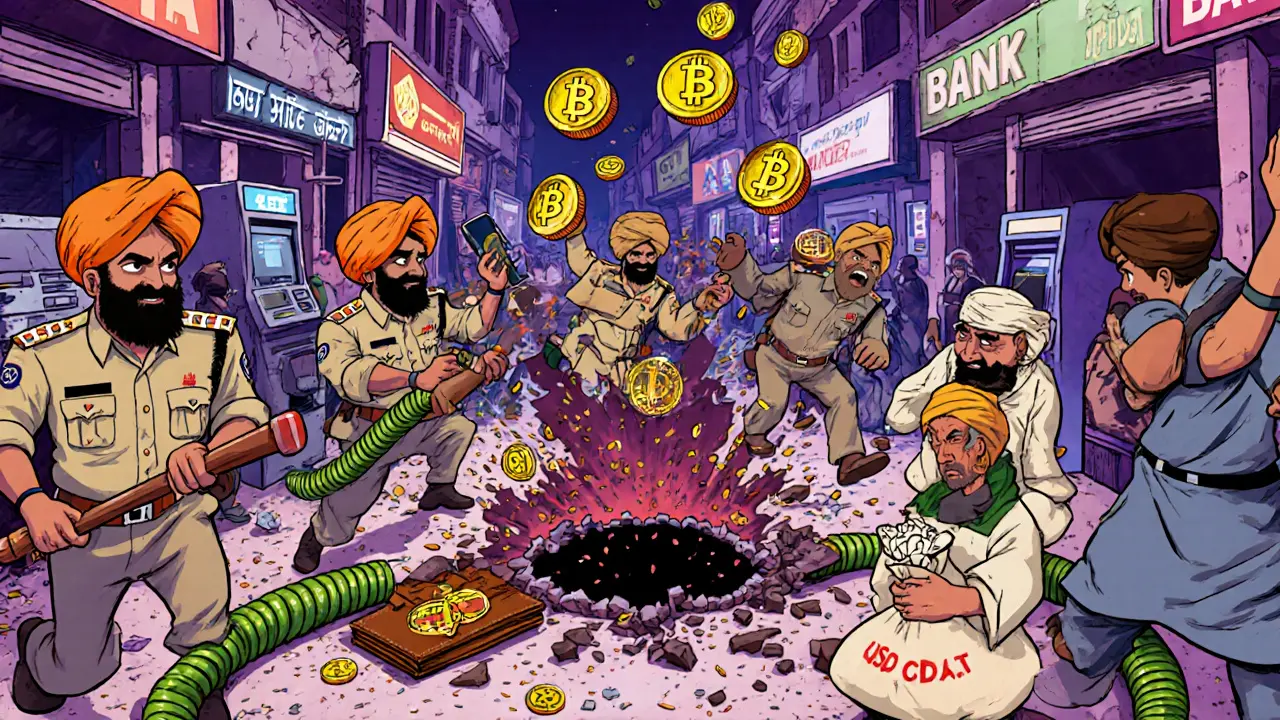
The heaviest crackdown happened in Herat, Afghanistan’s third-largest city and a major trade hub near Iran. By August 2022, more than 20 crypto-related businesses had been shut down. Police raided offices, seized computers, and arrested staff. In May 2023, eight traders were locked up for 28 days. By September 2023, authorities shut down 16 exchanges in a single sweep, arresting at least 13 people.
Sayed Shah Sa’adat, head of Herat’s counter-crime unit, told Ariana News the closures were part of a nationwide effort to eliminate what he called ‘digital scams.’ But the people being arrested weren’t fraudsters. They were shopkeepers, students, and delivery drivers who used USDT to send money home or buy goods. One trader told Coinspeaker he made 1-2% profit per transaction-enough to feed his kids. After the ban, he couldn’t afford rice.
Who got arrested-and who didn’t
The Taliban didn’t go after only big operators. They targeted anyone they could find. A university student who helped his uncle send money from Canada was detained. A woman who traded Bitcoin to pay for her mother’s medicine was held for days. Most were released on bail, but the threat stayed. No one knew if the next arrest would lead to six months in prison.
What happened to the crypto? Reports conflicted. Some detainees said their digital wallets were untouched. Others claimed their Bitcoin and USDT were confiscated. No official records exist. The lack of transparency made it impossible to know if the state was seizing assets-or just punishing people to scare others.
The humanitarian cost
Before the ban, Afghanistan ranked 20th globally in crypto adoption, according to Chainalysis. Over $962 million in crypto transactions flowed through the country between mid-2020 and mid-2021. Much of it was remittances. Families depended on it. NGOs used it too. The Women’s Entrepreneurship Day Organization paid 100,000 Afghan women weekly food stipends in USDT after traditional aid channels collapsed.
When the ban hit, those lifelines vanished. UNICEF warned in 2023 that over a million Afghan children faced severe malnutrition. With no formal banking, no foreign aid, and no crypto, many had nowhere to turn. The World Bank reported in April 2023 that 97% of Afghans now lived below the poverty line. The crypto ban didn’t stop poverty-it made it worse.
The terrorist financing excuse
The Taliban pointed to Islamic State Khurasan Province (ISKP) as justification. TRM Labs’ 2025 Crypto Crime Report showed ISKP had used crypto for attacks, including funding part of a March 2024 bombing in Moscow. A UK citizen was sentenced in December 2024 for sending over £16,000 to ISKP via cryptocurrency.
But here’s the problem: the crackdown didn’t target known terrorist networks. It targeted civilians. The number of crypto transactions linked to ISKP was tiny compared to the millions of daily peer-to-peer trades by ordinary Afghans. The regime used terrorism as a cover to crush a tool that threatened its control-not to fight crime.
What happened to the market?
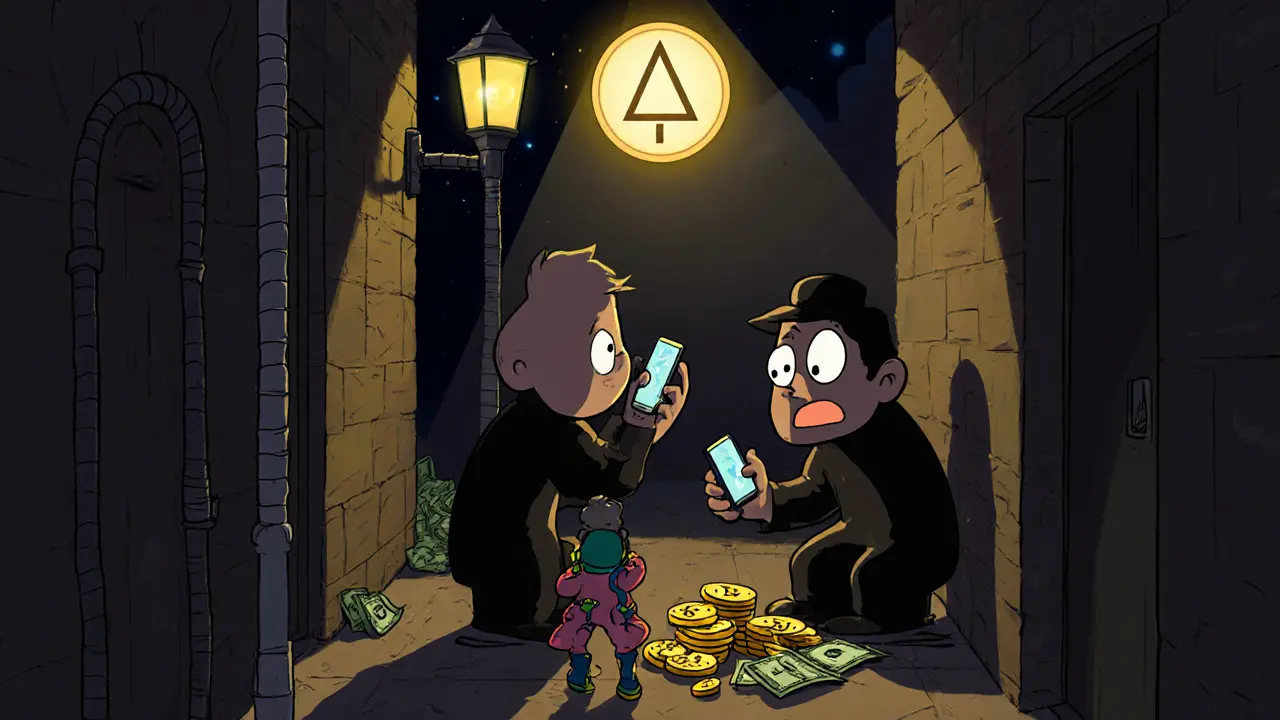
Crypto activity in Afghanistan dropped sharply after 2022. Exchanges closed. Public trading vanished. But that doesn’t mean crypto disappeared. It went underground. People switched to cash-based P2P deals-meeting in alleys, using WhatsApp, paying in dollars or gold to avoid digital trails. Some used privacy coins like Monero. Others hid wallets in encrypted apps.
The ban didn’t kill crypto. It made it riskier. And that’s exactly what the Taliban wanted. They didn’t need to eliminate it. They just needed to make it scary enough that most people would stop.
Why this matters beyond Afghanistan
Afghanistan’s story is unique, but it’s not isolated. It shows what happens when a government bans digital money without offering alternatives. When banks fail, people find ways to move value. Crypto was the only tool left. Crushing it didn’t restore order-it deepened the crisis.
Other countries facing financial isolation-Venezuela, Lebanon, Nigeria-have seen similar patterns. Crypto isn’t the problem. It’s the symptom. The real issue is broken systems and closed borders. When you cut off people from the global economy, they’ll use whatever tools they can find-even if the government says it’s illegal.
The paradox
The Taliban created the conditions that made crypto necessary. International sanctions froze Afghanistan’s foreign reserves. Banks stopped working. Remittances dried up. Then, when people turned to Bitcoin and USDT to survive, the regime punished them.
It’s a cruel irony. The same policies that isolated Afghanistan economically led to crypto adoption. And then, the regime punished that adoption as if it were a crime.
Today, crypto use in Afghanistan is quiet-but not dead. People still trade. Still send money. Still risk arrest. Because for many, the choice isn’t between legality and crime. It’s between feeding their children and obeying a law that makes no sense in their reality.

6 Comments
Puspendu Roy Karmakar
This hit me hard. I grew up in a family that sent money home through hawala networks-now I see how crypto was just the next evolution for survival. No bank? No cash? People aren’t trading Bitcoin for profit-they’re trading it for rice. The Taliban didn’t ban crime; they banned compassion.
And let’s be real-when your kid’s hungry, you don’t ask if the method is ‘Islamic’ or not. You find a way. That’s not fraud. That’s fatherhood.
Evelyn Gu
Can we just… stop pretending this was ever about religion? It was about control. Period. The Taliban didn’t care about ‘gambling’-they cared that people were moving money without their permission. They couldn’t tax it. They couldn’t track it. They couldn’t punish it. And that terrified them. So they arrested shopkeepers, students, mothers buying medicine… all because they refused to accept that the world had moved on.
And now? People are still trading. Just quieter. In alleys. With cash. With gold. With WhatsApp. The ban didn’t kill crypto-it made it a secret society. And that’s the most dangerous thing of all.
Shelley Fischer
The moral hypocrisy here is staggering. The international community imposed sanctions that crippled Afghanistan’s economy, then watched as its citizens turned to cryptocurrency out of necessity-and then, when the Taliban responded by criminalizing that lifeline, we didn’t blink. We called it ‘authoritarianism’ but never asked: What alternative did we offer? There is no moral high ground when your policy forces a mother to choose between breaking the law and watching her child starve.
This isn’t just a story about crypto. It’s a story about global abandonment masked as policy.
Michael Fitzgibbon
There’s a quiet dignity in how Afghans adapted. They didn’t riot. They didn’t protest in the streets-they just kept trading. In alleyways. Through encrypted chats. With strangers they met at tea shops. They didn’t need a license. They didn’t need a bank. They needed to eat. And so they did.
The Taliban’s crackdown wasn’t about justice. It was about fear. Fear of losing control. Fear of being irrelevant. And the saddest part? They succeeded. Not because crypto disappeared-but because people stopped talking about it. Out of fear. Out of grief. Out of exhaustion.
We owe them more than headlines. We owe them truth.
Tina Detelj
It’s not just about money-it’s about autonomy. When you strip away every institution-banks, aid, diplomacy, legal channels-you leave behind one thing: the human will to survive. And that will, in its purest form, doesn’t care about borders, laws, or fatwas. It just moves. Like water. Like air. Like love.
Crypto was never the villain. The villain was the silence of the world. The silence of the governments who imposed sanctions without safety nets. The silence of the NGOs who abandoned digital tools when they became inconvenient. The silence of the media who called it ‘crypto crime’ instead of ‘human desperation.’
And now? The children are still hungry. The mothers are still trading. And the Taliban? They’re still afraid. Because they know: you can jail a trader-but you can’t jail hope.
Komal Choudhary
Bro, I just saw a guy on TikTok say crypto is evil-like, what?? People are literally using it to buy diapers. Stop being so loud and just listen for once.