
When you try to access a crypto exchange like Binance or Coinbase from a country where trading is restricted, you might think using a VPN is enough to slip through. But today’s exchanges don’t just check your IP address-they use a multi-layered VPN detection system that can spot you even if you’re using a premium service. This isn’t just about blocking bots or hackers. It’s about compliance, legal risk, and an ongoing tech arms race between exchanges and users trying to bypass rules.
How Exchanges Know You’re Using a VPN
It starts with your IP address. Every device connecting to the internet has one, and exchanges maintain massive, constantly updated lists of known VPN server IPs. If your IP matches one of these, you’re flagged immediately. But this alone isn’t enough. Many VPNs rotate IPs, and some use residential IPs that look like regular home connections. That’s why exchanges layer on more checks.
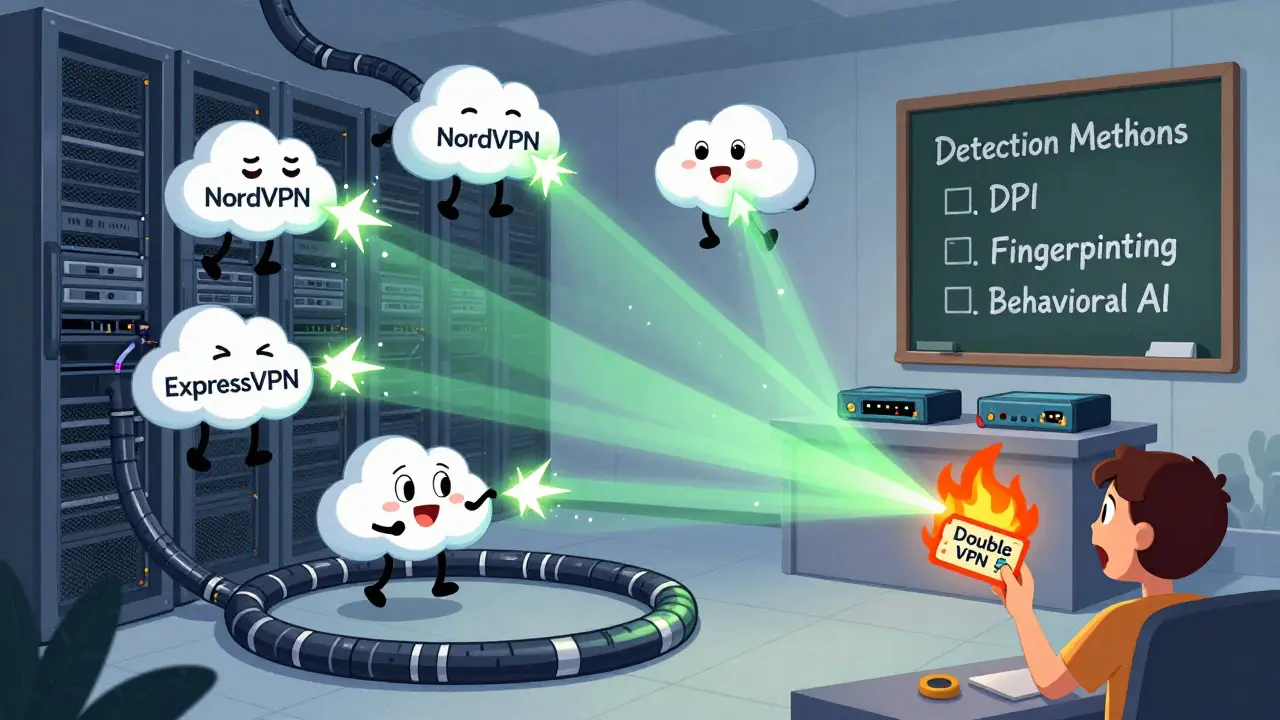
Deep Packet Inspection (DPI) is one of the most powerful tools. Unlike simple IP blocking, DPI looks at how data flows. Even encrypted traffic from a VPN has patterns-like how packets are timed, sized, or routed. Exchanges use algorithms trained to recognize these signatures. It’s like recognizing someone’s voice even if they’re whispering. You don’t need to hear the words-you just know it’s them.
DNS leaks are another giveaway. If your device claims you’re in Germany but your DNS server is in the U.S., the mismatch raises a red flag. Time zone analysis adds another layer. If you log in at 3 a.m. local time but your trading activity happens during U.S. market hours, the system notices. Browser fingerprinting takes it further. Your screen resolution, installed fonts, plugins, and even how fast you type can create a digital fingerprint. If that fingerprint doesn’t match your claimed location, the system suspects something’s off.
What Exchanges Do When They Detect a VPN
It’s not always an instant ban. Some exchanges just lock your account until you complete additional verification. Others freeze withdrawals or restrict trading pairs. A few will outright terminate accounts that repeatedly try to bypass geo-restrictions. The response depends on the exchange and the jurisdiction they’re trying to comply with.
Binance, for example, uses all the layers mentioned above-IP lists, DPI, DNS checks, time zone mismatches, and behavioral analysis. Users report being flagged within minutes of connecting to a VPN, even if they’re using NordVPN or ExpressVPN. Coinbase has similar systems, often triggering mandatory KYC re-verification when suspicious activity is detected. Smaller exchanges might only block based on IP, but the big players have invested heavily in detection tech.
It’s not just about the network. Exchanges monitor your behavior. If you’ve never traded before, suddenly start making large deposits from a new location, and then withdraw immediately-all while using a VPN-that’s a high-risk pattern. Machine learning models now analyze these behaviors, not just technical signals. They learn what normal activity looks like for users in each region, and deviations trigger alerts.
Why This Matters for Users
For many, using a VPN isn’t about breaking rules-it’s about access. In countries like Russia, Turkey, or Nigeria, local banks block crypto transactions. People turn to VPNs to reach global exchanges. But when those same exchanges lock them out, users lose access to savings, investments, and financial tools they rely on.
Free VPNs are almost always detected. They use shared IPs, have poor obfuscation, and often leak data. Premium services like NordVPN and ExpressVPN have better success-but even they aren’t foolproof. NordVPN alone has over 7,000 servers across 113 countries, yet Binance blocks hundreds of them daily. The key? Server selection. Some servers are optimized for streaming or torrenting, not crypto. Users who switch to less common server locations or use obfuscated protocols (like NordVPN’s Obfuscated Servers) have better luck.
But even then, it’s a game of cat and mouse. Exchanges update their blocklists hourly. A server that works today might be blocked tomorrow. Some users report success with Double VPN (traffic routed through two servers) or Onion over VPN, but these are increasingly flagged as high-risk patterns. Split tunneling-where only your browser uses the VPN while other apps connect directly-is another trick exchanges are now detecting.
The Arms Race: VPNs vs. Exchanges
It’s not just exchanges evolving. The VPN market has responded. Services like NymVPN are built on decentralized mixnet technology, routing traffic through hundreds of community-run nodes. Unlike traditional VPNs with centralized servers, Nym’s architecture makes it nearly impossible to block specific IPs because there are no fixed ones. This is why privacy advocates see decentralized networks as the future.
Meanwhile, exchanges are integrating blockchain analysis. If your wallet has been linked to a known blacklisted address from a restricted region, even a clean IP won’t save you. Some platforms now cross-reference your mobile device’s GPS location with your connection origin. If your phone says you’re in London but your connection comes from a server in Singapore, you’re flagged.
Machine learning is now the backbone of detection. Instead of relying on static rules, systems learn from millions of data points: typing speed, mouse movements, session duration, even how long you pause before clicking “Confirm.” These behavioral cues are harder to fake than IP addresses.
What’s Next?
As regulation tightens globally, exchanges will keep tightening detection. Expect more AI-driven monitoring, deeper integration with KYC systems, and possibly mandatory device authentication. Some regulators are already pushing for rules that require exchanges to verify not just who you are, but where you are-at all times.
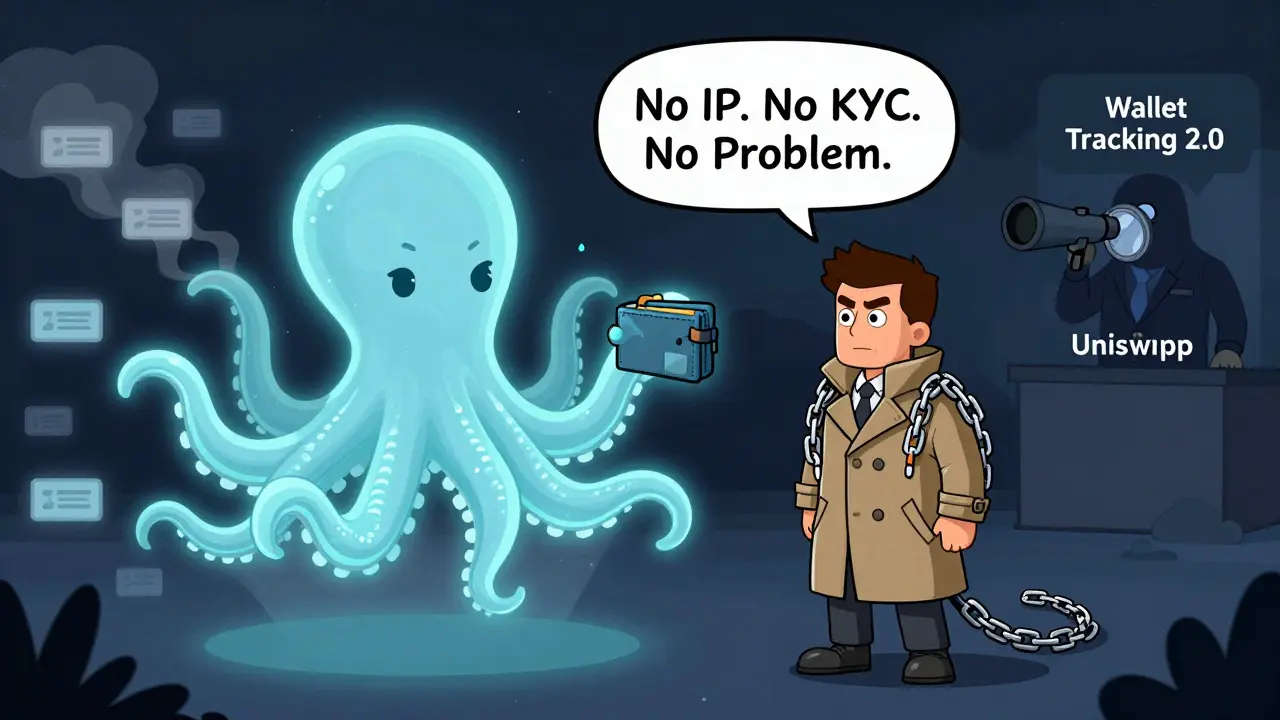
But there’s a counter-trend: decentralized exchanges (DEXs). Platforms like Uniswap or dYdX don’t require sign-ups or KYC. They don’t track IPs or log locations. If you’re trying to avoid detection, a DEX might be your best bet. But even here, regulators are looking at wallet-level tracking. The future may not be about blocking VPNs-it could be about tracing crypto flows no matter how you connect.
For now, the safest route isn’t trying to outsmart the system. It’s understanding the rules. If you’re in a restricted country, know that using a VPN carries risk. Your account could be frozen, your funds locked, or your identity flagged for review. And if you’re outside a restricted region, remember: exchanges are watching-not just your trades, but how you connect to them.
Can I use a VPN to trade on Binance if I’m in a restricted country?
Technically, yes-but Binance actively detects and blocks most VPNs. Even premium services like NordVPN and ExpressVPN have hundreds of their IPs blocked. If detected, your account may be restricted, require additional verification, or be permanently limited. It’s not a guaranteed workaround and carries significant risk.
Why do crypto exchanges block VPNs if they’re legal?
Exchanges don’t block VPNs because they’re illegal-they block them because using a VPN to bypass geo-restrictions violates their Terms of Service. More importantly, if an exchange allows users from countries where crypto is banned (like China or Russia), it risks fines, regulatory shutdowns, or being cut off from banking partners. Blocking VPNs is about legal survival, not user control.
Do free VPNs work better than paid ones for crypto trading?
No-free VPNs are far more likely to be blocked. They use shared, well-known IPs that exchanges blacklist immediately. They also often leak DNS data or have poor encryption, making detection easier. Paid services like NordVPN or Surfshark have dedicated crypto-friendly servers and better obfuscation, giving them a higher chance of working-though even they aren’t foolproof.
Can a decentralized VPN like NymVPN bypass crypto exchange detection?
Yes, NymVPN and similar decentralized networks are much harder to detect because they don’t rely on fixed server IPs. Instead, traffic is mixed through hundreds of anonymous nodes, making it impossible to block specific addresses. While exchanges can’t yet reliably identify Nym traffic, they’re developing behavioral analysis tools that might eventually flag unusual connection patterns-even from decentralized networks.
What happens if my account gets flagged for using a VPN?
You’ll typically receive an email or in-app notification asking you to verify your identity or location. If you can’t prove you’re in an allowed region, your account may be suspended or permanently restricted. Withdrawals are often frozen first. In extreme cases, exchanges may report suspicious activity to regulators, especially if large sums are involved.
Are decentralized exchanges (DEXs) immune to VPN detection?
Yes, because DEXs like Uniswap or PancakeSwap don’t require sign-ups, KYC, or IP tracking. You connect your wallet directly-no personal data is shared. However, regulators are exploring ways to track wallet activity across chains, so while DEXs avoid traditional VPN detection, they may face new forms of monitoring in the future.

5 Comments
Anshita Koul
This is why I stopped using centralized exchanges entirely. You think you're fighting for freedom, but you're just playing into their surveillance game. Every keystroke, every click, every second you spend trying to hide... it's all data they're collecting. I switched to DEXs, and honestly? Life's quieter. No more anxiety about being flagged. No more 'verification' nightmares. Just me, my wallet, and the blockchain. No middlemen. No monitoring. No paranoia.
And yes, I know some say DEXs are harder to use-but isn't true autonomy worth a little friction? We're not here to make it easy. We're here to be free.
PIYUSH KOTANGALE
I use NordVPN + obfuscated servers and it works 90% of the time 😎
But man, the moment I tried to withdraw $5k, they locked me out. Sent me a 'verify your identity' email that asked for my birth certificate AND a selfie with today's newspaper. 🤯
Like... I get it. But also? This feels like digital apartheid. We're not criminals. We're just people trying to protect our money. 💔
vishnu mr
i was using expressvpn and it was working fine untill one day i just couldnt log in and then i got this email saying my account was flagged for 'suspicious location behavior' lol i never even knew my typing speed was being tracked 😅
also why does my font list matter???
Zephora Zonum
It's fascinating how people still think a VPN is some kind of magic cloak when every major exchange has been using behavioral biometrics for years. The fact that you're even surprised DNS leaks or time zone mismatches flag you shows a fundamental misunderstanding of modern cybersecurity infrastructure. This isn't a cat-and-mouse game-it's a mismatch of expectations. You're not a hacker. You're just someone who assumes obfuscation equals anonymity. It doesn't. Not anymore. And if you're using a premium service thinking you're safe-you're delusional. The system doesn't care about your subscription tier. It cares about patterns. And patterns don't lie.
Grace van Gent-Korver
I just use Uniswap now. No login. No questions. Just connect my wallet and trade. So simple. So clean. No one is watching me. No one is tracking me. Just me and the blockchain. It's beautiful.