
When Nigeria’s Securities and Exchange Commission (SEC) released its final cryptocurrency guidelines under the Investment and Securities Act (ISA) 2025, it didn’t just update rules-it rewrote the playbook for how finance works in the country. For banks, payment processors, and fintechs, the change wasn’t subtle. If you’re a financial institution in Nigeria and you’re dealing with crypto, you now have a clear path to follow-or face serious consequences.
What Changed With the ISA 2025?
Before March 2025, crypto lived in a legal gray zone. The Central Bank of Nigeria (CBN) had banned banks from handling crypto transactions in 2021, but that didn’t stop Nigerians from using it. By 2024, Nigeria led the world in peer-to-peer crypto trades, with over $92 billion flowing through the market in just one year. People were buying Bitcoin, sending remittances via crypto, and trading tokens-but without any legal protection. The ISA 2025 changed that. It officially classified digital assets as securities. That means anything from Bitcoin to a tokenized stock is now under the SEC’s control. This isn’t just a paperwork update. It’s a full legal shift. If you’re running a crypto exchange, wallet service, or even a crypto lending platform, you now need a license from the SEC to operate. No license? You’re breaking the law.Who Needs a License?
The SEC defines these as Virtual Asset Service Providers (VASPs), and they include:- Crypto exchanges like Quidax and Busha (both licensed since 2024)
- Custodial wallet providers
- Crypto-to-fiat on/off ramps
- Decentralized finance (DeFi) platforms that interact with Nigerian users
- Token issuance platforms offering investment contracts
AML/CFT Rules Are Non-Negotiable
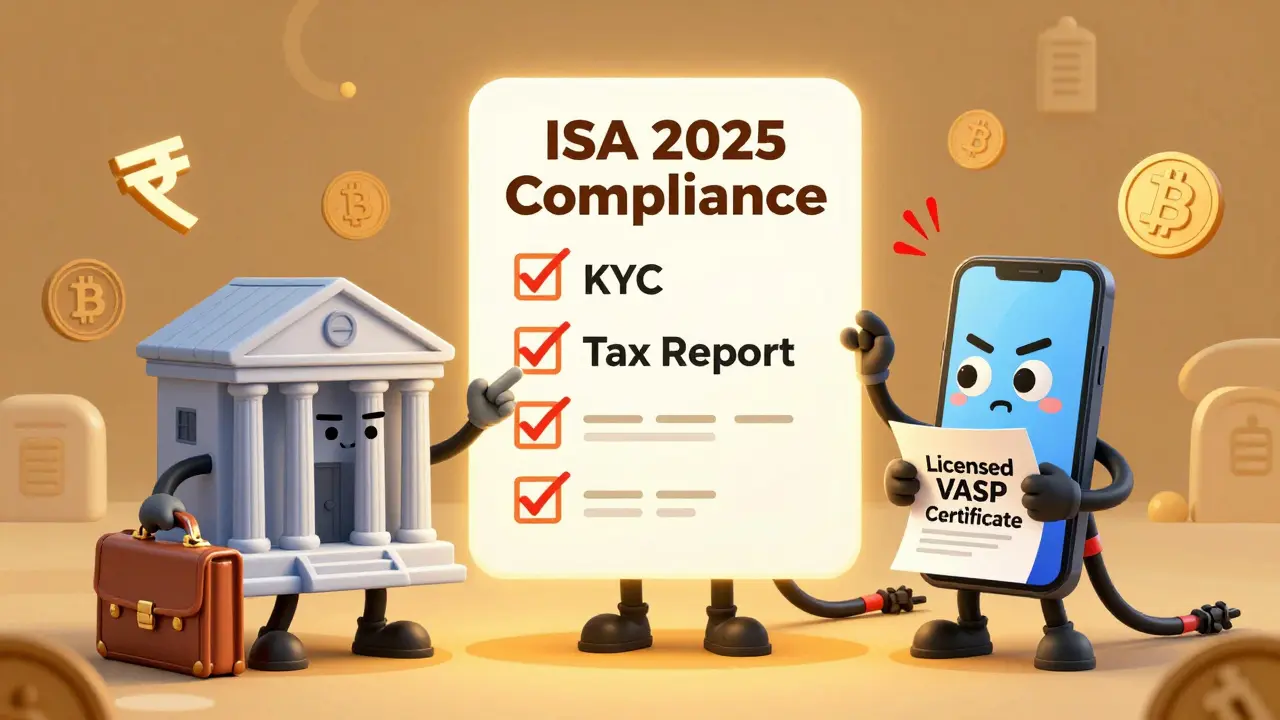
The Nigerian Financial Intelligence Unit (NFIU) now requires every licensed VASP to follow strict anti-money laundering and counter-terrorism financing rules. That means:- Know Your Customer (KYC) checks on every user-no exceptions
- Transaction monitoring for suspicious activity
- Reporting large or unusual transfers to the NFIU within 24 hours
- Keeping records for at least five years
Taxes Are Now Enforced
The Nigeria Tax Administration Act (NTAA) 2025, effective January 1, 2026, made crypto taxes real. VASPs must now report all user transactions and pay corporate income tax. Individual users owe capital gains tax on crypto profits. Non-compliance hits hard:- First month of default: ₦10 million ($6,693) fine
- Each additional month: ₦1 million ($669) extra
- Repeated violations lead to license suspension or revocation
What Happens If You Ignore the Rules?
The penalties aren’t theoretical. In late 2025, the SEC shut down three unlicensed crypto lending platforms that promised 20% monthly returns. They were classic Ponzi schemes. The operators were arrested. Their bank accounts were frozen. Their customers lost everything. For financial institutions, the risk is reputational and financial. If your bank is linked to a fraudulent VASP-even unknowingly-it damages trust. The SEC can fine banks up to ₦50 million ($33,465) for facilitating unlicensed operations. Insurance companies are already refusing coverage for banks that don’t verify VASP licenses.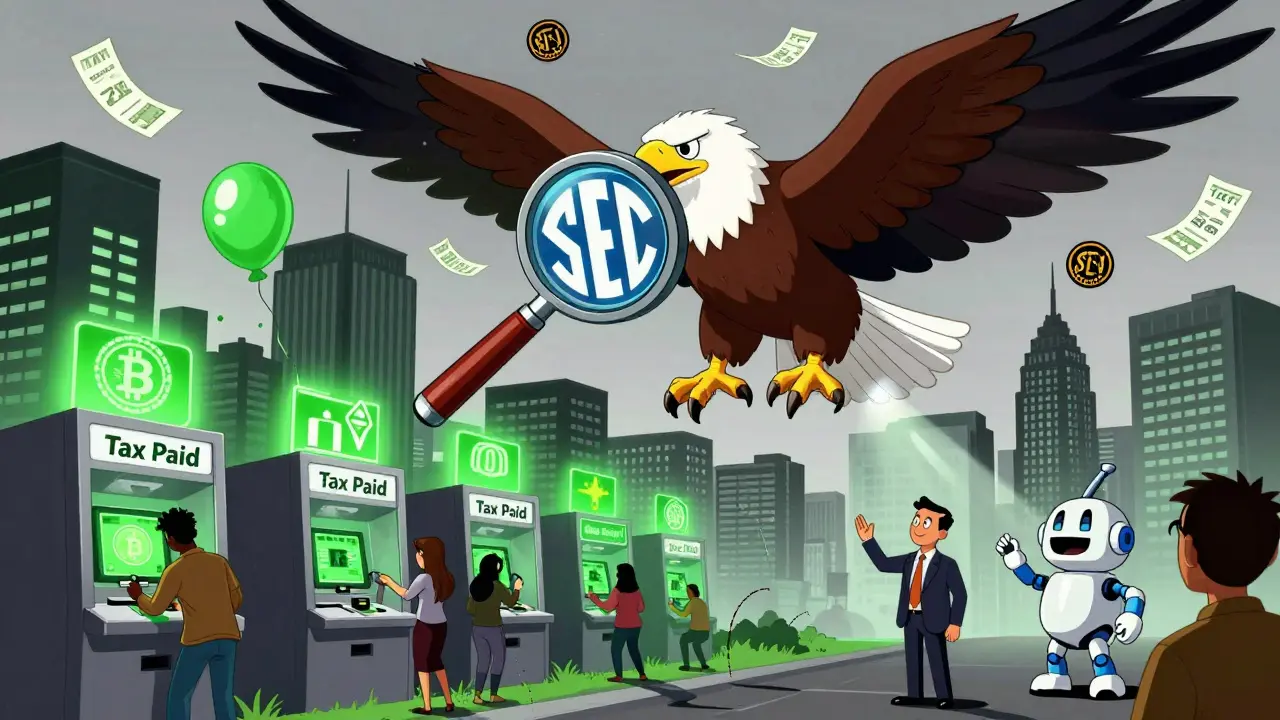
What Should Financial Institutions Do Now?
If you’re a bank, payment processor, or fintech in Nigeria, here’s what you need to do immediately:- Check if any VASP clients you serve are SEC-licensed. Visit the SEC Nigeria website for the official list.
- Require proof of licensing before opening or renewing accounts for crypto businesses.
- Train your compliance team on the NFIU’s AML/CFT requirements for crypto.
- Ask your VASP clients for their latest tax compliance certificate under NTAA 2025.
- Update your internal policies to reflect the ISA 2025 and NTAA 2025 requirements.
Why This Matters Beyond Compliance
This isn’t just about avoiding fines. It’s about opportunity. Nigeria has 28.69 million crypto users projected by 2026. That’s one in every five adults. The people are already using crypto. The question isn’t whether you’ll engage with it-it’s whether you’ll do it safely and legally. Licensed VASPs are now attracting foreign investment. Nigerian fintechs are partnering with global platforms. The SEC’s framework is being studied by Ghana, Kenya, and South Africa as a model. If your institution gets ahead of this, you’re not just complying-you’re positioning yourself as a leader in Africa’s next financial revolution.What’s Next?
The SEC is already working on amendments to include decentralized exchanges and NFT marketplaces under licensing. Tax reporting rules will get stricter in 2027. The CBN is exploring a digital naira integration with licensed crypto platforms. The rules are evolving, but the foundation is set. The message is clear: If you’re in finance in Nigeria, crypto isn’t optional anymore. You either operate within the law-or you risk being left behind.Are Nigerian banks allowed to handle cryptocurrency transactions now?
Yes-but only with licensed Virtual Asset Service Providers (VASPs). The Central Bank of Nigeria lifted its 2021 ban in 2023, allowing banks to provide account services to SEC-licensed crypto exchanges and wallet providers. Banks cannot legally serve unlicensed crypto businesses. Doing so risks fines, regulatory action, and loss of banking license.
Do I need a license to trade crypto personally in Nigeria?
No, individual Nigerians don’t need a license to buy, sell, or hold cryptocurrency for personal use. The SEC’s rules target businesses that offer crypto services to others-like exchanges, wallets, and lending platforms. However, individuals must still pay capital gains tax on crypto profits under the Nigeria Tax Administration Act (NTAA) 2025, which took effect in January 2026.
What happens if a VASP doesn’t pay its crypto taxes?
The penalties are steep. A VASP that fails to file taxes faces a ₦10 million ($6,693) fine in the first month of non-compliance. Each additional month adds ₦1 million ($669). After three months, the SEC can suspend their license. After six months, they revoke it entirely. The SEC now has direct access to transaction data from licensed exchanges to track tax evasion.
Is Bitcoin legal tender in Nigeria?
No. Bitcoin and other cryptocurrencies are not legal tender in Nigeria. The Nigerian naira remains the only official currency for payments, taxes, and government transactions. However, cryptocurrencies are legally recognized as securities under the ISA 2025, meaning they can be bought, sold, and traded through licensed platforms. They’re treated like stocks or bonds-not cash.
How can I check if a crypto platform is SEC-licensed in Nigeria?
Visit the official SEC Nigeria website and go to the "List of Licensed VASPs" section. As of early 2026, only a handful of platforms like Quidax, Busha, and NairaEx are licensed. Any platform claiming to be regulated but not on that list is operating illegally. Always verify before depositing funds or opening an account.
Can foreign crypto companies operate in Nigeria?
Yes, but they must register with the SEC and comply with all local rules. Foreign VASPs must appoint a local representative in Nigeria, meet the same AML/CFT standards, and pay taxes under NTAA 2025. They cannot target Nigerian users without a license. The SEC has already blocked several offshore platforms for operating illegally in the country.
What’s the difference between SEC and CBN rules on crypto?
The SEC regulates crypto as a security-so they control who can offer, trade, or issue crypto assets. The CBN controls banking and monetary policy-so they decide which financial institutions can provide services to crypto businesses. The SEC licenses the platforms; the CBN licenses the banks. Both agencies work together, but their roles are separate. A VASP needs approval from the SEC, and a bank needs to follow CBN rules to serve them.

7 Comments
josh gander
Okay so let me get this straight - Nigeria just turned crypto into a regulated asset class like stocks, and banks can finally stop ghosting crypto businesses? 🤯 I mean, I’ve been watching this whole thing from across the Atlantic, and honestly? This is the most coherent crypto regulation I’ve seen outside of Switzerland. No more ‘CBN says no, but everyone does it anyway’ chaos. The fact they’re forcing KYC, AML, AND tax reporting in one go? That’s not just compliance - that’s civilization. I’m low-key impressed. 🙌
Aaron Poole
As someone who’s worked with fintechs in Kenya and Ghana, this Nigerian framework is actually kinda beautiful. It’s not perfect - yeah, the penalties are brutal - but it’s clear, consistent, and gives real teeth to enforcement. The real win? Banks aren’t just allowed to work with VASPs anymore, they’re *required* to verify licenses. That’s the missing link everywhere else. In Kenya, you still get banks freezing accounts because they’re scared. Here? They’ve got a checklist. This could be the blueprint for the whole continent.
Freddy Wiryadi
so like… bitcoin isn’t legal tender but it’s a security? that’s wild. it’s like saying your sneaker is a stock. 🤔 i mean, i get it legally, but philosophically? it’s a paradox. if you can’t use it to buy bread but you gotta pay tax on it when you sell it… is it money or is it just digital collectible art with a balance sheet? also, did anyone else notice the SEC’s website looks like it was designed in 2008? 🙃 anyway, i’m just here for the chaos. and also, if i buy a dogecoin and it goes up 500%, do i owe taxes on the *dream* or just the cashout? 🤷♂️
Brianne Hurley
Oh wow. A government actually enforcing crypto taxes? How quaint. I mean, I’m sure this works for the average Nigerian who still thinks ‘crypto’ is just a fancy word for ‘get rich quick.’ But let’s be real - this is just another bureaucratic cage for people who don’t understand decentralization. The SEC doesn’t own your wallet. The CBN doesn’t own your money. And no amount of ‘licensed VASPs’ is going to change that. You can regulate the storefront, but you can’t regulate the blockchain. 🤷♀️ Also, ‘capital gains tax on crypto profits’? Cute. Like taxing sunlight.
christal Rodriguez
Taxing crypto is just the state trying to monetize your paranoia.
Calvin Tucker
The legal distinction between ‘crypto as security’ and ‘crypto as currency’ is legally sound but economically incoherent. If an asset is fungible, interchangeable, and used as a medium of exchange - even if not legal tender - it functions as money. Classifying it as a security ignores its network effects and user behavior. The SEC is applying securities law to a monetary phenomenon. That’s like regulating the internet as a publishing house. It’s not wrong - it’s just incomplete. And until regulators grasp that, enforcement will remain reactive, not strategic.
Rob Duber
THEY SHUT DOWN THREE LENDING PLATFORMS AND ARRESTED THE GUYS?? 😱 I was literally just about to invest in one of those ‘20% monthly returns’ apps last week - thank god I didn’t! That’s like watching a horror movie and then realizing the monster was real and it was in your closet. I mean, the SEC didn’t just slap a wrist - they dropped the whole damn building on these fraudsters. And now banks are actually being held accountable? This isn’t regulation - this is a public service. I’m not Nigerian, but I’m sending a donation to the SEC’s tip line just for the sheer audacity of it. 🎉🔥