
Meme Coin Risk Calculator
Investment Risk Assessment
This tool analyzes risk based on data from the article about Miss Kaka (KAKA) crypto coin. It uses real-world statistics about low-liquidity meme coins.
Miss Kaka (KAKA) isn’t a cryptocurrency you buy because it’s innovative, useful, or backed by a team. It’s a meme coin - a digital token built on a cute story and nothing else. The story? It’s named after Miss Kaka, the teddy dog owned by Yi He, co-founder of Binance. That’s it. No whitepaper. No roadmap. No developers you can contact. Just a dog, a name, and a contract address on the Binance Smart Chain: 0xcad5...1270c8.
How did Miss Kaka even get started?
Miss Kaka launched in 2023 as a joke-turned-coin, riding the same wave as Dogecoin and Shiba Inu. But unlike those coins, which grew into real communities, KAKA never took off. It was never promoted by Binance. Yi He never endorsed it. There’s no official website, no Twitter account with more than a few hundred followers, and no GitHub repo showing code updates. The entire project lives on a single token contract and a handful of price trackers.
Its total supply is fixed at 1 billion KAKA tokens - all of them already in circulation. That means no more tokens can be minted. Sounds fair, right? Except there’s no mechanism to control supply, no burn function, and no utility. It’s not used for payments, staking, or governance. It doesn’t power any app. It exists solely to be traded - and even that’s rare.
Is Miss Kaka even tradable?
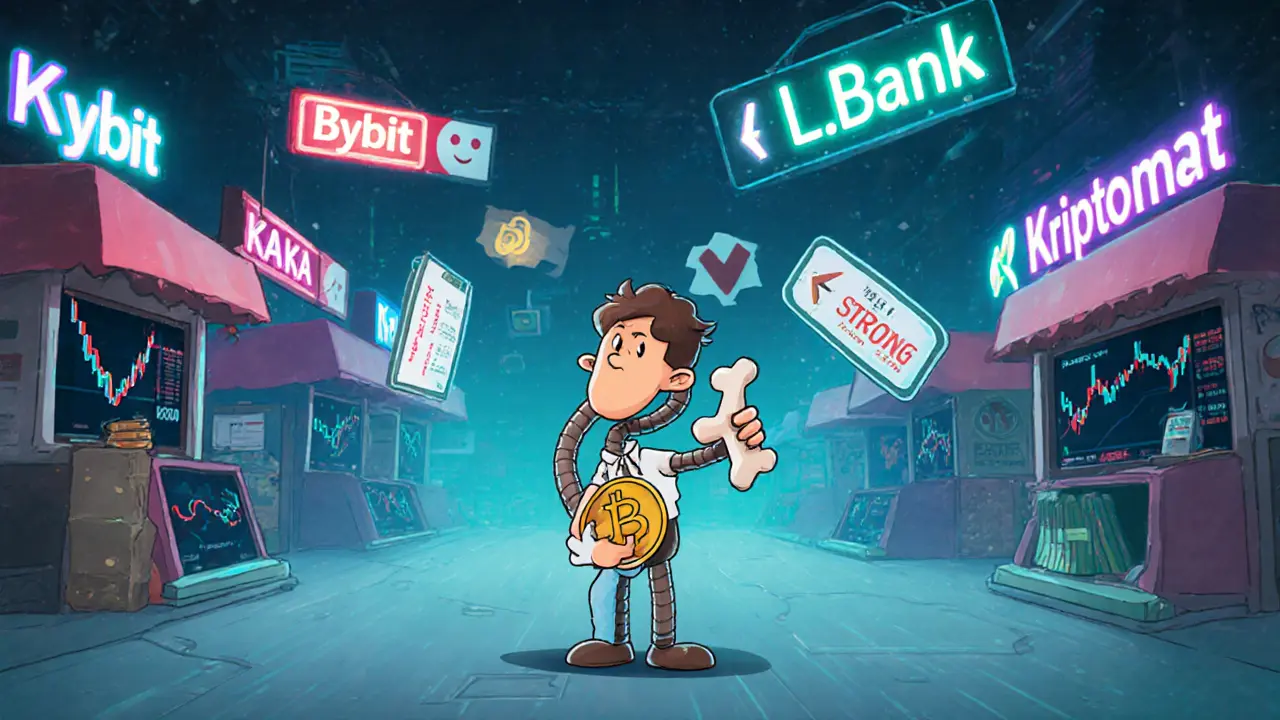
You can technically buy KAKA on a few exchanges like Bybit, LBank, and Kriptomat. But here’s the catch: most platforms show $0 in 24-hour trading volume. CoinMarketCap, the biggest crypto data site, lists KAKA with zero volume. Crypto Tracker says $67.50. Kriptomat says €297.33. These numbers are so low they’re almost meaningless. For comparison, even the tiniest real meme coins trade millions daily.
That means if you buy KAKA, you might not be able to sell it later. There’s no buyers. No liquidity. If you try to cash out, you could be stuck. The price you see on one site won’t match another. One says $0.0000344. Another says $0.000043. That’s not market volatility - that’s a lack of real trading.
What do experts say about KAKA?
No one serious is talking about it.
Not Messari. Not CoinDesk. Not Delphi Digital. Not even the crypto YouTubers who cover every new meme coin under the sun. The only analysis available comes from Bitget, which gives KAKA a “Strong Sell” signal. Their technical indicators - moving averages, oscillators, volume trends - all point down. And that’s the best-case scenario.
Industry analysts like David Gokhshtein warn that tokens with market caps under $100,000 are almost always pump-and-dump schemes. KAKA’s market cap hovers around $40,000. That’s not a coin. That’s a gambling chip.
Even the SEC has warned about tokens like this. Their 2024 guidance specifically called out low-liquidity, no-utility coins as high-risk. KAKA fits that description perfectly.
Is there a community behind it?
Not really.
Reddit has three mentions of KAKA in over a year - all from users with less than 10 karma. CoinCodex has 15 user ratings, and 67% of them are negative. Telegram groups claiming to be “official” have under 200 members. The last message in the main group? October 9, 2025. That’s over six weeks of silence.
Compare that to Dogecoin, which has tens of thousands of daily posts, active developers, and real-world use cases like tipping on Twitter. KAKA has none of that. It’s not a community. It’s a ghost town with a token attached.
Can you use Miss Kaka for anything?
No.
You can’t pay for coffee with it. You can’t stake it to earn interest. You can’t use it in any app. No merchant accepts it. No wallet supports it as a default asset. Even Binance - the exchange tied to its origin story - doesn’t list it on its main platform. It only appears on smaller, lesser-known exchanges that list hundreds of low-quality tokens.
The only “use” is speculation. Buy low, hope someone else buys higher, sell before the price crashes. That’s it. There’s no technology, no innovation, no future plan. Just a dog’s name and a contract.
What’s the risk?
Extremely high.
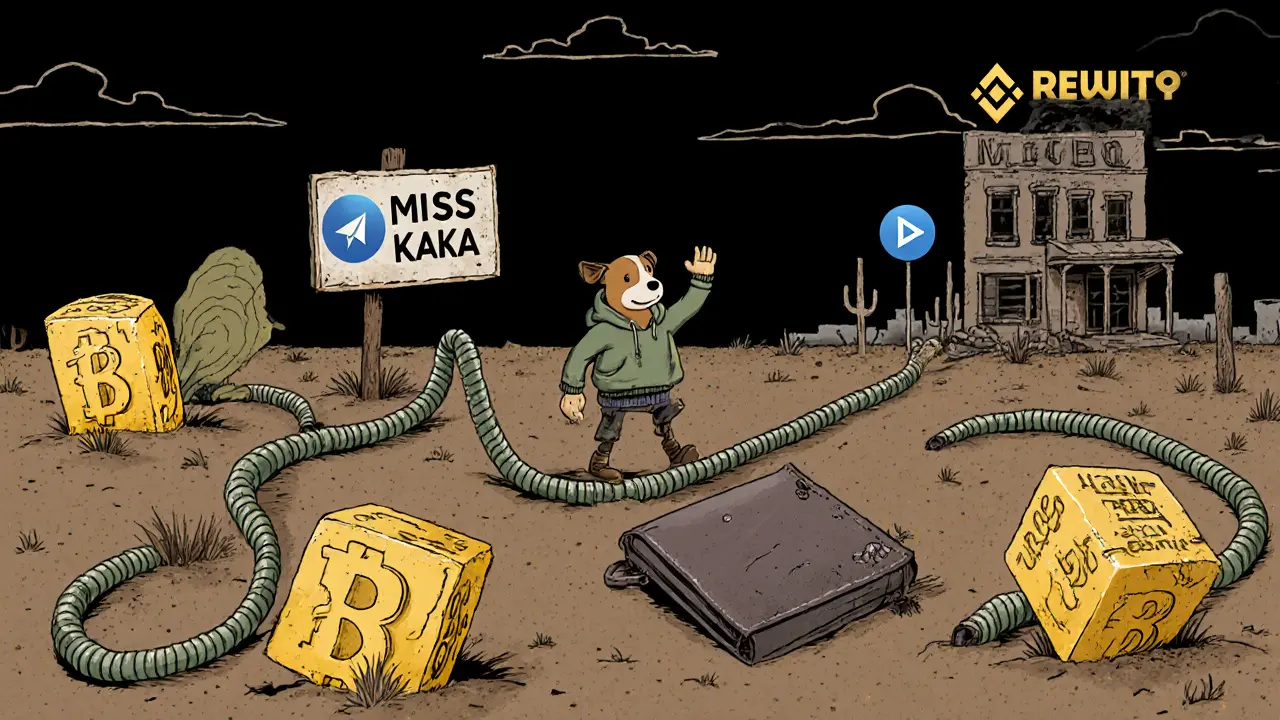
VanEck’s 2025 Crypto Sustainability Index rates tokens like KAKA as “highly likely to become valueless within 24 months.” CoinGecko reports that 63% of meme coins under $100,000 have died off since 2024. KAKA isn’t just risky - it’s statistically doomed.
And if you lose money on it? There’s no recourse. No customer service. No refund policy. No legal protection. Crypto isn’t regulated like stocks. If a token vanishes, you’re out of luck.
Why does KAKA even exist?
Because someone made it and hoped to profit from hype.
There are over 20,000 cryptocurrencies. Most of them are worthless. KAKA is one of the weakest. It doesn’t add value. It doesn’t solve a problem. It doesn’t even have a real team. It’s a digital collectible with no collector.
People buy it because they think it’s funny. Or because they saw a post saying “KAKA could hit $0.00004 by 2026!” - a prediction with zero data behind it. LBank made that claim, but they also admit it’s just a guess. And guess what? That’s how most of these coins die: with a fake prediction and a silent community.
Should you buy Miss Kaka?
Only if you’re okay with losing everything.
If you have $10 to throw away and want to see what happens when a meme coin goes nowhere - go ahead. But don’t call it an investment. Don’t tell yourself it’s “the next Dogecoin.” It’s not. It’s a digital pet rock with a blockchain address.
Real crypto grows because people build things. KAKA doesn’t build anything. It just sits there. Waiting. For someone to buy it. And then, eventually, for no one to care anymore.
If you’re looking for meme coins with real traction, look at Dogecoin or Shiba Inu. They have communities. They have developers. They have history. KAKA has a teddy dog and a contract. That’s not enough.
