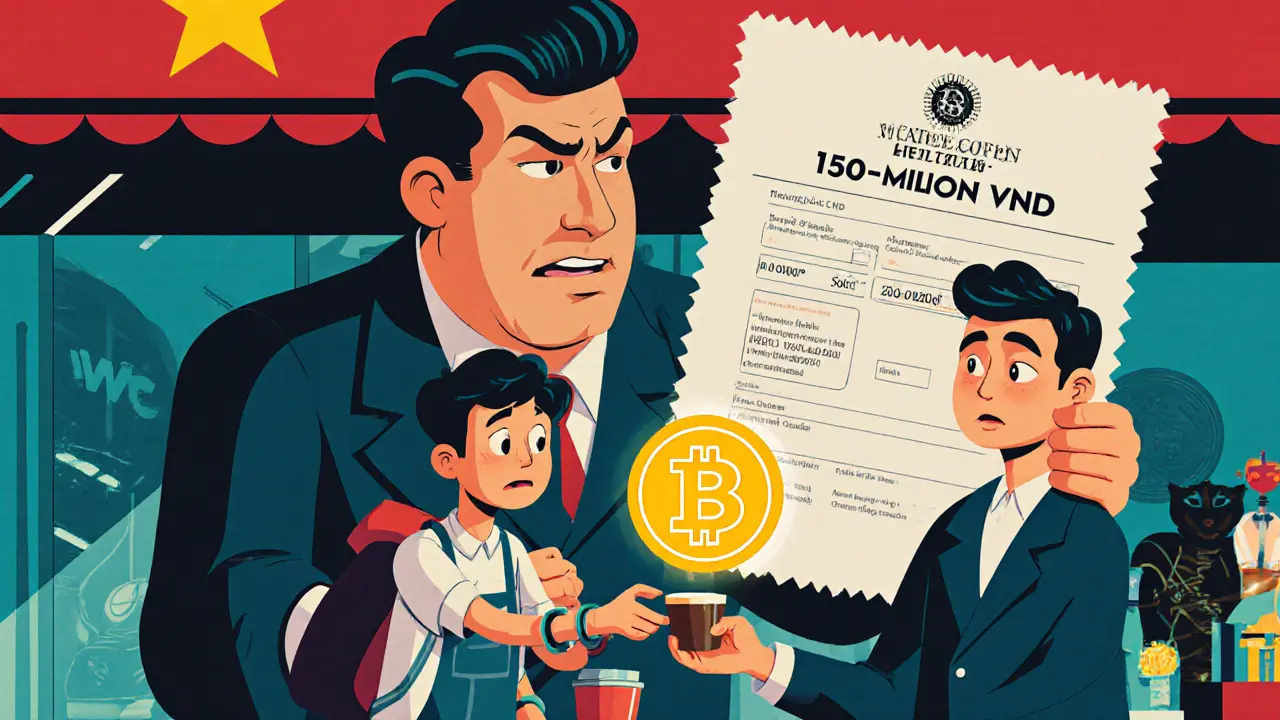
If you're using Bitcoin or any other cryptocurrency to pay for goods or services in Vietnam, you could be hit with a fine of up to 200 million Vietnamese Dong-roughly $8,900 USD. That’s not a warning. It’s the law. Since January 1, 2018, the State Bank of Vietnam (SBV) has made it clear: using crypto as payment is illegal. And the penalties aren’t small change.
Why Is Using Crypto as Payment Illegal in Vietnam?
Vietnam doesn’t ban owning Bitcoin or Ethereum. You can buy, hold, and trade them all you want. But if you try to use them to pay for your coffee, rent, or tuition? That’s where the trouble starts. The legal line is simple: only government-approved payment tools are allowed. That means bank cards, mobile wallets like Momo or ZaloPay, and bank transfers. Nothing else. The SBV’s reasoning? Control. Cryptocurrencies operate outside the banking system. That makes it hard to track money flows, collect taxes, or stop illegal activity like money laundering. Le Truong Tung, president of FTP University, put it bluntly: accepting Bitcoin as payment makes the economy harder to manage-and opens the door to tax evasion and untraceable transfers. The legal foundation comes from Decree No. 96/2014/ND-CP, which outlines administrative penalties for violations in banking and monetary activities. Clause 6, Article 27 specifically bans the issuance, supply, or use of Bitcoin and similar virtual currencies as payment. This was reinforced by Decree 101/2012/ND-CP, amended in 2016, which lists only approved payment instruments. Crypto isn’t on that list. So it’s not just discouraged-it’s prohibited.How Much Is the Fine? And Who Gets Hit?
The fine for using crypto as payment ranges from 150 million to 200 million VND. That’s not a slap on the wrist. It’s enough to buy a mid-range motorcycle in Hanoi or cover a year’s rent in a smaller city. The fine applies to anyone who accepts crypto as payment-whether you’re a small shop owner, a university accepting tuition, or a business running an online store. There’s no ambiguity here. In 2017, a university in Vietnam planned to let students pay tuition in Bitcoin. The SBV stepped in immediately and shut it down. No trial. No warning. Just a direct order: stop. The university complied. But here’s the catch: enforcement isn’t everywhere. The SBV doesn’t have the resources to monitor every peer-to-peer crypto transaction. Most fines are applied in high-profile cases-like businesses advertising crypto payments on their websites or platforms openly accepting Bitcoin. Regular users trading crypto among friends? They’re mostly ignored. But if you’re a merchant, the risk is real.What About Holding or Trading Crypto?
You can still buy, sell, and hold Bitcoin, Ethereum, or any other cryptocurrency in Vietnam. The ban only applies to using it as a payment method. That’s why Vietnam ranks 8th globally in crypto adoption, according to Chainalysis’ 2021 report. People are trading, investing, and speculating-but not spending. This creates a strange split in behavior. Vietnamese users might hold crypto as an asset, like gold or stocks, but use ZaloPay or Vietcombank’s app to pay for groceries. The system works because the law treats crypto as property, not currency. That distinction matters. It’s why the Ministry of Finance started drafting tax rules for crypto transactions in 2022. If you profit from selling Bitcoin, you might owe taxes. But if you use it to buy a phone? You’re breaking the law.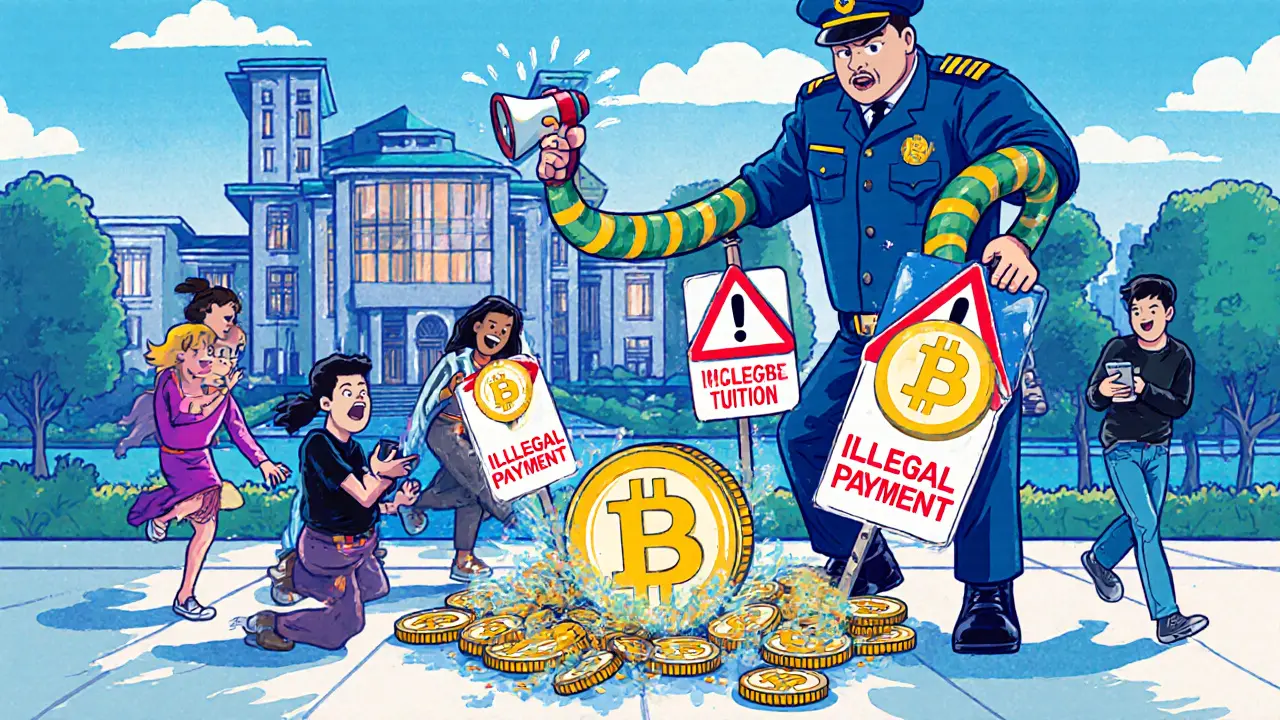
How Does Vietnam Compare to Other Countries?
Vietnam’s approach is one of the strictest in Southeast Asia. Thailand allows licensed crypto exchanges. Singapore created a full regulatory framework for digital payment tokens. Even China, which banned crypto trading in 2021, still lets people hold it privately. Vietnam chose to block the payment use outright. Experts like Dr. Nguyen Xuan Thanh from Harvard’s Kennedy School argue this misses the point. Cryptocurrency isn’t just about money-it’s about technology. Blockchain could help modernize Vietnam’s financial system, improve transparency, and reduce fraud. Instead, the government is trying to shut it down at the door. Le Hong Hiep from Singapore’s ISEAS-Yusof Ishak Institute says Vietnam’s ban doesn’t reflect reality. People want faster, cheaper payment options. When traditional banking is slow or expensive, crypto fills the gap. Banning it doesn’t eliminate demand-it just pushes it underground.Is the Law Actually Enforced?
Technically, yes. The fine is written into law and still active as of 2025. The SBV’s 2022 Monetary Policy Report reconfirmed that crypto is not legal tender. But practically? Enforcement is rare. The General Department of Vietnam Customs reported in 2017 that daily crypto transaction values were already in the thousands of U.S. dollars. By 2025, that number is likely 10 times higher. Millions of Vietnamese use peer-to-peer platforms like Paxful or LocalBitcoins to trade crypto. Few are caught. Fewer are fined. The SBV focuses on large-scale violations: businesses advertising crypto payments, exchanges operating without licenses, or platforms facilitating crypto-to-VND conversions. For individual users, the risk is low-but not zero. If you’re a small business owner and get reported, the fine can be devastating.
What’s Next for Crypto in Vietnam?
The government hasn’t changed its stance, but pressure is building. The 2021 Draft Decree on Virtual Assets proposed treating crypto as an asset-not currency-while keeping the payment ban. The 2022 tax draft signaled that the state is preparing to collect revenue from crypto profits. Dr. Tran Ngoc Ca, former deputy director of Vietnam’s Academy of Finance, said in a 2023 interview: “The 150-200 million VND fine remains technically enforceable, but it’s becoming harder to apply. Demand for crypto is growing. The law is catching up to reality.” Vietnam’s digital payment market is booming. Over 43% of adults used digital payments in 2020, according to the World Bank. The SBV’s own reports show non-cash payments growing at 35% per year since 2015. The government wants innovation-but only on its terms. That means the future likely won’t be crypto as payment. It’ll be state-backed digital currency-something like a Vietnamese central bank digital currency (CBDC)-with all the control and none of the decentralization.What Should You Do If You’re in Vietnam?
If you’re a tourist or expat: don’t try to pay for anything with Bitcoin. Even if a vendor says it’s okay, they’re breaking the law-and you could be pulled into an investigation. If you’re a local business owner: stick to approved payment methods. Don’t advertise crypto as a payment option. Don’t integrate crypto wallets into your checkout. The fine isn’t worth the risk. If you’re a crypto investor: hold, trade, speculate-but don’t spend. Use your crypto like an asset, not a currency. And be ready for taxes. The government is watching.Bottom Line
Vietnam’s 150-200 million VND fine for crypto payments isn’t just a rule-it’s a statement. The state wants control over money. It doesn’t trust decentralized systems. And it’s willing to punish anyone who challenges that. The law hasn’t stopped crypto adoption. It’s just forced it underground. But as digital payments grow and global trends shift, Vietnam’s rigid stance may not last forever. For now, though, if you’re using crypto to pay for anything in Vietnam, you’re playing with fire.Is it illegal to own Bitcoin in Vietnam?
No, owning Bitcoin or other cryptocurrencies is not illegal in Vietnam. The ban only applies to using them as a payment method. You can buy, sell, and hold crypto without breaking the law. But if you use it to pay for goods, services, or tuition, you risk a fine of 150-200 million VND.
Can I get fined for using crypto to pay a friend?
Technically, yes-the law doesn’t distinguish between commercial and personal use. But in practice, the State Bank of Vietnam only enforces the fine against businesses and public-facing transactions. Peer-to-peer transfers between friends are rarely targeted unless they’re part of a larger pattern of illegal activity.
What happens if I’m caught using crypto as payment?
You’ll receive an administrative fine ranging from 150 to 200 million VND. There’s no jail time, but the fine can be imposed on individuals or businesses. The SBV may also require you to stop the activity immediately. Repeated violations could lead to higher penalties or being blacklisted from financial services.
Are crypto exchanges legal in Vietnam?
No, crypto exchanges that operate without government approval are illegal. While many Vietnamese users trade on international platforms like Binance or OKX, these platforms aren’t licensed in Vietnam. The SBV has warned that operating or promoting unlicensed exchanges violates financial regulations. However, enforcement against individual users of these platforms remains limited.
Will Vietnam ever allow crypto payments in the future?
It’s unlikely in the near term. The State Bank of Vietnam is focused on launching its own central bank digital currency (CBDC) to replace private digital payment methods. While some experts argue for a regulated crypto payment system, the government’s priority remains control, not innovation. Any future change would likely come through a CBDC, not Bitcoin or Ethereum.

9 Comments
Mark Adelmann
Man, I get why they’re scared of crypto payments-no paper trail, no taxes, no control. But banning it outright feels like trying to stop water with a net. People are gonna find ways to move value, whether it’s through blockchain or bartering goats.
SHASHI SHEKHAR
Look, I’ve been trading crypto since 2017 in India and the vibe is the same everywhere-governments panic because they can’t tax it or track it. Vietnam’s fine is brutal, yeah, but honestly? It’s a band-aid on a bullet wound. The real issue is that their banking system is still stuck in the 90s. ZaloPay and Momo are great, but they’re just digital gatekeepers for the same old centralized mess. Blockchain could fix settlement times, cut remittance fees, and bring unbanked people into the fold-but instead, they’re punishing the users. I’ve seen small shops in Delhi take Bitcoin for chai and no one cared. Why? Because enforcement is a joke unless you’re big enough to be a headline. Vietnam’s law is theater, not policy.
Also, the fact that they’re drafting tax rules for crypto profits while banning payments? That’s not hypocrisy, that’s just capitalism with a side of control. They want the revenue, not the disruption. And honestly? Smart. But not ethical.
Meanwhile, I’m sitting here with 0.3 BTC in my wallet, paying for my Netflix with a credit card, and laughing. The system’s rigged, but at least I’m not the one getting fined.
Also, if you’re reading this and you’re in Hanoi? Don’t pay your landlord in ETH. Just don’t. I’m not saying it won’t work-I’m saying if it does, you’re lucky, not smart.
And yes, I’ve used LocalBitcoins to buy VND when my bank froze my account. No regrets. Just don’t tell the SBV.
🚀
imoleayo adebiyi
As someone who grew up in a country where cash was king and digital payments were a luxury, I understand the fear behind regulating crypto. But the penalty seems disproportionate to the actual harm. Most people using crypto for small payments aren’t laundering money-they’re just trying to avoid bank fees or send money home to family. The real criminals aren’t the shop owners accepting Bitcoin for rice-they’re the ones hiding millions in offshore accounts. Maybe the government should focus on the big fish instead of chasing minnows.
Abby cant tell ya
Wow. So people are getting fined like it’s 2003 and you got caught downloading music. This is why I hate governments. They’re scared of tech they don’t understand, so they punish the users instead of fixing the system. Pathetic.
Ben Costlee
I’ve lived in Hanoi for three years. I’ve seen people pay for street food with QR codes, with cash, with Momo-but never with Bitcoin. Not once. And I’ve asked. The people who know about crypto? They use it to send money to family overseas, not to buy pho. The law isn’t really about stopping payments-it’s about stopping the shadow economy. But the penalty? It’s like putting a speed trap on a highway where no one’s speeding. It’s symbolic. It’s performative. And honestly? It’s making Vietnam look outdated.
Meanwhile, the young kids here are learning Solidity in high school. They’re building DeFi bots. They’re not going to stop because a law says so. They’ll just move to Thailand or Singapore. And the country loses talent because it’s afraid of the future.
I’m not pro-crypto. I’m pro-adaptation. If you want to keep up, you don’t ban the tool-you learn how to use it.
ola frank
It is imperative to note that the legal architecture governing monetary instruments in Vietnam is predicated upon the principle of state sovereignty over the monetary supply, as codified under Decree No. 96/2014/ND-CP and its subsequent amendments. The prohibition of cryptocurrency as a medium of exchange is not merely regulatory-it is ontological: the state refuses to recognize decentralized value as a legitimate monetary substrate. This is not an anomaly in global governance; it is the norm. Central banks globally-whether the Fed, ECB, or SBV-view decentralized currencies as epistemic threats to their monopolies on money creation. The fine is not punitive; it is performative. It signals institutional authority. The fact that enforcement is selective does not undermine the law’s legitimacy-it reinforces its function as a deterrent, not a tool of justice. To conflate enforcement frequency with legal validity is to commit the naturalistic fallacy. The law exists to define boundaries, not to be universally applied. The SBV’s stance is coherent, rational, and institutionally necessary.
Vaibhav Jaiswal
Bro, I know a guy in Da Nang who runs a surf shop. He took Bitcoin for a board last year. Got a call from the bank the next day. Said he had to ‘clarify his transaction records.’ He never took crypto again. No fine. No paperwork. Just a quiet ‘hey, don’t do that.’ That’s how it works. The law’s there. But the cops? They’re busy with real crime.
stephen bullard
What’s funny is how everyone acts like crypto is this wild new thing. It’s just money, man. And money? It’s always been about control. The king used to mint coins. Now the state controls digital ledgers. Crypto just says: ‘What if we let the people mint?’ And that terrifies people who’ve spent their whole lives holding the keys. Maybe the real crime isn’t paying with Bitcoin. Maybe it’s believing that anyone should have to ask permission to move their own money.
Angel RYAN
So you can own crypto but not spend it? That’s like saying you can own a car but not drive it. Why even have it then? Just sell it and use ZaloPay. Simple.