
Imagine trying to send money abroad, but every traditional bank account is frozen, every credit card is declined, and international wire transfers take weeks-or never arrive. For millions of Russians since 2022, this wasn’t a hypothetical nightmare; it was daily life. In response, cryptocurrency didn’t just become an investment option for many; it became essential infrastructure.
Today, as we move through mid-2026, crypto adoption in Russia stands as one of the most complex and dynamic stories in global finance. Despite strict government restrictions on using digital assets for everyday payments, roughly 20 million people-about 13.6% of the population-are actively holding or trading cryptocurrencies. This isn’t just about speculation. It’s about survival, sovereignty, and finding a way around geopolitical walls.
The Reality Behind the Numbers: Who Is Using Crypto?
When you look at the data from the Bank of Russia and reports from TASS in late 2025, the scale becomes clear. By March 2025, the total value of cryptocurrencies held in exchange wallets across Russia hit 827 billion rubles (approximately $10.15 billion USD). That’s a 27% jump from the previous year. But what kind of coins are people actually holding?
Bitcoin dominates the landscape, making up 62.1% of all holdings. Ether follows with 22%, while stablecoins like USDT and USDC account for nearly 16%. Why this mix? Bitcoin serves as a long-term store of value-a digital gold reserve against inflation. Stablecoins, however, are the workhorses. They allow users to preserve value without the wild swings of volatile assets, crucial when the ruble’s purchasing power fluctuates.
Demographically, this isn’t a nationwide equalizer. The majority of users are men aged 25 to 44, living in major urban centers like Moscow and St. Petersburg. About 89% of active crypto users reside in cities with populations over one million. Rural areas lag behind, not necessarily due to lack of interest, but because of lower digital literacy and fewer reliable internet connections needed for secure transactions.
| Asset Type | Market Share (%) | Primary Use Case |
|---|---|---|
| Bitcoin | 62.1% | Long-term value storage / Hedge against inflation |
| Ether | 22.0% | DeFi participation / Smart contracts |
| Stablecoins (USDT/USDC) | 15.9% | Cross-border payments / Daily transactional use |
Why the Surge? Sanctions and the Need for Alternatives
You can’t understand Russian crypto adoption without understanding the context of 2022. When Western nations imposed sweeping sanctions following the invasion of Ukraine, traditional financial channels were severed. SWIFT access was restricted for major banks. Visa and Mastercard pulled out. Suddenly, sending money to a contractor in Dubai or buying software from a US vendor became nearly impossible through conventional means.
Crypto filled that void. According to Chainalysis’ 2025 Global Crypto Adoption Index, Russia ranks #10 globally. More impressively, it ranks #4 in institutional adoption. What does that mean? It means businesses, not just individual traders, are using crypto. Companies are using blockchain to bypass blocked banking routes, paying for imports, and preserving capital outside the sanctioned system.
But here’s the catch: Decentralized Finance (DeFi) lags significantly. Russia ranks #52 globally in DeFi usage. Why? Because DeFi requires high technical knowledge and often relies on platforms that have themselves sanctioned Russian IP addresses. Most users stick to centralized exchanges or peer-to-peer (P2P) networks where they can trade directly with other humans, reducing reliance on complex smart contract protocols.

The Regulatory Tightrope: Ownership vs. Payment
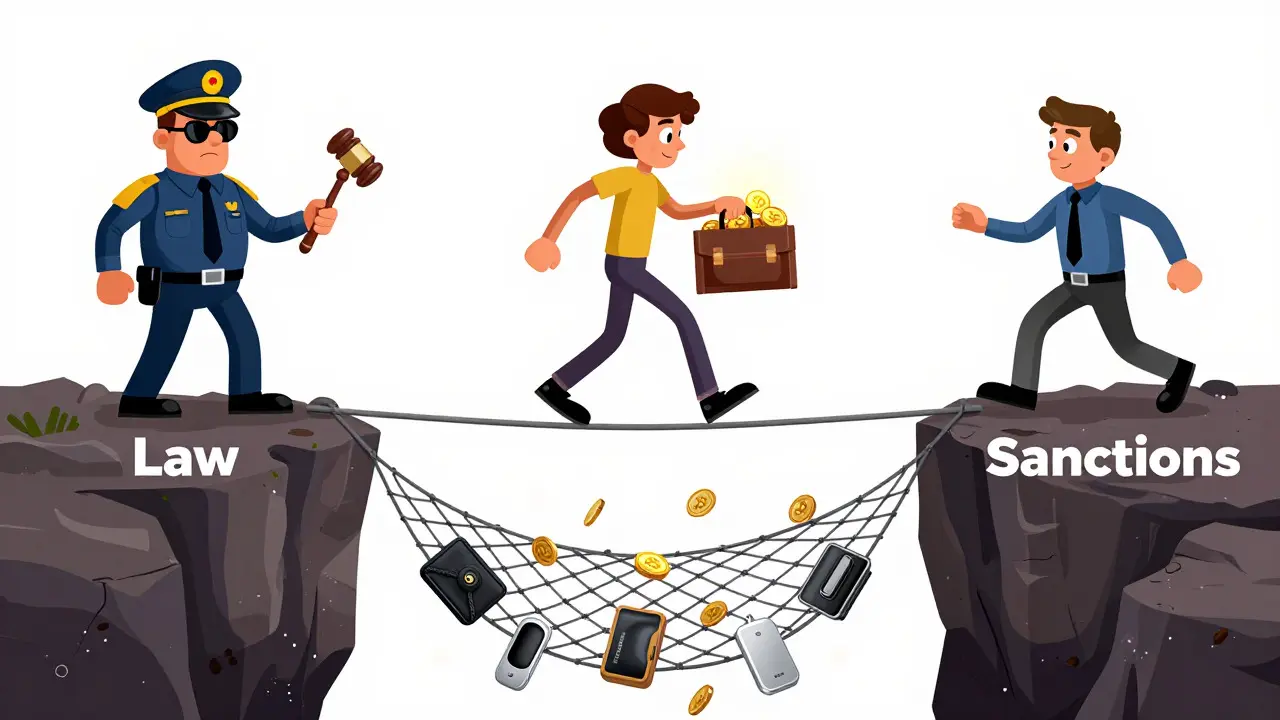
If you’re new to this space, the legal situation in Russia might seem contradictory. On one hand, the government acknowledges that crypto exists and generates tax revenue. On the other, it strictly limits how you can use it.
The key law here is Federal Law No. 259-FZ, known as the "On Digital Financial Assets" act, which came into effect in January 2021. Here’s the simple breakdown:
- You CAN own crypto: Holding Bitcoin or Ethereum is legal. You can buy, sell, and transfer it between private wallets.
- You CANNOT pay for goods with it: Using cryptocurrency to buy bread, rent an apartment, or pay for services is illegal. Merchants who accept crypto risk heavy fines.
- Banks are cautious: While the Bank of Russia has hinted at allowing banks to handle crypto transactions under strict rules (announced in October 2025), most local banks still block direct crypto-related transfers to avoid regulatory heat.
This creates a gray market. Less than 0.5% of Russian businesses officially accept cryptocurrency. Instead, users rely on P2P platforms. You find a seller on a platform like Kuna.io or BitPrepay, agree on a price, and transfer rubles via bank card while the seller releases USDT to your wallet. It’s manual, slightly risky, but it works.
How Russians Actually Trade: The P2P Ecosystem
Since international giants like Coinbase or Binance have limited availability or face blocking issues, domestic alternatives have risen. Platforms like Garantex were once huge, but after being sanctioned by the U.S. Treasury in 2022, they shut down. Newer players like EXMO and BitPrepay have stepped in, though they operate under constant scrutiny.
For the average user, the process looks like this:
- Registration: Sign up on a domestic exchange. Expect identity verification (KYC) to take 3-5 business days. The Bank of Russia demands strict compliance to track flows.
- Funding: Deposit rubles via SBP (System for Fast Payments) or bank transfer. Note: Some banks may flag these transactions if they detect crypto-related keywords.
- P2P Trading: List an offer to buy/sell USDT or BTC. Negotiate with a counterparty. Release funds only after confirming receipt.
- Withdrawal: Move assets to a self-custody wallet (like Trust Wallet or Ledger) to avoid exchange hacks or freezes.
The learning curve is steep. A study from Moscow State University in September 2025 found that new users need 15-20 hours of study to feel comfortable managing wallets and understanding security risks. Nearly 68% of beginners require help from friends or online communities during setup.
Risks and Realities: Fraud, Freezes, and Volatility
It’s not all smooth sailing. The very factors driving adoption also create vulnerabilities. With no consumer protection laws for crypto transactions, scams are rampant. Phishing sites mimicking popular exchanges are common. If you send money to the wrong address, it’s gone forever.
Then there’s the regulatory hammer. In March 2025, the Bank of Russia conducted a massive compliance review. According to FinProm Analytics, 28% of surveyed users reported having their exchange accounts frozen for weeks during routine verifications. One user on the Banki.ru forum shared losing a 250,000-ruble opportunity because his account was locked right before a major market rally.
Security incidents are hard to quantify because authorities don’t publish detailed stats, but community forums buzz with stories of hacked hot wallets and rug pulls from lesser-known tokens. The advice from seasoned users is consistent: Never keep large amounts on an exchange. Use hardware wallets. And always double-check recipient addresses.
What’s Next? The Road to 2027 and Beyond
The government is slowly warming up to formal integration. Deputy Finance Minister Ivan Chebeskov stated in October 2025 that ignoring crypto would mean missing out on economic benefits. The Bank of Russia plans to survey crypto investments and lending activity in early 2026 to shape future rules. There are whispers of allowing banks to custody crypto under strict capital reserves.
However, geopolitical tensions remain the biggest wildcard. The U.S. Treasury continues to scrutinize Russian crypto activities, threatening further sanctions on infrastructure providers. If global platforms cut ties completely, Russia will be forced to build its own isolated crypto ecosystem-a digital iron curtain.
Statista projects the market revenue to reach $2.3 billion in 2025, with user numbers growing to 23.5 million by end of 2026. The trend is upward, driven by necessity. As long as traditional finance remains inaccessible or unreliable for cross-border needs, crypto will remain a vital tool for millions of Russians.
Is it legal to own cryptocurrency in Russia?
Yes, owning cryptocurrency is legal in Russia under Federal Law No. 259-FZ. However, using it as a payment method for goods and services is prohibited. You can hold, buy, and sell crypto, but merchants cannot legally accept it for retail transactions.
Which crypto exchanges are available in Russia?
Major international exchanges like Binance have limited presence. Domestic platforms such as EXMO, BitPrepay, and Kuna.io are popular. These platforms facilitate P2P trading, allowing users to swap rubles for crypto directly with other individuals, bypassing some banking restrictions.
Why is Bitcoin so dominant in Russia?
Bitcoin holds 62.1% of crypto assets in Russia because it is viewed primarily as a store of value and a hedge against inflation and currency devaluation. Its decentralized nature makes it resistant to government control, appealing to those seeking financial independence amid sanctions.
Can I use crypto to pay for groceries in Russia?
Technically, no. Using crypto for retail payments is illegal. Less than 0.5% of businesses accept it officially. Most users convert crypto back to rubles via P2P platforms before spending on everyday items to stay within legal boundaries.
What are the main risks of trading crypto in Russia?
Risks include account freezes by exchanges during regulatory reviews, phishing scams, and lack of consumer protection. Additionally, sudden changes in banking policies can disrupt P2P funding sources. Users must prioritize security and stay updated on regulatory shifts.
Will banks start accepting crypto deposits soon?
The Bank of Russia announced plans in late 2025 to allow banks to handle crypto transactions under strict capital requirements. A comprehensive survey is scheduled for early 2026. While full integration is likely years away, limited custodial services may emerge for institutional clients first.
