
Imagine trying to buy a cup of coffee with Bitcoin in Tehran. You might think it’s as simple as scanning a QR code and tapping your phone. But in reality, that transaction could land you in hot water with the Central Bank of Iran. While mining is legal, spending is a different story entirely. The short answer to whether crypto payments are allowed in Iran is a complicated "yes, but..." It’s not a free-for-all; it’s a tightly controlled sandbox where the government watches every move. If you’re an expat, a trader, or just curious about how sanctions shape money flow, understanding these rules is crucial before you touch a single satoshi.
The Legal Gray Area: Mining vs. Spending
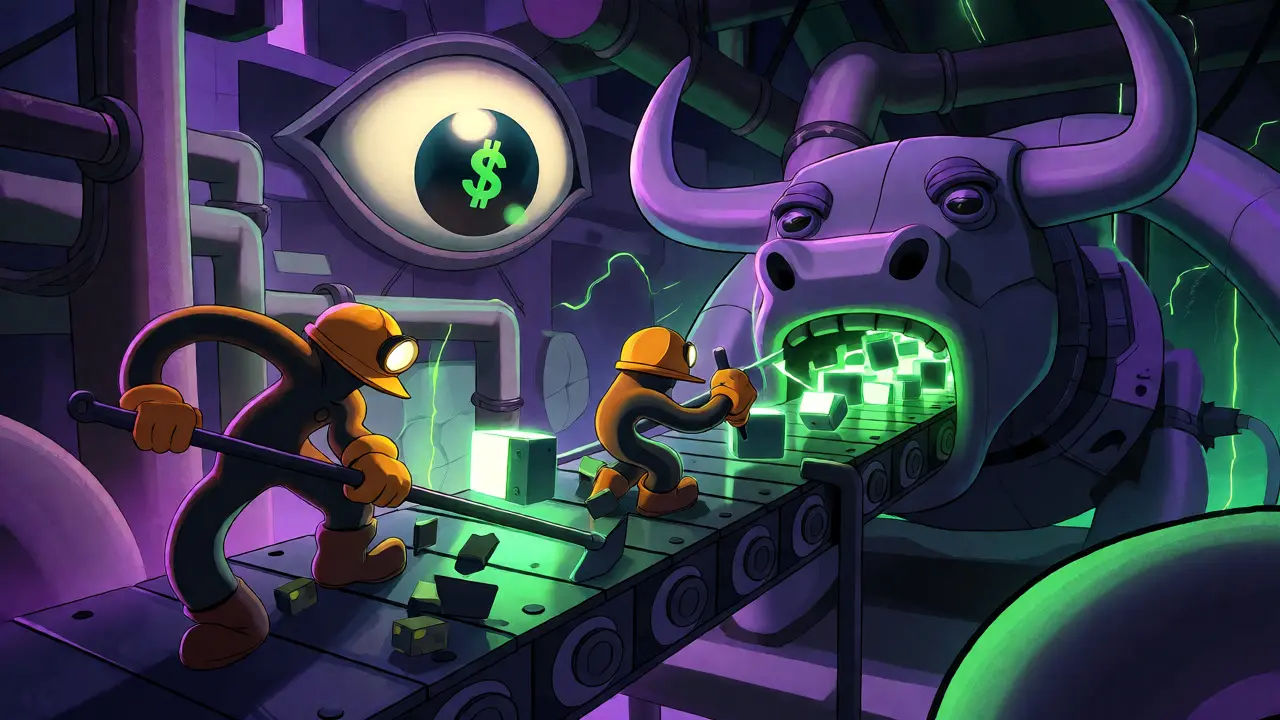
To understand the payment situation, you first have to separate mining from spending. These two activities are treated like night and day by Iranian authorities. Since 2019, cryptocurrency mining has been legal in Iran, provided you have a license from the Ministry of Industry, Mine and Trade. Why? Because Iran has cheap electricity, and the government sees mining as a way to generate hard currency despite international sanctions. Miners must sell their mined assets directly to the Central Bank, which helps stabilize foreign reserves.
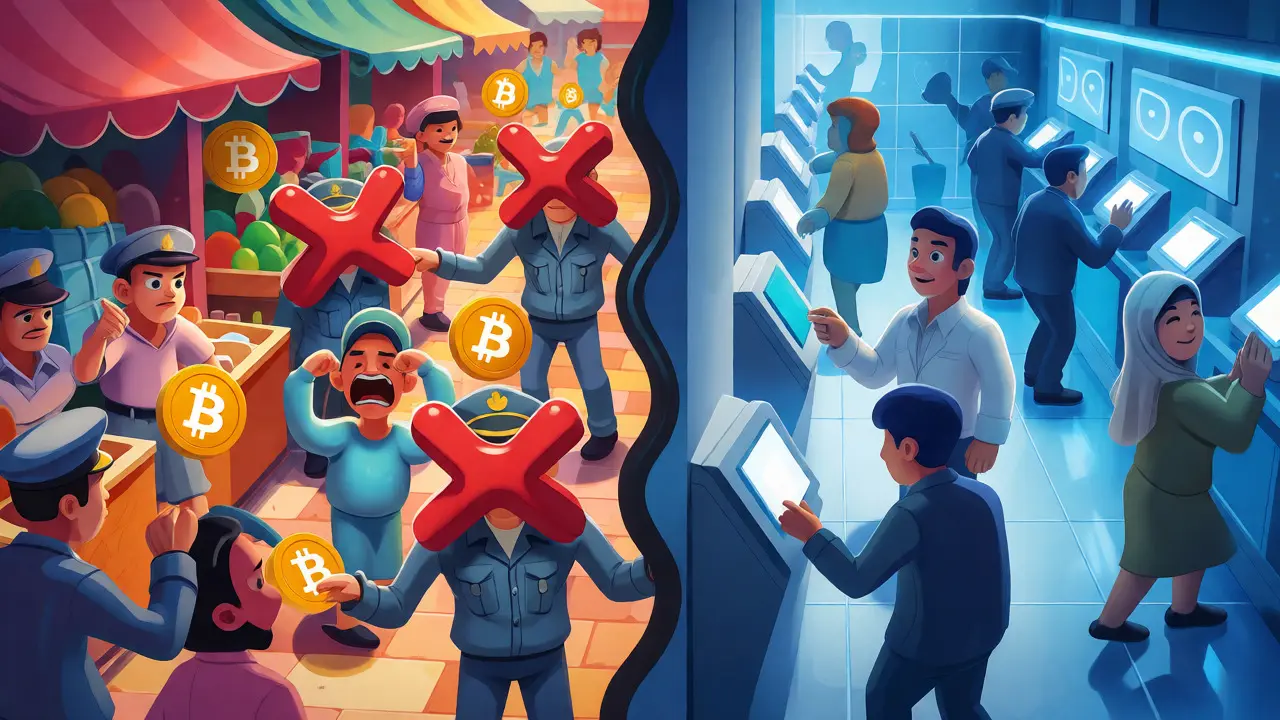
However, using those same cryptocurrencies to pay for groceries or rent is another matter. For years, domestic payments were effectively banned. The fear was simple: if people started using Bitcoin instead of the Rial, the local currency would crash even harder than it already had. So, while you can legally mine Bitcoin, you generally cannot use it to buy a taxi ride unless you go through very specific, government-approved channels. This creates a strange paradox where the country produces billions in digital assets but restricts their circulation among its own citizens.
Recent Regulatory Shifts (2024-2025)
If you looked at the news from late 2024, things looked bleak. In December 2024, the Central Bank blocked all direct crypto-to-Rial conversions on local websites. It felt like a total shutdown. But by January 2025, the policy shifted again. The ban wasn’t lifted completely; it was replaced with strict surveillance. Now, exchanges can operate, but they must use the government’s own API system. This means every trade, every withdrawal, and every user detail is visible to the authorities in real-time.
This isn’t just about control; it’s about data. The Central Bank of Iran now demands full transparency from all brokers. There is no more anonymity. If you try to swap Rials for USDT, the bank knows exactly who you are, when you did it, and how much you moved. This shift from prohibition to "controlled permission" aims to curb speculative bubbles that hurt the Rial’s value while still allowing some market activity to exist under a microscope.
The Advertising Ban and Public Awareness
You won’t see billboards for crypto exchanges in Tehran anymore. In February 2025, the government imposed a nationwide ban on cryptocurrency advertising. This applies to both online platforms and physical spaces. No more Instagram ads promising quick returns, no more flyers at universities. The goal here is psychological: keep the general public away from the hype cycle. By limiting exposure, authorities hope to reduce panic buying and selling driven by social media trends rather than economic fundamentals.
This ban makes it harder for new users to enter the market. Without clear information, many Iranians turn to unofficial peer-to-peer markets or use VPNs to access foreign exchanges like Binance or Kraken. These methods bypass local restrictions but come with risks. You lose the protection of local consumer laws, and you risk having your funds frozen if international compliance tools flag your address.
Sanctions, Tether, and International Pressure
Iran’s relationship with crypto is deeply tied to global politics. Sanctions cut off Iranian banks from the SWIFT system, making international transfers painful. Crypto became a lifeline for businesses needing to import goods. However, this lifeline is fragile. In July 2025, Tether, the issuer of USDT, froze over 40 addresses linked to Iranian entities. This was one of the largest freezes ever seen, showing that stablecoins are not immune to geopolitical pressure.
The involvement of groups like the Islamic Revolutionary Guard Corps (IRGC) in crypto activities adds another layer of complexity. International compliance firms monitor wallets associated with sanctioned entities. If you’re doing business with an Iranian partner, their crypto transactions might be flagged automatically. This forces traders to be extremely careful about counterparty risk. A clean wallet today could become tainted tomorrow based on political developments.
The Digital Rial Pilot Project
While private crypto faces hurdles, the government is pushing its own solution: the Digital Rial. Currently in a pilot phase on Kish Island, this Central Bank Digital Currency (CBDC) is designed to be the electronic version of cash. Unlike Bitcoin, it cannot be mined. Its supply is strictly regulated by the central bank.
The idea is to modernize payments without losing monetary sovereignty. The Digital Rial allows for faster, cheaper transactions within the country, reducing reliance on the US dollar for domestic commerce. For merchants, it offers a way to accept digital payments without the volatility of Bitcoin. For the state, it provides a tool to track money flow precisely, ensuring taxes are collected and inflation is managed. It’s a strategic move to embrace technology while rejecting decentralization.
| Activity | Legal Status | Key Restriction | Regulatory Body |
|---|---|---|---|
| Mining | Legal with License | Must sell to CBI; high energy tariffs | Ministry of Industry, Mine and Trade |
| Trading (Exchange) | Permitted with Surveillance | API integration required; KYC mandatory | Central Bank of Iran |
| Direct Payment (P2P) | Effectively Prohibited | Limited to approved pilots/goods | Central Bank of Iran |
| Advertising | Banned | No online or offline promotion | Government Media Council |
| Digital Rial | Pilot Phase | Kish Island only; non-minable | Central Bank of Iran |
Practical Implications for Traders and Businesses
If you’re operating in Iran, you need to adapt. Using a local exchange like Nobitex means complying with strict Know Your Customer (KYC) rules. You’ll need to provide identification documents, and your transaction history is open book for auditors. Foreign miners often face challenges too. If you bring Bitcoin into Iran from abroad, you might find it difficult to convert it back to Rials locally because the system prioritizes domestically mined assets.
Many businesses resort to hybrid models. They might invoice in USD or Euro but settle via crypto transfers between offshore accounts. This keeps the money outside the immediate view of the Central Bank, though it requires robust accounting to prove legitimacy during audits. For individuals, holding crypto is generally tolerated as an asset class, similar to gold or foreign currency. The trouble starts when you try to spend it casually. Until the Digital Rial rolls out nationwide, most daily transactions remain in Rials.
Future Outlook: Stability or Further Control?
The trend is clear: tighter control. The decline in crypto flows-down 11% in early 2025 compared to the previous year-shows that regulation is working to slow down speculation. Authorities are wary of the Rial’s depreciation and see unregulated crypto markets as a threat to national financial stability. Expect further integration of blockchain tech into banking, but not necessarily adoption of decentralized coins for everyday use.
For investors, the opportunity lies in infrastructure and mining efficiency, not in speculative trading gains. As the grid improves and licensing becomes clearer, professional mining operations may thrive. Meanwhile, the average citizen will likely stick to the Digital Rial once it expands beyond Kish Island. The era of wild-west crypto experimentation in Iran seems to be closing, replaced by a structured, state-monitored digital economy.
Can I legally buy Bitcoin in Iran?
Yes, you can buy Bitcoin through licensed Iranian exchanges. However, these platforms require strict identity verification (KYC) and report all transactions to the Central Bank. The process is transparent and monitored, so anonymity is limited compared to international standards.
Is it illegal to hold cryptocurrency in Iran?
Holding cryptocurrency is not illegal. Iranians are permitted to own digital assets as investments. The restrictions primarily focus on using crypto for domestic payments and the method of conversion between Rials and crypto, which must occur through approved channels.
Why is cryptocurrency advertising banned in Iran?
The government banned crypto advertising in February 2025 to limit public exposure and reduce speculative trading driven by hype. This move aims to stabilize the Rial by preventing mass retail investment waves that could destabilize the local currency market.
What is the Digital Rial and how does it differ from Bitcoin?
The Digital Rial is a Central Bank Digital Currency (CBDC) issued by the Central Bank of Iran. Unlike Bitcoin, it is centralized, cannot be mined, and its supply is controlled by the government. It is currently being piloted on Kish Island to test digital payment infrastructure.
Can foreigners use crypto to pay for services in Iran?
Direct payments are restricted. Most businesses prefer Rials or foreign currencies transferred via traditional banking or informal networks. While some tourist areas might accept crypto informally, it is not a standard legal tender for commercial transactions across the country.

5 Comments
Joey Eden
The distinction between mining as a sanctioned export mechanism and spending as a prohibited domestic circulation vector is fascinating from a monetary policy perspective. It essentially creates a closed-loop system where the state captures the value generation while suppressing the velocity of money for retail users to protect the Rial's exchange rate.
This isn't just about regulation; it's a deliberate decoupling of asset accumulation from transactional utility. By forcing miners to sell directly to the Central Bank, they are effectively creating a sovereign wealth fund backed by hash power rather than oil reserves. The surveillance aspect via API integration removes the pseudonymity that usually defines crypto, turning these exchanges into highly transparent ledgers for the CBI.
It’s a clever, if restrictive, way to harness blockchain infrastructure without surrendering monetary sovereignty. The ban on advertising further reinforces this by keeping the market institutionalized and preventing retail speculation from destabilizing the currency. This model could actually serve as a blueprint for other sanction-hit economies trying to bypass SWIFT without fully dollarizing their internal markets.
Donald Underwood
You're overthinking the 'sovereignty' angle. They just don't want people moving money out of the country. That's it. If you can buy coffee with Bitcoin, you can buy gold or dollars and run. Simple economics, not some grand monetary theory experiment. The government is scared of capital flight, plain and simple. Stop romanticizing the control mechanisms.
Genevieve LeMarchal
oh wow i never thought about it like that! its kinda wild how they treat mining diffrently then spending lol. i mean its logical if u think about protecting the rial but still super annoying for regular folks who just wanna use tech properly. hope the digital rial pilot goes well so ppl dont have to jump through hoops 🇮🇷
Sayantan Bhadury
Meh. Same old story. Ban ads, track wallets, keep profits. Nothing new under the sun. Just more bureaucracy disguised as innovation. The Tether freeze was predictable anyway given the IRGC connections everyone ignores until it hits their wallet.
rose meechan
Love the breakdown of the Digital Rial vs Bitcoin! 😊 It really highlights how different central bank thinking is compared to the decentralized ethos we see in the West. Even with all the restrictions, the fact that they are piloting CBDCs shows they are adapting fast. Kish Island seems like a great sandbox for testing this before nationwide rollout. Exciting times for Iranian fintech despite the hurdles! 🚀