
Remember the rush of October 2021? The Digital Asset space was exploding, and everyone was hunting for free tokens. If you were lurking on Twitter or Discord back then, you likely saw the buzz around the Coinary Token (CYT) airdrop. It wasn't just another giveaway; it was a key part of the BSC GameFi Expo III, a massive seven-day event that tried to bridge the gap between hardcore gamers and casual crypto users. But did it actually work? And what happened to those tokens after the hype died down?
This isn't just a nostalgia trip. Understanding how projects like Dragonary handled their initial distribution tells us a lot about where GameFi is heading. We're talking about real mechanics, real failures, and the stark reality of tokenomics when the spotlight fades.
The BSC GameFi Expo Context
To get why this airdrop mattered, you have to look at the stage it was set on. The Binance Smart Chain (BSC) was fighting hard for dominance against Ethereum's high gas fees. In late 2021, BSC had over 100 million unique addresses and was positioning itself as the home of accessible blockchain gaming. Enter the BSC GameFi Expo III, running from October 23 to 30, 2021. This wasn't a solo act; it featured three major players: Dragonary, Mobox, and DSG Metaverse.
The goal was simple but ambitious: distribute roughly $60,000 worth of tokens combined, with Dragonary offering up to 500,000 CYT per user. For context, Axie Infinity was dominating headlines with its own scholarship programs, but these smaller expos aimed to capture the "long tail" of users who wanted in without spending hundreds of dollars upfront. It was a strategic move by Binance to keep users engaged on their chain rather than letting them drift back to Layer 1 solutions.
How the CYT Airdrop Actually Worked
So, how did you actually get your hands on those tokens? It wasn't as simple as clicking a button. The process required a mix of technical setup and social engineering. First, you needed a MetaMask wallet configured for the Binance Smart Chain network. Even though the expo claimed transactions were "free," you still needed a tiny amount of BNB-about $1 to $2-for potential gas fees if things went sideways.
The steps were tedious but manageable:
- Connect Wallet: Link your BSC-compatible wallet to the CoinMarketCap airdrop page.
- Social Tasks: Follow Coinary’s Twitter, like and retweet specific posts, and tag friends. This was the classic "engagement farming" tactic.
- Watch the Livestream: You had to tune into the daily showcases. Specifically, watching the Dragonary segment hosted by BSC’s Simran on October 25 was crucial.
- Complete the Quiz: After watching, you had to answer questions to prove you weren't a bot.
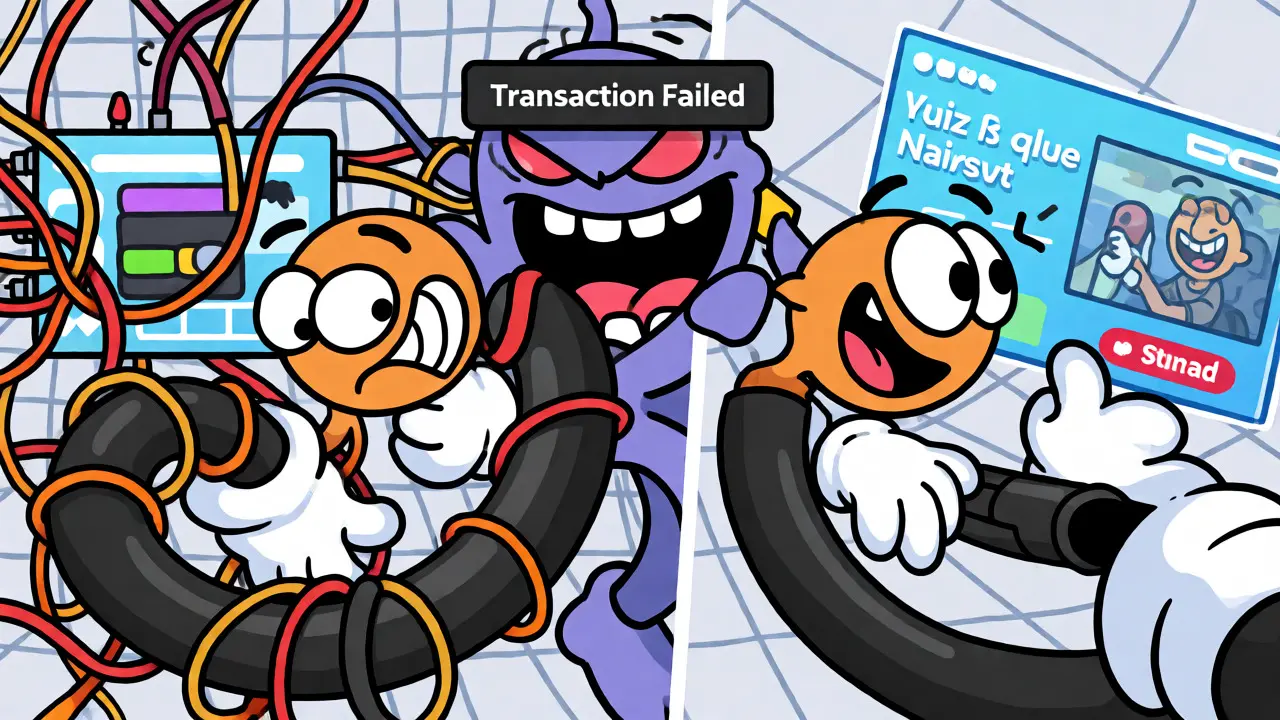
User reports varied wildly. Some folks, like Reddit user u/BlockchainGamer89, claimed they finished the whole thing in 15 minutes. Others spent hours wrestling with "transaction failed" errors. An unofficial poll suggested nearly 40% of participants faced connection issues. It highlights a common pitfall in early DeFi and GameFi events: the tech stack often couldn't handle the sudden surge in traffic.
Dragonary Tokenomics: More Than Just Hype
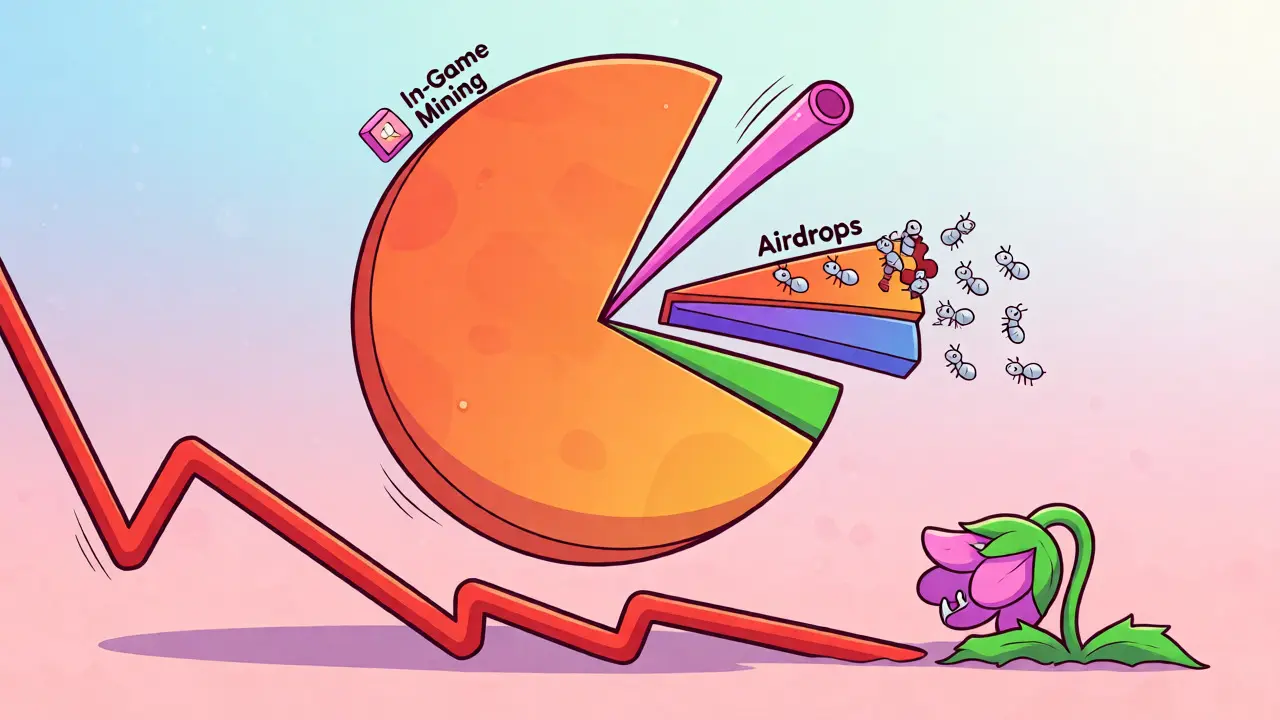
What made the Coinary Token interesting wasn't just the free coins; it was the structure behind them. Unlike many meme coins that appeared overnight, Dragonary launched with a deflationary model baked into its core. Here’s the breakdown from their whitepaper:
| Allocation Category | Percentage | Token Amount | Vesting/Lockup |
|---|---|---|---|
| In-Game Mining | 74.9% | 749,000,000 CYT | Earned via gameplay |
| Investors | 16% | 160,000,000 CYT | Standard lockups |
| Development Team | 5% | 50,000,000 CYT | 10-Year Vesting (Daily Unlock) |
| Airdrops & Community | 4.1% | 41,000,000 CYT | Event-based distribution |
Notice that team vesting schedule. A 10-year lockup is rare. Most projects in 2021 locked team tokens for 2-4 years. This signaled a long-term commitment, trying to reassure investors that insiders wouldn't dump their holdings immediately. Additionally, the token implemented a burn mechanism: 80% of in-game purchases and breeding commissions were permanently destroyed. The remaining 20% went to players. The idea was to reduce supply over time, theoretically increasing scarcity.
The Reality Check: Price Action and Sentiment
Here is where theory meets practice. Despite the solid tokenomics, the market didn't care much about the fine print. Following the airdrop conclusion, CYT experienced a sharp 32% price drop within 48 hours. Why? Because airdrop recipients are notorious for dumping tokens instantly to cash out risk-free profits.
Crypto economist Alex Thorn pointed out this exact issue in late 2021, noting that misaligned incentives create volatility that hurts long-term holders. He was right. While the project aimed for sustainability, the immediate liquidity crunch hit hard. Trading volume spiked briefly during the expo but settled into low levels afterward. By late October, daily trading volume hovered around $460, which is negligible for a token with a billion-token supply.
User sentiment reflected this disconnect. Trustpilot reviews averaged 3.7 stars, with praise for the game's accessibility-you could play Dragonary on mobile or PC without even knowing what a blockchain was. However, complaints focused heavily on the friction of claiming rewards. The hybrid model worked well for gameplay but created headaches for the crypto-native crowd expecting seamless DeFi interactions.
Lessons from the Dragonary Experiment
If you're looking at similar opportunities today, Dragonary offers several critical takeaways. First, don't underestimate the technical barriers. The 37% failure rate in wallet connections shows that infrastructure readiness is just as important as marketing buzz. Second, tokenomics matter, but only if the community believes in them. A 10-year vesting period is great on paper, but if the utility doesn't drive consistent demand, the price will still bleed.
Third, timing is everything. The BSC GameFi Expo occurred during a peak interest window for GameFi, with sector investment hitting $4.15 billion in Q3 2021. Projects launching outside such ecosystem-wide pushes struggle to gain traction. Dragonary benefited from the Binance halo effect, but that boost faded quickly once the expo ended.
Was the CYT airdrop legitimate?
Yes, it was an official event organized by Coinary in partnership with Binance Smart Chain and CoinMarketCap. It was not a scam, but rather a structured marketing campaign involving verified tasks and live streaming components.
Why did the CYT price drop after the airdrop?
The primary reason was selling pressure from airdrop recipients. Many users claimed their free tokens and immediately sold them to realize profits, causing a 32% price decline shortly after the event concluded. Low initial liquidity exacerbated this volatility.
Do I need crypto knowledge to play Dragonary?
No. Dragonary was designed as a free-to-play RPG available on standard platforms like Google Play and Steam. Non-crypto users can enjoy the PVE and PVP modes without interacting with the blockchain. Crypto integration is optional for earning CYT tokens.
What was the maximum number of tokens one person could claim?
During the BSC GameFi Expo III, users had the opportunity to earn up to 500,000 CYT tokens by completing all engagement tasks, including watching livestreams, passing quizzes, and fulfilling social media requirements.
Is Dragonary still active today?
Yes, the project continues, though with reduced visibility compared to its 2021 peak. They have continued small-scale airdrops and community events, but the token trades at significantly lower valuations than its post-airdrop highs, reflecting broader market corrections and slower adoption rates.
