
The image of a miner swinging a pickaxe in a dark tunnel is long gone. Today, the front line of resource extraction looks more like a high-tech server room mixed with an autonomous vehicle testing ground. We are standing at a turning point in 2026 where mining hardware technology is undergoing a radical shift from brute-force mechanical power to intelligent, connected, and sustainable systems. It’s not just about bigger trucks or deeper drills anymore. It’s about smarter machines that talk to each other, analyze their own health, and operate without humans in the loop.
This transformation isn't happening because companies want to look cool on social media. It’s driven by hard economic realities: rising labor costs, stricter environmental regulations, and the sheer difficulty of finding new ore deposits. The result? A industry that is doubling down on digital tools, artificial intelligence, and automation to squeeze every last bit of efficiency out of the earth.
The Rise of Autonomous Fleets
If you visit a major open-pit mine today, you might notice something strange: it’s quiet. And empty. Or at least, empty of drivers. The era of autonomous mining equipment has moved from experimental pilots to standard operational procedure. The market for these driverless solutions is projected to double from $3.1 billion to $6.2 billion by 2026. That’s a massive leap in a short time.
We’re talking about fleets of self-driving haul trucks, robotic drilling rigs, and automated loaders working around the clock. These machines don’t get tired, they don’t take coffee breaks, and they don’t make human errors. They operate with precision that increases productivity while simultaneously removing workers from hazardous environments. For the first time in history, safety and productivity are moving in the same direction. Remote operation centers allow skilled technicians to monitor dozens of machines from air-conditioned offices miles away from the dust and danger.
| Feature | Traditional Manual Ops | Autonomous/AI-Driven Ops |
|---|---|---|
| Safety Risk | High (human exposure to hazards) | Low (remote monitoring) |
| Operational Hours | Limited by fatigue/regulations | 24/7 continuous operation |
| Maintenance Strategy | Reactive (fix when broken) | Predictive (AI-driven alerts) |
| Resource Efficiency | Variable based on operator skill | Optimized via real-time analytics |
Data as the New Ore: Edge Computing & Storage
You can’t run an autonomous fleet without data. And we aren’t talking about spreadsheets. Modern mines generate terabytes of data every hour from sensors, cameras, and machine diagnostics. This is where the hardware evolution gets really interesting. The focus has shifted to ruggedized storage solutions that can survive the harshest conditions on Earth.
In 2025 and 2026, we see the deployment of ruggedized HDD mining systems designed specifically for remote drilling data logging. These drives aren’t your average laptop hard disks. They are built to withstand extreme shocks, temperature swings, and dust levels that would kill standard electronics within minutes. These systems offer up to a 35% improvement in efficiency simply by ensuring data integrity in the field.
But storage alone isn’t enough. You need speed. Enter AI-optimized edge storage nodes which provide integrated analytic processors for in-situ analysis. Instead of sending raw data back to a central server (which takes time and bandwidth), these nodes process information right where it’s generated. This allows for real-time ore grade assessment. Imagine a drill knowing instantly if it’s hitting valuable mineral or waste rock, adjusting its path immediately. This hybrid approach-combining high-capacity HDDs for long-term survey data with fast SSDs for instant reporting-delivers a 28% boost in operational agility.
Self-Healing Systems and Predictive Maintenance
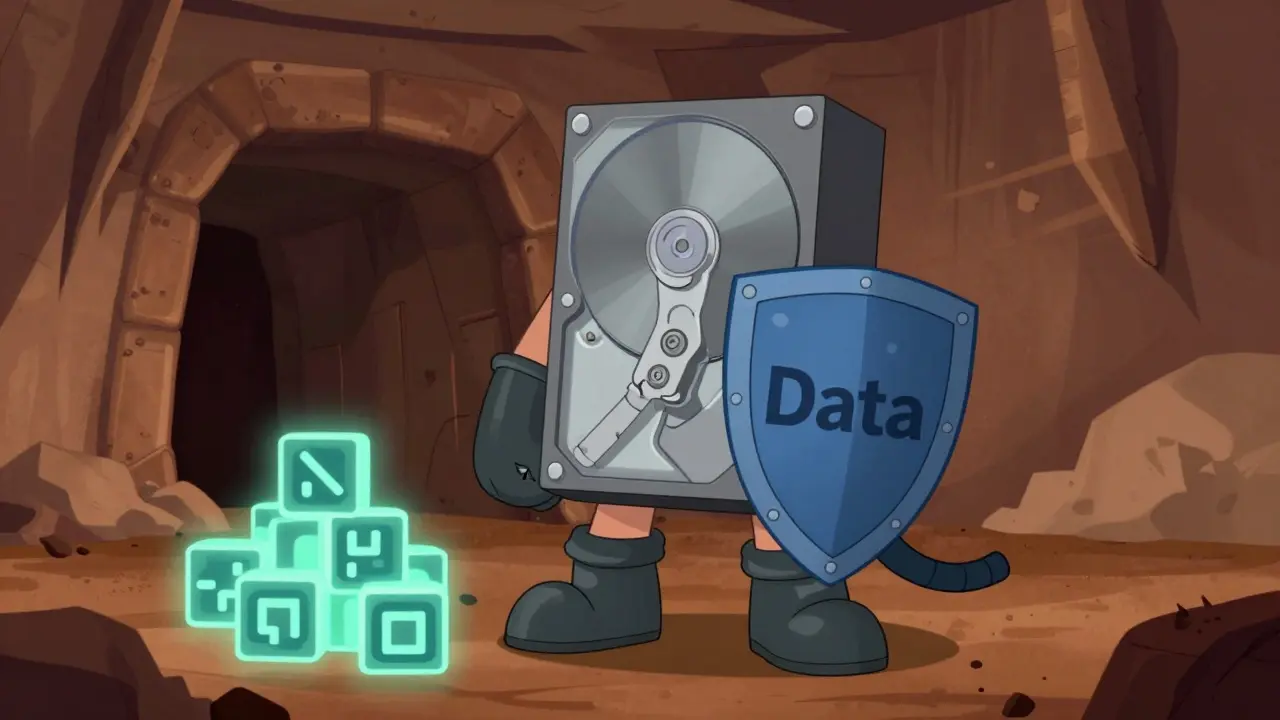
Downtime is the enemy of profit. If a haul truck breaks down, the whole supply chain stalls. The future of mining hardware addresses this through self-healing storage platforms and advanced predictive maintenance. These systems use AI-driven checks to detect errors before they cause failures.
Think of it like your smartphone telling you the battery is degrading, but for multi-million dollar machinery. Self-healing storage platforms offer a 38% efficiency improvement by automatically correcting data errors and archiving operational logs continuously. Meanwhile, IoT-embedded devices (expected to be widely adopted by 2026) connect directly to machinery, creating an automated flow of health data. This connectivity allows engineers to replace a part *before* it fails, often during scheduled downtime rather than in an emergency.
Additive Manufacturing: Fixing Problems On-Site
Supply chains are fragile. When a critical part breaks in a remote mine in Kazakhstan or Chile, waiting weeks for a replacement from a factory thousands of miles away is not an option. This is where additive manufacturing, or 3D printing, changes the game.
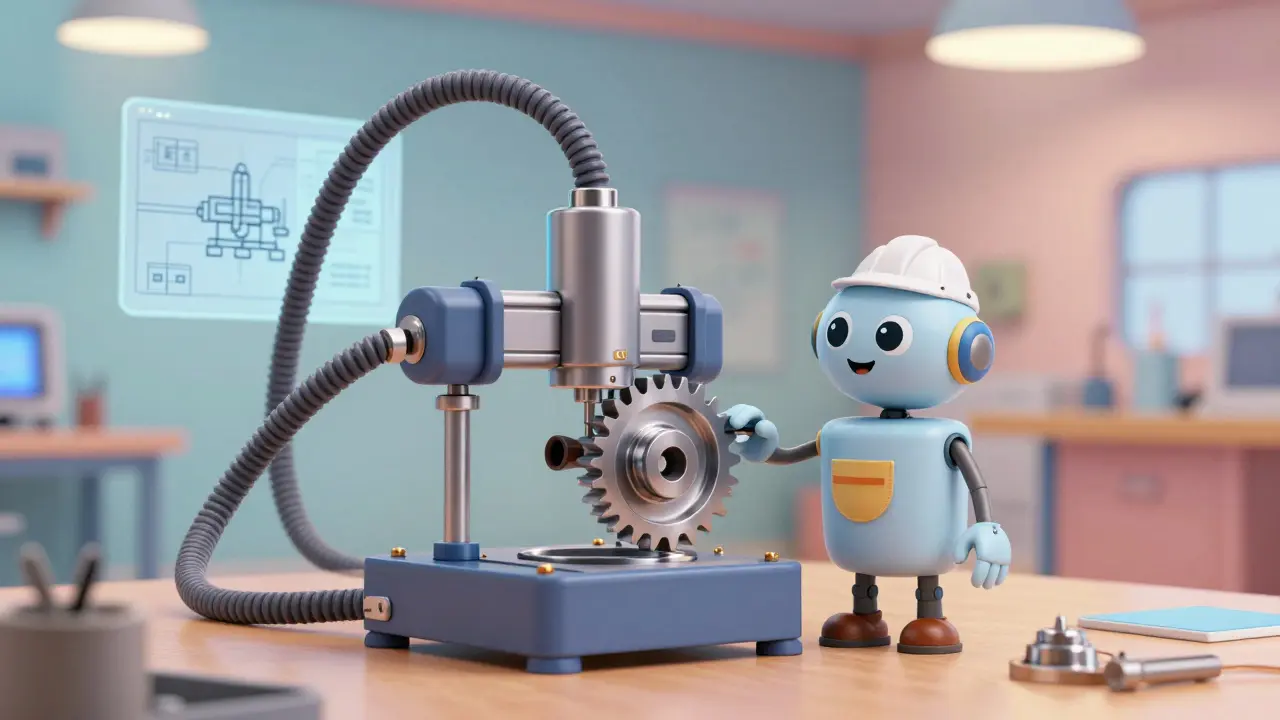
We are seeing a shift toward metal 3D printing, laser cladding, and continuous fiber filament printing. Companies no longer need to stockpile every possible spare part. Instead, they keep digital blueprints and print what they need, when they need it. Kazakhstani startup Arcobo, for example, manufactures large-scale metal products using steel, titanium alloys, and bronze. They use specialized blanks created with high-tech CNC machines to produce custom parts in days, not months. This reduces reliance on traditional logistics and minimizes downtime significantly. It’s a perfect example of how hardware innovation supports operational resilience.
Sustainability and Green Mining Tech
Let’s address the elephant in the room: mining has a terrible environmental reputation. But the hardware of 2026 is helping to clean up that act. Sustainability is no longer a PR buzzword; it’s a regulatory requirement and a financial imperative.
New hardware focuses heavily on energy efficiency. Energy-efficient HDD devices achieve 32% gains through advanced thermal management, crucial for green data centers set up on mining camps. Beyond data, the physical machinery is going electric. Electric and hybrid mining equipment is gaining traction, reducing emissions and fuel consumption. Precision mining technologies ensure that less waste is generated because machines extract exactly what’s needed, leaving the surrounding environment undisturbed.
Furthermore, blockchain integration for data traceability provides guaranteed integrity for compliance audits. By logging extraction data on immutable ledgers, companies can prove their minerals were sourced responsibly. This transparency is increasingly demanded by consumers and regulators alike, offering a 30% improvement in audit efficiency and trust.
The Human Element: Workforce Transformation
All this tech sounds great, but what about the people? The narrative that "robots will take all jobs" is oversimplified. The reality is a workforce transition. Mining is evolving from physical labor in difficult conditions to technology management, data analysis, and remote supervision.
Companies are increasing digital spending by 25% in 2025, recognizing that machine learning tools can improve mineral discovery rates by 20 to 30%. But these tools require skilled operators. We’re seeing a surge in demand for data scientists, AI specialists, and robotics technicians in the mining sector. This attracts a diverse talent pool that might never have considered mining previously. The challenge lies in retraining existing workers and adapting regulations to fit this new digital reality. Cybersecurity also becomes a top priority, as connected mines are vulnerable to digital threats that could halt operations or compromise sensitive geological data.
Conclusion: Smarter, Safer, Sustainable
The automated mine of 2026 isn’t just about doing more with less. It’s about reimagining the entire relationship between humans, machines, and the earth. From self-driving trucks to self-healing data drives, the hardware is becoming smarter and more resilient. For investors and industry players, the message is clear: those who embrace this digital transformation will lead the next decade of resource extraction. Those who stick to legacy systems will find themselves left behind in the dust.
How does AI improve mining hardware efficiency?
AI improves efficiency by enabling predictive maintenance, optimizing resource allocation in real-time, and automating complex decision-making processes. For example, AI-optimized edge storage nodes can assess ore grades instantly, allowing machinery to adjust its operations immediately, resulting in up to 40% efficiency gains in data processing and analysis.
What is the role of blockchain in modern mining hardware?
Blockchain is used for data traceability and compliance. By integrating blockchain ledger modules into mining hardware systems, companies can create immutable records of mineral extraction. This ensures data integrity, simplifies compliance audits, and proves responsible sourcing, improving audit efficiency by approximately 30%.
Are autonomous mining trucks safe?
Yes, they are generally safer than manned vehicles because they remove humans from hazardous environments. Autonomous trucks are equipped with advanced collision avoidance technology, real-time monitoring systems, and precise navigation capabilities, dramatically reducing incident rates and improving overall site safety.
How does 3D printing help mining operations?
3D printing, or additive manufacturing, allows mines to fabricate strong, lightweight replacement parts on-demand at remote sites. This reduces reliance on long supply chains, minimizes downtime caused by equipment failures, and enables rapid customization of components using materials like steel and titanium alloys.
What are ruggedized HDDs used for in mining?
Ruggedized HDDs are specialized hard drives designed to withstand shock, extreme temperatures, and dust. They are used for reliable data logging in remote drilling and harsh mining environments, ensuring that critical operational data is preserved even under severe physical stress, offering up to 35% efficiency improvements in data reliability.
