
OFAC cryptocurrency sanctions aren’t optional - they’re mandatory
If your business touches cryptocurrency and you’re connected to the U.S. financial system, you’re under OFAC’s watch. It doesn’t matter if you’re based in Estonia, Singapore, or Texas. If a U.S. person is involved - even indirectly - you’re subject to U.S. sanctions rules. And OFAC doesn’t care if you didn’t know. OFAC cryptocurrency sanctions operate on strict liability. One wrong transaction, one unblocked wallet, and you’re on the hook.
What OFAC actually blocks - and how
OFAC doesn’t just freeze bank accounts. It freezes digital wallets. Since 2018, the agency has added over 1,247 cryptocurrency addresses to its Specially Designated Nationals (SDN) List. These aren’t random strings. They’re real wallet addresses tied to sanctioned individuals or entities - like hackers, ransomware operators, or Russian-linked exchanges.
When a wallet gets flagged, you can’t send, receive, or even hold funds from it. You have to block it. And OFAC gives you two choices: either freeze each individual wallet separately, or pool all blocked crypto into one designated ‘Blocked SDN Digital Currency’ wallet. Either way, the assets stay locked. You don’t have to convert them to dollars. You just can’t move them.
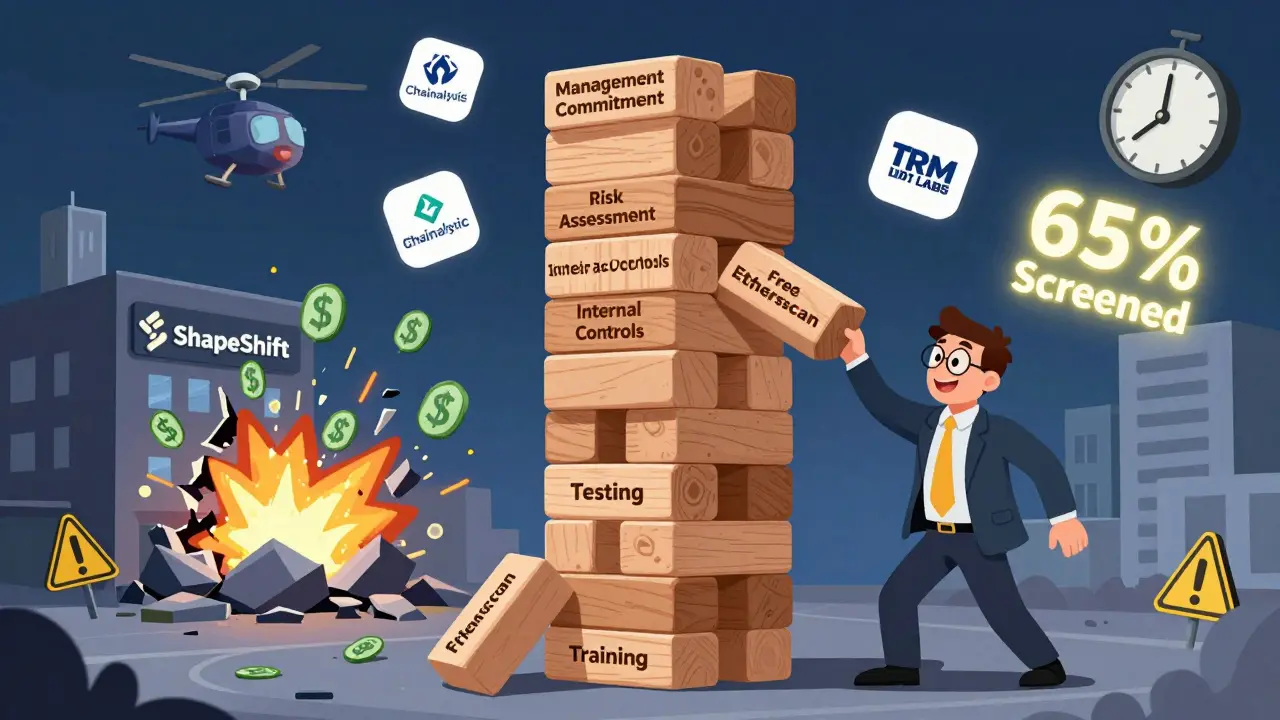
That’s not theory. In September 2025, ShapeShift paid $750,000 after letting users from Cuba, Iran, Sudan, and Syria trade over $12.5 million in crypto over two years. They didn’t block IPs. They didn’t screen wallets. They didn’t need to intend to break the law. Just failing to act was enough.
Your compliance checklist: Five non-negotiables
OFAC doesn’t expect perfection. But it does expect structure. Every crypto business - even small ones - needs a Sanctions Compliance Program (SCP) with five core parts:
- Management commitment: Your board or CEO must sign off on sanctions compliance. No exceptions. This isn’t just an IT or legal issue - it’s a business priority.
- Risk assessment: Update this every quarter. What chains do you support? Do you handle privacy coins? Do you allow P2P trades? Each adds risk.
- Internal controls: Automated screening tools are mandatory. Manual checks won’t cut it. You need real-time wallet screening against the SDN List.
- Testing and auditing: Hire an independent third party to audit your system at least once a year. OFAC will ask for proof.
- Training: Everyone who touches transactions - support, devs, compliance - needs training. ACAMS found compliance officers need 147 hours of specialized training just to get started.
Skipping even one of these can get you fined. And fines aren’t small. The 17 OFAC crypto enforcement actions since 2018 total over $48.7 million.
Tools you actually need - and which ones work
You can’t screen wallets by hand. You need blockchain analytics tools. The big three are Chainalysis, Elliptic, and TRM Labs. They connect to OFAC’s SDN List and flag risky addresses in real time.
But not all tools are equal. In 2025, Chainalysis scored 4.7/5 for documentation and ease of use on G2. TRM Labs got 3.2/5. One Kraken compliance manager said switching to Chainalysis Reactor dropped false positives from 18% to 4.3% - saving hours of manual review. But it cost $450,000 to implement.
Smaller firms can’t always afford that. But skipping it? That’s how you end up like ShapeShift. The average setup time for these tools is 8-12 weeks. And you’ll need at least 1.7 full-time staff per $100 million in daily volume to manage alerts, false positives, and updates.
And don’t forget: OFAC added 37 new crypto addresses to the SDN List in Q2 2025 alone. Your system must update daily. If it doesn’t, you’re already behind.
Privacy coins? DeFi? The hard parts
Monero, Zcash, and other privacy coins are the biggest headache. They hide sender and receiver addresses. No tool can fully trace them. OFAC’s October 2025 update says you still need to take “reasonable measures” to block them - but doesn’t define what’s reasonable.
Most firms just block all transactions to or from privacy coin addresses. It’s the safest move. Some ban them entirely.
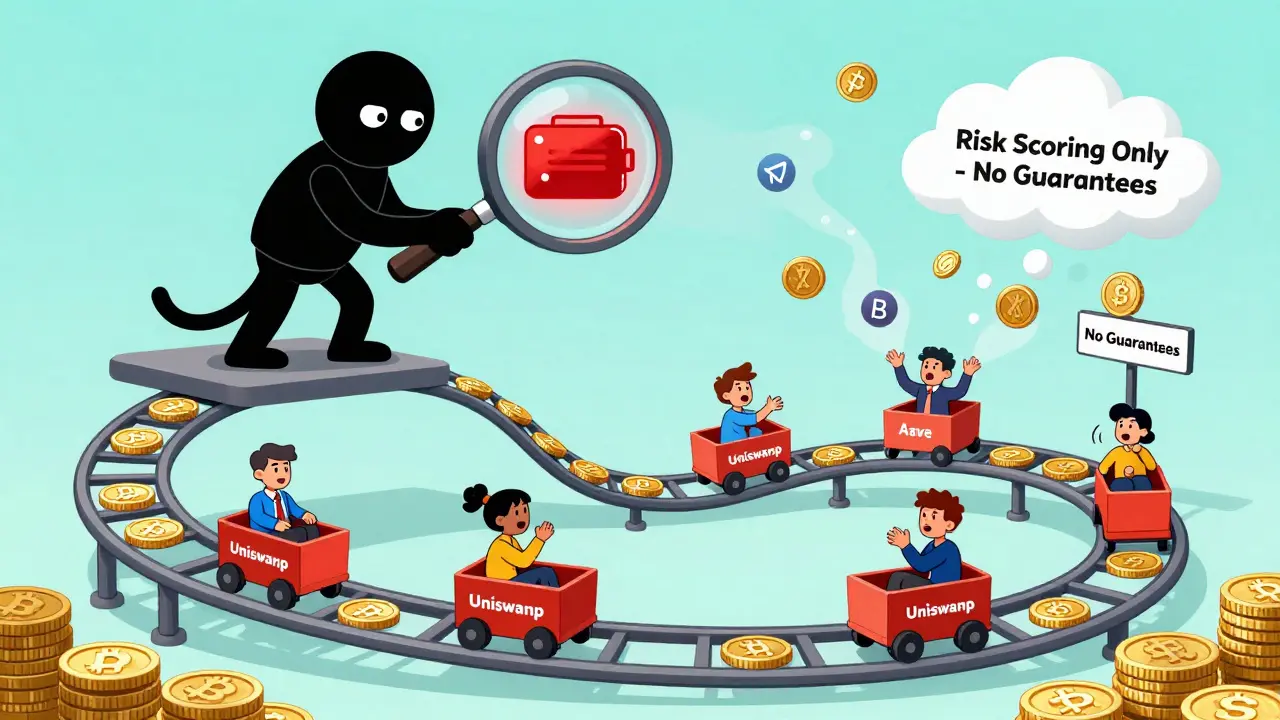
DeFi is even messier. When you swap tokens on Uniswap or provide liquidity on Aave, you don’t know who you’re trading with. OFAC says you still need to screen. But how? You can’t block every liquidity pool. Many firms now use “risk scoring” - flagging transactions that pass through known sanctioned addresses, even if the final recipient is unknown.
Still, 73% of firms say DeFi screening is their biggest compliance gap. The technology isn’t there yet. But OFAC won’t wait for it.
How OFAC compares to the rest of the world
OFAC is the toughest. The EU’s 6AMLD says you need “reasonable measures” to comply. If you try, you might avoid punishment. OFAC doesn’t care if you tried. If you failed, you’re guilty.
The UK’s OFSI has issued only three crypto enforcement actions since 2018. OFAC has issued 17. Singapore has five. The U.S. is leading - and pushing others to follow.
Even the FATF’s Travel Rule - which requires sharing sender and receiver info for transactions over $1,000 - doesn’t match OFAC’s reach. OFAC applies to every transaction, no matter the size, if it involves a sanctioned address.
And OFAC doesn’t stop at one company. In August 2025, they sanctioned Garantex Europe OU - and then six more companies linked to it, including its successor, Grinex. This is “network sanctions.” They’re going after the whole ecosystem. If you’re helping a sanctioned entity, even indirectly, you’re next.
What happens if you ignore this
ShapeShift paid $750,000. Garantex got blacklisted. Their executives are now blocked from the U.S. financial system. Their names are on a global sanctions list. That’s not a fine. That’s a death sentence for a crypto business.
And it’s not just fines. OFAC can freeze your U.S. bank accounts. Block your access to payment processors like Stripe or PayPal. Prevent you from hiring U.S. talent. Make it impossible to raise capital from U.S. investors.
The message is clear: compliance isn’t a cost. It’s survival.
Where things are headed
OFAC just launched a new Digital Asset Sanctions Task Force with 35 specialists. The Treasury’s 2026 budget requests $28 million - up 40% from last year - just for crypto enforcement.
On-chain solutions are coming. Ethereum proposed EIP-7594, a way to build sanctions checks directly into the blockchain. But the community pushed back hard. Over 1,200 comments on the AllCoreDevs call called it a threat to decentralization.
Meanwhile, Gartner predicts the crypto compliance market will hit $1.8 billion by 2026. Only 17 out of 124 wallet apps have built-in screening. Most users are unprotected. But the industry is catching up. Binance’s system screens 1.2 million transactions daily with 99.98% accuracy. JPMorgan now screens 2.3 million daily.
By 2027, Forrester says 65% of all crypto transactions will be screened in real time. That’s up from 38% today. The shift isn’t coming. It’s already here.
Start now - or risk everything
There’s no grace period. No warning. If you’re processing crypto transactions and have any link to the U.S., you’re already under OFAC’s jurisdiction.
Don’t wait for a subpoena. Don’t wait for a fine. Start with a risk assessment. Pick a blockchain analytics tool. Train your team. Build your program. It will cost you $150,000 to $2 million a year. But not doing it? That could cost you your business.
The technology exists. The rules are clear. The penalties are real. Ignorance is no longer an excuse.
Do OFAC sanctions apply to decentralized exchanges (DEXs)?
Yes. If a U.S. person uses a DEX, or if the DEX has any U.S.-based team, infrastructure, or funding, OFAC considers it under its jurisdiction. You can’t hide behind decentralization. OFAC expects you to screen transactions, even if you don’t know the counterparty. This means using blockchain analytics to flag addresses linked to sanctioned wallets - even in liquidity pools or automated market makers.
What happens if I accidentally process a transaction with a sanctioned address?
OFAC doesn’t require intent. If you process a transaction involving a wallet on the SDN List, you’re in violation - even if it was a mistake. Your responsibility is to have systems in place to prevent it. If you do, and you report the error immediately, OFAC may reduce penalties. But if you had no screening tools, no training, and no documentation? Expect a fine.
Can I use free blockchain explorers to check wallets?
No. Free tools like Etherscan or Blockchain.com don’t update in real time against OFAC’s SDN List. They show transaction history, but not sanctions status. OFAC requires automated, real-time screening against the official list. Using free tools won’t protect you - and could make your compliance program look negligent.
Do I need to screen every single transaction?
Yes. OFAC’s guidance applies to all transactions, regardless of size. Even $1 transfers to a sanctioned wallet are violations. This is why automated screening is non-negotiable. Manual checks are impossible at scale. Most firms use risk-based thresholds - flagging high-risk chains or wallet types - but still screen everything.
What if I’m not a U.S. company?
If you serve U.S. customers, accept U.S. dollars, use U.S.-based payment processors, or have any U.S. employees or investors, OFAC has jurisdiction. It doesn’t matter where you’re headquartered. If your business touches the U.S. financial system, you’re covered. Many non-U.S. exchanges now screen all users globally - not just Americans - to avoid risk.
How often does OFAC update the SDN List with crypto addresses?
OFAC updates the list continuously. In Q2 2025 alone, they added 37 new cryptocurrency addresses. The full list has over 1,247 crypto-related entries as of October 2025. Your screening tool must update daily. Waiting weekly or monthly puts you at high risk.
Can I get a license to transact with sanctioned addresses?
Yes - but only in rare cases. You can apply for a specific license from OFAC if you have a legitimate reason, like returning funds to a victim of fraud. But these licenses are hard to get, take months to process, and require full disclosure. Most businesses don’t apply. They just block the addresses.
What’s the biggest mistake crypto businesses make?
Thinking compliance is just about KYC. Many firms focus on verifying user identities but ignore wallet screening. You can have perfect KYC and still be violating OFAC rules if you’re sending crypto to a sanctioned address. The biggest failure? Not connecting your onboarding system with blockchain analytics tools.

7 Comments
Daniel Verreault
Man, this whole OFAC thing is insane. You got some startup in Bangalore running a DEX and suddenly you’re on the hook because some guy in Russia sent 0.001 ETH through your liquidity pool? No intent, no warning, just boom-you’re fined. It’s like being guilty of being near a crime scene. I get the need for control, but this is digital McCarthyism.
Alison Hall
Start with the risk assessment. Seriously. Just do it. Today.
Jacky Baltes
The idea that compliance is survival isn't hyperbole-it's arithmetic. Every dollar spent on screening is a dollar saved from being erased by a federal penalty. The real tragedy isn't the cost of Chainalysis-it's the companies that never made it past the 'we'll get to it tomorrow' phase. They don't vanish with a bang. They fade out quietly, one blocked wire transfer at a time.
Prateek Chitransh
Ah yes, the classic 'block privacy coins' solution. Because nothing says 'decentralized finance' like turning your platform into a gated community where only the well-behaved wallets can enter. Meanwhile, the real criminals? They're using mixers, bridges, and chain-hopping like it's a video game. You're not stopping crime-you're just making life harder for honest users who don't want their transactions tracked like a GPS leash.
christopher charles
I’ve seen so many teams think, 'We’ll just use Etherscan'... bro. No. Just... no. Etherscan doesn’t know what OFAC is. It’s like using Google Maps to navigate a war zone. You need real-time, automated, SDN-list-synced tools. And yes, it’s expensive-but so is your reputation. I’ve watched three small exchanges die because they thought they could wing it. Don’t be the next one.
Vernon Hughes
The fact that OFAC can sanction a company and then six others connected to it is terrifying. It’s not about individual guilt anymore. It’s about guilt by association. If your dev used to work at Garantex? You’re now under scrutiny. If your investor’s cousin knows someone who invested in a sanctioned exchange? You’re on the list. This isn’t regulation. It’s digital feudalism.
Michelle Slayden
The ethical imperative here transcends legal compliance. The preservation of financial sovereignty, even within the constraints of transnational regulatory frameworks, demands rigorous, transparent, and technologically robust safeguards. To neglect this is not merely to risk fines-it is to abdicate the fiduciary responsibility owed to users who place trust in decentralized systems. The technology exists. The moral obligation is clear. The time for deliberation has expired.