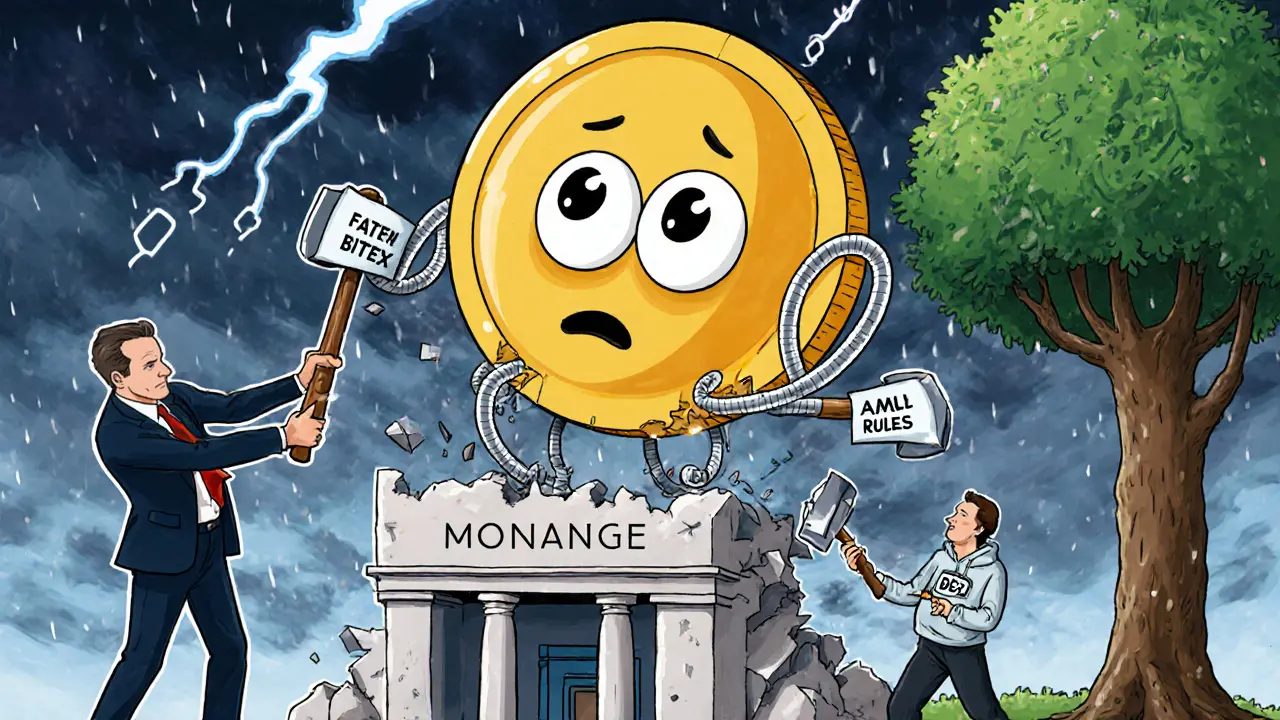
Privacy coins were once seen as the ultimate expression of financial freedom in the crypto world. With Monero and Zcash leading the charge, they promised transactions that couldn’t be traced, amounts that couldn’t be seen, and identities that couldn’t be linked. But as of 2025, that dream is colliding head-on with global regulation. The question isn’t whether privacy coins will disappear-it’s how they’ll survive.
What Exactly Are Privacy Coins?
Privacy coins are cryptocurrencies built to hide transaction details. Unlike Bitcoin, where every transfer is visible on a public ledger, privacy coins scramble sender, receiver, and amount data using advanced cryptography. Monero uses ring signatures, stealth addresses, and confidential transactions to make every single transaction private by default. Zcash, on the other hand, offers optional privacy through zk-SNARKs-users can choose between shielded (private) and transparent (public) transactions.
These aren’t just theoretical features. In 2024, activists in Hong Kong used Monero to receive donations without exposing donors to retaliation. Ukrainian NGOs relied on it to send aid during the conflict, knowing traditional crypto would reveal their network. For users in authoritarian regimes or high-risk professions, this isn’t about hiding crime-it’s about survival.
Why Are Regulators Targeting Privacy Coins?
Regulators don’t hate privacy. They hate untraceable money. By 2025, 97 countries have updated their rules to target privacy coins, mostly under pressure from the Financial Action Task Force (FATF). The core complaint? Privacy coins make it harder to track money laundering, ransomware payments, and darknet market activity.
But here’s the twist: privacy coins account for only 0.34% of all cryptocurrency transaction volume, according to Chainalysis. Yet they’re involved in 38% of enforcement actions. That’s not proportionate-it’s targeted. The U.S. Treasury’s FinCEN reported that privacy coins impeded investigations in 92% of crypto-related crime cases. That statistic drives policy, even if the actual risk is small compared to the scale of the market.
Exchanges are feeling the heat. Kraken delisted Monero in 2023. Bittrex followed. Even Zcash, with its optional privacy, lost listings in Australia, South Korea, and Japan. By Q2 2025, only 12 major exchanges still offered Monero trading. The message is clear: if you can’t prove you’re complying with AML rules, you’re out.
Monero vs. Zcash: Two Paths, One Crisis
Monero and Zcash are taking opposite approaches-and it’s shaping their futures.
Monero refuses to compromise. Its privacy is mandatory, built into every transaction. That’s why it’s the top choice for users who need real anonymity. But it’s also why exchanges keep dropping it. Its blockchain is huge-175 GB as of March 2025-making it harder to run full nodes. And despite community efforts like the proposed “Regulatory Node Clusters,” Monero hasn’t built in any backdoors for authorities. That’s a dealbreaker for regulators.
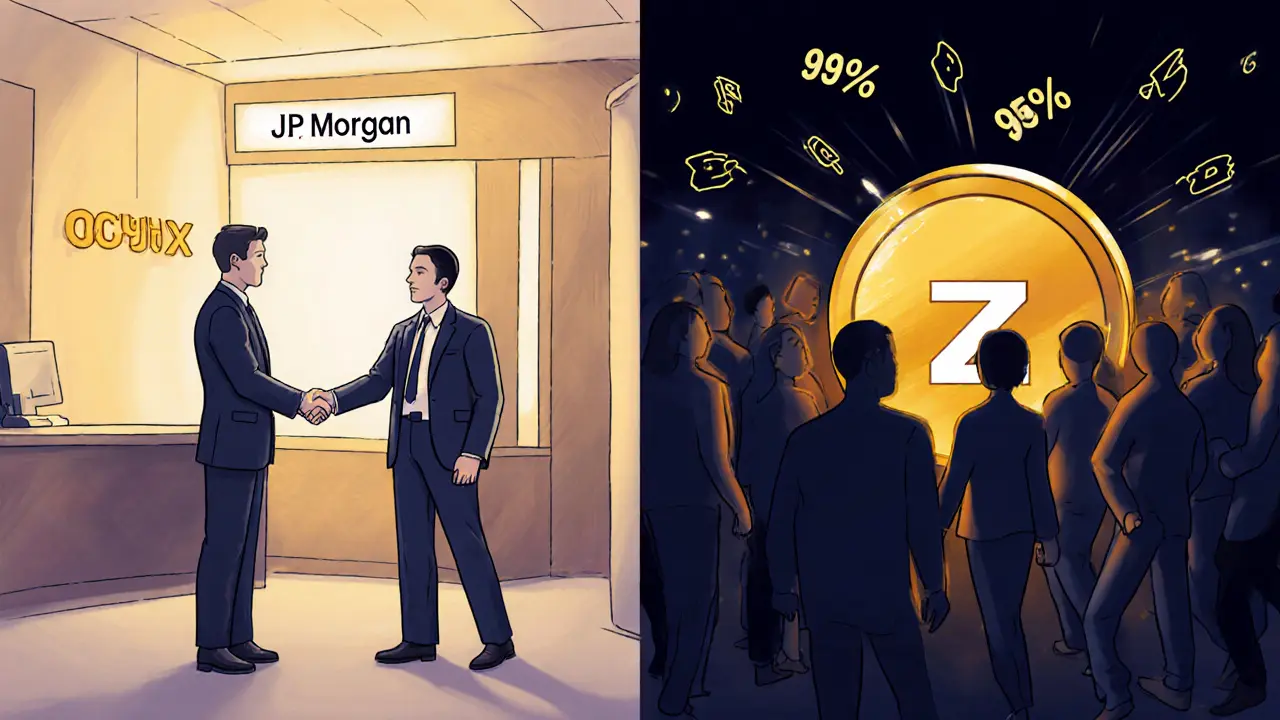
Zcash, by contrast, was designed with compliance in mind. Its viewing keys let authorities or auditors peek at shielded transactions if given permission. In 2024, JP Morgan’s Onyx blockchain started using Zcash Enterprise for institutional settlements. That’s huge. It’s the first time a major bank has adopted a privacy coin for real business use.
But Zcash’s flexibility comes at a cost. Shielded transactions use 40% more computing power than Monero’s, slowing things down to 15 transactions per second. And here’s the irony: less than 5% of Zcash users ever enable viewing keys. The feature exists, but nobody uses it. So while Zcash looks compliant on paper, in practice, it’s still as private as Monero for most people.
The Regulatory Tightrope: What’s Changing in 2025?
The biggest shift came with the EU’s MiCA Phase 2 rules, set to take effect in 2027. They’ll ban anonymous crypto wallets entirely. That means no Monero on EU exchanges. No Zcash shielded transactions either-unless they’re linked to KYC identities.
Switzerland is the exception. In January 2025, it launched the “Privacy Coin Sandbox,” a legal testing ground for privacy-enhancing technologies. Monero and Zcash foundations are both participating. The goal? Prove that privacy and compliance can coexist. Early tests show zero-knowledge proofs can verify a transaction is legitimate without revealing who sent it or how much was sent. That’s the holy grail.
But adoption is slow. Only 18% of privacy-focused platforms have implemented automated risk-scoring tools for wallet addresses. Compare that to 89% of non-private exchanges. The gap isn’t just technical-it’s cultural. Many privacy coin developers see regulation as an enemy, not a challenge to solve.
Who’s Still Using Privacy Coins?
The user base is shrinking, but it’s not disappearing. As of Q1 2025, total market cap for privacy coins fell to $3.8 billion-down 41% from 2023. Daily trading volume dropped from $492 million to $187 million.
But usage is polarizing. 68% of active users live in jurisdictions that don’t ban privacy coins: Switzerland, Singapore, parts of Latin America, and decentralized organizations. The rest? They’re using decentralized exchanges like Haveno or AtomicDEX to swap Monero or Zcash without KYC. Fees are higher-2.5% to 4.1%-but they’re the only option left.
Users are also changing. A 2025 Monero survey found 58% hold computer science degrees. 22% are journalists, activists, or whistleblowers. This isn’t a crowd of criminals. It’s a group of people who know how to protect themselves-and refuse to give up that right.

Can Privacy Coins Adapt?
The future isn’t binary. It’s not “privacy coins die” or “privacy coins win.” It’s about adaptation.
Monero’s path is clear: retreat into decentralized infrastructure. It’s already happening. Most trading now happens on DEXs, peer-to-peer platforms, and atomic swaps. Its market share among privacy coins remains at 54%, but its reach is narrowing. By 2027, Bernstein analysts predict Monero will be used mostly on darknet markets-65% of its current usage.
Zcash’s path is riskier but more promising. If its “Canopy+ Compliance Module” gains traction, it could become the privacy coin for institutions. Enterprise adoption is still tiny-only 12 Fortune 500 companies tested it in 2024-but the trend is upward. If banks start using it for confidential payroll or supply chain payments, regulators may have no choice but to accept it.
The real wildcard? New privacy tech. Projects are now experimenting with “selective disclosure” systems that let users prove they’re not laundering money without revealing identities. Imagine a zero-knowledge proof that says: “This transaction is clean,” without saying who sent it. That’s not science fiction-it’s being tested in Switzerland right now.
What Should You Do?
If you’re a user: know your risks. If you live in the EU, U.S., or Australia, holding Monero or Zcash on an exchange is becoming dangerous. Move to non-custodial wallets. Learn how to use SPV wallets like Cake Wallet or ZecWallet. But understand that even those can be blocked if regulators pressure wallet providers.
If you’re an investor: don’t bet on Monero’s survival in regulated markets. It’s a hedge, not a growth asset. Zcash has more upside-if it can get institutions on board. Watch for partnerships with banks or fintech firms. That’s the signal to watch.
If you’re a developer: build tools that make privacy easier. The average user takes 11.3 hours to complete their first private transaction. That’s too long. Simplify wallet setup. Create guides. Lower the barrier. The future belongs to those who make privacy usable, not just powerful.
Final Reality Check
Privacy coins aren’t going away. But their role is changing. They’re no longer mainstream financial tools. They’re becoming tools for resistance, for confidentiality in hostile environments, and for niche enterprise use.
The era of privacy coins as easy-to-use, exchange-listed assets is over. The next decade will belong to those who can prove that privacy doesn’t mean lawlessness-and that you can protect identity without hiding crime.
That’s the real challenge. Not technology. Not money. But trust.
Are privacy coins illegal?
No, privacy coins are not illegal in most countries-but their use is heavily restricted. Japan, South Korea, and Australia ban exchange listings. The EU will ban anonymous wallets entirely in 2027. In the U.S., holding privacy coins is legal, but exchanges must comply with KYC rules, making it harder to trade them. The coins themselves aren’t banned, but access to them is being cut off through regulation.
Can I still buy Monero or Zcash in 2025?
Yes, but not easily on major exchanges. Most U.S. and European platforms no longer list Monero. Zcash is still available on a few, like Kraken and Bitfinex, but with heavy restrictions. Your best bet is decentralized exchanges like Haveno (for Monero) or Uniswap (for Zcash), or peer-to-peer services like LocalMonero. Expect higher fees and slower transactions.
Why is Monero’s blockchain so big?
Monero’s blockchain is 175 GB as of March 2025 because every transaction includes ring signatures and stealth addresses, which add extra data to hide origins and amounts. This makes it private-but also large. Zcash, with optional privacy, only adds this data when users choose shielded transactions, keeping its chain at 65 GB. Running a full Monero node requires at least 8 GB of RAM and significant storage.
Is Zcash truly private?
Only if you use shielded transactions. Most users don’t. By default, Zcash works like Bitcoin-public and traceable. Even when shielded, the viewing key feature means authorities can request access. So while Zcash offers privacy, it’s not absolute. Monero is more private because it’s private by default, with no opt-out.
What’s the future of privacy coins in 2030?
By 2030, privacy coins will likely exist in two forms: one for underground use (Monero-style), and one for regulated enterprise (Zcash-style). Fully private coins will survive on decentralized networks, used by activists, journalists, and those in repressive regimes. Coins with compliance features may be adopted by banks and institutions for confidential transactions. The majority of users will be technical or high-risk individuals-not casual investors.

10 Comments
Wilma Inmenzo
Of course they're targeting privacy coins... because the government can't control what they can't see. 😏 Next they'll ban encryption, then silence, then THOUGHT. We're one step away from mandatory facial recognition in your shower. Monero isn't illegal-it's a constitutional right wrapped in crypto. They fear what they can't track. And guess what? That's the point.
priyanka subbaraj
They call it ‘compliance.’ I call it control. 🚫
George Kakosouris
Let’s cut through the noise: privacy coins are a regulatory arbitrage play. Monero’s 175GB blockchain is a scalability nightmare-no node operator in 2025 wants to sync that. Zcash’s zk-SNARKs are computationally expensive, and the 5% usage of viewing keys is a performative compliance theater. Institutional adoption? A mirage. JP Morgan’s Onyx is a sandbox, not a scale. Real volume? 0.34%. Regulatory focus? Disproportionate. This isn’t about crime-it’s about power consolidation. And the market’s pricing it accordingly: -41% since 2023. The only question is whether Monero becomes a black-market relic or a DAO-backed resistance token. My bet? Both.
Tony spart
So let me get this straight-we’re gonna let some crypto bros hide money from the feds? Nah. If you ain’t got nothing to hide, why you need stealth addresses? This ain’t freedom, it’s felony prep. America don’t need no crypto anarchists. We got laws for a reason. And if you can’t follow ‘em, go live in Switzerland. 🇺🇸
Mark Adelmann
Hey everyone-just wanted to say if you're new to privacy coins, don't panic. It's not about giving up. It's about adapting. Use non-custodial wallets like Cake Wallet or ZecWallet. Learn how to do atomic swaps. It’s a little more work, sure-but you’re keeping your rights. And honestly? The community’s gotten way better at guides and tutorials. I’ve seen new users go from confused to confident in under 3 hours. You got this. 💪 And if you ever need help setting up a wallet, just ask-I’m happy to walk you through it.
SHASHI SHEKHAR
Broooooo 😍 let me tell you something about Zcash’s viewing keys-this is the real genius move! 🤯 Imagine a world where you can prove you’re clean without revealing your identity-like a digital notary that whispers ‘this transaction is legit’ to regulators but screams ‘none of your business’ to everyone else. That’s zero-knowledge proof magic! And guess what? Switzerland’s sandbox is already testing it with real-world data! 🇨🇭✨ The future isn’t ‘privacy vs compliance’-it’s ‘privacy WITH compliance’-and Zcash is leading the charge. Monero? Still the underground queen. But Zcash? She’s wearing a suit now. 👔👑 And honestly? I’m rooting for both. 🙌
Vijay Kumar
You’re all delusional. Privacy isn’t a right-it’s a privilege for criminals. Stop romanticizing anonymity.
Vance Ashby
Monero's blockchain size is a feature, not a bug. You want efficiency? Use Bitcoin. You want privacy? Deal with the bloat. Also, 'Regulatory Node Clusters'? Cute. They're not fooling anyone. :P
Grace Zelda
They say privacy coins are for criminals-but then why are journalists, activists, and whistleblowers the top users? You don’t need to be a criminal to live under surveillance. You just need to be alive. The real crime is pretending that transparency equals safety. If you can’t see the difference between privacy and secrecy, you’re part of the problem. 🤷♀️
Sierra Myers
Zcash is just Monero with a corporate veneer. If you need a viewing key to feel safe, you shouldn't be in crypto at all. 😒