
Imagine you buy a bag of spinach at the grocery store. If an E. coli outbreak hits, how long do you think it takes to figure out which farm it came from? Before blockchain entered the picture, Walmart spent nearly seven days manually tracing mangoes back to their source. Today, thanks to IBM Food Trust, that same trace takes just 2.2 seconds. That is not just a speed bump; it is a complete overhaul of how we trust what we consume and use.
You might wonder why this matters if your products aren't food. It matters because every physical item-your smartphone, your car parts, your luxury handbag-moves through a messy web of suppliers, shippers, warehouses, and retailers. Traditional systems are siloed. Everyone keeps their own spreadsheet, and reconciling them is a nightmare. Blockchain solves this by creating a single, shared truth that no one can secretly edit after the fact.
The Core Mechanism: Immutable Ledgers and Smart Contracts
At its heart, blockchain is a decentralized digital ledger. Unlike a standard database where an administrator can change records, blockchain stores data in blocks linked together using cryptography. Once a block is added, it cannot be altered without changing every subsequent block, which requires network consensus. This tamper-evident nature is crucial for supply chains where multiple parties don't necessarily trust each other.
But storing data isn't enough. The real magic happens with smart contracts. These are self-executing codes stored on the blockchain that trigger actions when specific conditions are met. For example, a smart contract could automatically release payment to a supplier once a shipment is verified as delivered via GPS data. Or, it could flag a pharmaceutical shipment as compromised if temperature sensors report readings outside a safe range for more than ten minutes. This automation removes human error and delays from the verification process.
Integrating Physical Reality with Digital Records
A common criticism of early blockchain projects was the "garbage in, garbage out" problem. If someone lied about the origin of a diamond, the blockchain would immutably record that lie. To fix this, modern implementations rely heavily on Internet of Things (IoT) devices. Sensors attached to containers or products capture real-world data-location, temperature, humidity, shock-and write it directly to the blockchain. Because these devices often have secure hardware modules, spoofing the data becomes significantly harder.
This integration creates a digital twin of the physical product. When you scan a QR code on a package, you aren't just seeing a marketing blurb; you're accessing a verifiable history of that specific item's journey. Companies like Kaleido provide platforms that make connecting these IoT streams to enterprise blockchains easier, allowing businesses to see exactly where their inventory sits in real time.
Why Traditional Systems Fall Short
Before blockchain, supply chain visibility relied on Electronic Data Interchange (EDI) and proprietary ERP systems. While tools like SAP S/4HANA manage internal operations well, they struggle to share data seamlessly across different companies. Each partner uses different formats, different timelines, and different definitions of "delivered." Reconciling these discrepancies often takes weeks.
| Feature | Traditional ERP/Database | Blockchain Solution |
|---|---|---|
| Data Integrity | Centralized admin can alter records | Immutable, cryptographically secured |
| Traceability Speed | Days to weeks (manual reconciliation) | Seconds to minutes (automated query) |
| Trust Model | Relies on legal contracts and audits | Mathematical proof and consensus |
| Integration Cost | High per-pair integration costs | Standardized API access for all nodes |
Blockchain shifts the trust model from institutional to mathematical. You don't need to trust your supplier's word; you verify the transaction hash. However, this doesn't mean blockchain replaces ERPs entirely. Most successful deployments use blockchain as a layer on top of existing systems, syncing critical milestones rather than replacing day-to-day operational databases.
Real-World Impact: From Mangoes to Diamonds
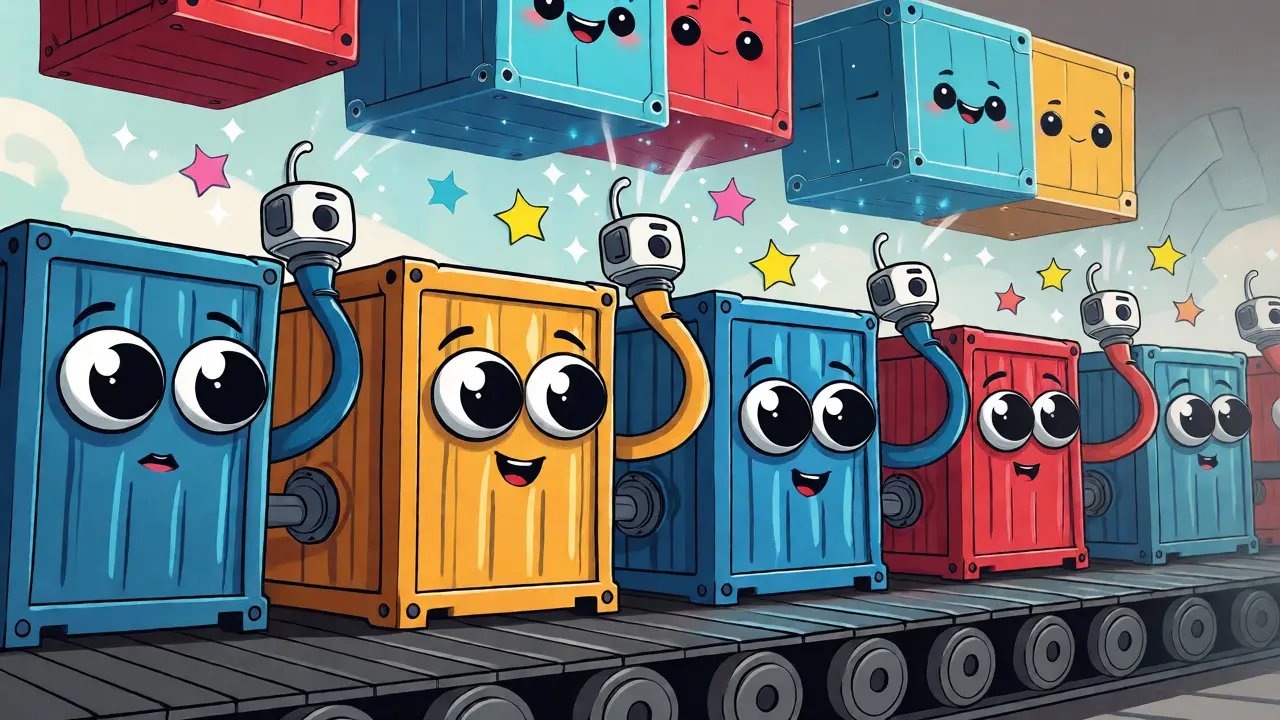
The most famous case remains Walmart’s partnership with IBM. By mandating that leafy green suppliers join the network, they reduced the time to trace produce origins from six to seven days down to mere seconds. This capability allowed them to remove affected products from shelves instantly during outbreaks, saving millions in wasted inventory and protecting brand reputation.
In the luxury goods sector, Everledger uses blockchain to track diamonds. Their system created digital identities for stones, recording cut, clarity, and provenance. According to their impact reports, this transparency helped reduce counterfeit goods in tracked supply chains by up to 98%. Similarly, in pharmaceuticals, the MediLedger Network helps companies comply with the U.S. Drug Supply Chain Security Act (DSCSA). By verifying the saleable status of drugs electronically, members achieved 99.8% compliance rates compared to 87% with traditional manual checks.
Challenges and Implementation Pitfalls
Despite the hype, blockchain isn't a silver bullet. Gartner analysts warn that poor ecosystem participation kills many initiatives. If only half your suppliers join the network, you still have gaps in visibility. Onboarding legacy suppliers who lack digital infrastructure is a major hurdle. Some projects face delays because older partners resist sharing data due to competitive concerns or technical limitations.
Privacy is another tightrope walk. Competitors don't want to reveal their pricing or volume to rivals on the same public ledger. Permissioned blockchains address this by restricting access to authorized participants and using techniques like zero-knowledge proofs, which allow verification of data without revealing the underlying details. Additionally, interoperability remains a challenge. With dozens of protocols like Hyperledger Fabric, Ethereum Enterprise, and Corda competing, getting different networks to talk to each other is still complex.
The Future: AI and Tokenization
We are moving beyond simple tracking. The next wave involves integrating Artificial Intelligence with blockchain data. Since blockchain provides clean, standardized historical data, AI models can better predict disruptions, optimize routes, and forecast demand. Deloitte predicts that by 2026, nearly 70% of enterprise blockchain supply chain implementations will incorporate AI analytics.
Tokenization is also gaining traction. This involves creating digital tokens representing physical assets. Imagine buying a fraction of a rare wine collection or a piece of industrial machinery, with ownership rights recorded on the blockchain. This increases liquidity and allows for fractional ownership of high-value goods, transforming how assets are traded and financed within the supply chain.
Frequently Asked Questions
Does blockchain replace my current ERP system?
No, blockchain typically complements rather than replaces ERP systems. Your ERP handles internal operations like invoicing and inventory management, while blockchain manages cross-company transactions and external verification. They usually integrate via APIs to sync key milestone data.
Is blockchain tracking expensive to implement?
Initial setup costs for enterprise solutions can range from $500,000 to $2 million, depending on complexity. However, costs are decreasing with cloud-based Blockchain-as-a-Service (BaaS) providers. The ROI often comes from reduced fraud, faster dispute resolution, and improved regulatory compliance.
Can consumers really see the entire product journey?
Yes, but it depends on the company's disclosure policy. Many brands offer consumer-facing apps where scanning a QR code reveals key milestones like origin, manufacturing date, and shipping path. Not all internal logistics data is made public to protect competitive advantages.
What happens if a sensor breaks or sends bad data?
The blockchain records whatever data is sent. If a sensor fails, the record shows the anomaly. Advanced systems use AI to detect outliers and may require manual verification or secondary sensor confirmation before triggering smart contract actions, ensuring that faulty hardware doesn't automatically invalidate a shipment.
Which industries benefit most from blockchain tracking?
Industries with high fraud risk, strict regulations, or complex multi-tier supply chains benefit most. This includes pharmaceuticals, luxury goods, food and beverage, aerospace, and electronics. Simple, vertically integrated local supply chains may not see significant benefits.
