
Imagine waking up to find your digital wallet holding two different versions of the same coin. That is exactly what happened to millions of crypto holders during the great fork wars of 2017 and 2018. Blockchain forks are not just technical glitches; they are evolutionary leaps that have reshaped the entire cryptocurrency landscape. Whether you are a long-time holder or a curious newcomer, understanding these splits helps explain why some coins survived while others vanished into obscurity. This guide breaks down the most impactful forks in history, from the controversial Ethereum DAO split to the massive Bitcoin Cash divergence, showing how protocol changes create new realities for investors and developers alike.
What Actually Is a Blockchain Fork?
To understand the drama behind these events, we first need to define the mechanics. A blockchain fork occurs when the underlying rules of a network change. Think of it like a highway splitting into two separate roads. From that point on, traffic flows independently along each path. There are two main types: soft forks and hard forks.
- Soft Forks: These are backward-compatible updates. Old nodes can still talk to new nodes. They usually introduce efficiency improvements without breaking existing rules. Bitcoin's SegWit upgrade is a prime example.
- Hard Forks: These are incompatible changes. To accept the new rules, every node must update its software. If the community cannot agree, the chain splits permanently, creating two distinct cryptocurrencies with their own histories and markets.
The distinction matters because hard forks often signal ideological or technical disagreements within a project's community. When developers and miners push for bigger blocks to handle more transactions, but core developers want to keep the base chain small and rely on layer-two solutions, a hard fork is often the result.
The Bitcoin Scaling Wars: From XT to Cash
No discussion of significant forks is complete without looking at Bitcoin. The original blockchain had a 1MB block size limit set by Satoshi Nakamoto. As adoption grew, this limit became a bottleneck. In late 2014, Mike Hearn and Gavin Andresen proposed Bitcoin XT, which aimed to increase block sizes to 8MB. It gained over 1,000 node deployments but eventually died out as the community sought a more moderate approach.
Then came the real contender: Bitcoin Cash (BCH). On August 1, 2017, at block 478,558, the Bitcoin network split. Led by Roger Ver and Jihan Wu, this fork implemented an immediate 8MB block size increase. The goal was simple: make Bitcoin usable for everyday payments by reducing fees and increasing speed. At its peak in December 2017, BCH became the fourth-largest cryptocurrency by market capitalization, reaching $48.7 billion. However, the excitement faded. By October 2023, its market cap had dropped to around $4.2 billion, illustrating how quickly momentum can shift in the crypto world.
Ethereum’s Dramatic Splits: DAO and The Merge
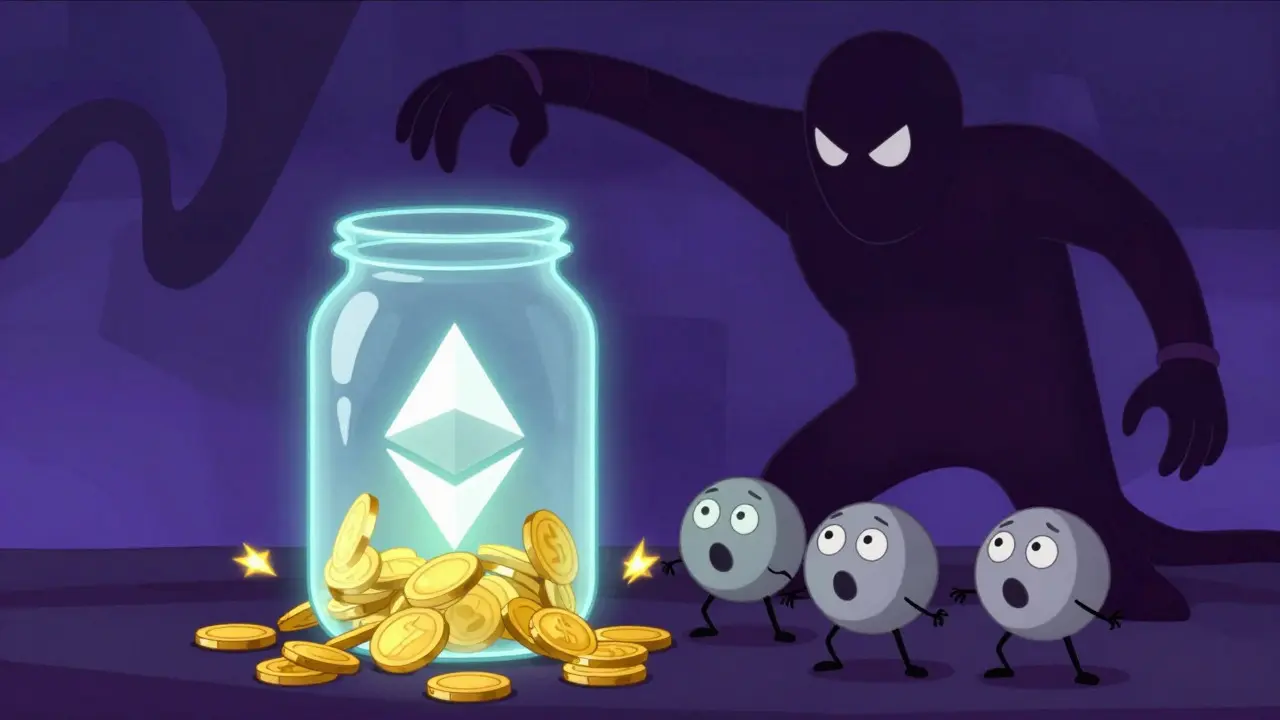
If Bitcoin’s forks were about scaling, Ethereum’s were about philosophy and survival. The most famous incident was The DAO Hack in June 2016, where hackers drained 3.6 million ETH (about $50 million) from a decentralized autonomous organization. The Ethereum community faced a dilemma: trust the code as immutable, or reverse the hack to protect users?
They chose to reverse it. On July 20, 2016, the network executed a hard fork known as EIP-779. About 90% of hash power supported the rollback, creating the new Ethereum (ETH) chain. The remaining 10% rejected the rollback, continuing to mine the original chain, now called Ethereum Classic (ETC). This wasn't just a technical event; it was a philosophical schism between "code is law" purists and pragmatic user-protection advocates. ETC has since maintained a stable presence, often ranking between the 15th and 30th largest cryptocurrencies.
Fast forward to September 15, 2022, and we see another monumental fork: The Merge. This was not a split into two chains but a transition from Proof-of-Work to Proof-of-Stake. It reduced energy consumption by 99.95%, marking a new era for Ethereum’s sustainability and scalability.
Other Notable Forks and Their Impact
Beyond the giants, several other forks left lasting marks on the industry. Litecoin, which forked from Bitcoin in October 2011, is arguably the most successful fork in terms of longevity. With a faster block time and different hashing algorithm, it carved out a niche as "digital silver" to Bitcoin's "gold." It remains a top-20 cryptocurrency today.
There was also Bitcoin Gold (BTG), launched in October 2017, which changed the mining algorithm to Equihash to allow GPU mining instead of specialized ASICs. While it didn't achieve the same height as BCH, it demonstrated the community's desire for decentralization in mining. Later, in 2018, Bitcoin Cash itself forked to create Bitcoin SV (BSV), championed by Craig Wright, further fragmenting the Bitcoin ecosystem.
| Fork Name | Date | Type | Primary Reason | Current Status |
|---|---|---|---|---|
| Bitcoin Cash (BCH) | Aug 2017 | Hard Fork | Increase block size to 8MB for lower fees | Active, Top 30 Crypto |
| Ethereum Classic (ETC) | Jul 2016 | Hard Fork | Rejection of DAO hack reversal | Active, Stable Market Cap |
| Segregated Witness (SegWit) | Aug 2017 | Soft Fork | Optimize transaction data structure | Integrated into Bitcoin Core |
| The Merge | Sep 2022 | Protocol Upgrade | Transition to Proof-of-Stake | Completed, Standard on Ethereum |
| Litecoin (LTC) | Oct 2011 | Hard Fork | Faster blocks, different hash algorithm | Active, Top 20 Crypto |
Risks and Rewards for Users
Forks aren't just abstract concepts; they directly affect your wallet. During the 2017 Bitcoin Cash fork, many users found themselves with duplicate assets. One Reddit user reported claiming 1 BTC = 1 BCH = 1 BTG, turning a $3,000 investment into over $15,000 in value during the bull run. However, it wasn't all free money. Replay attacks occurred, where transactions on one chain could be copied to the other, leading to accidental double-spends. Some users lost funds due to lack of awareness or outdated wallet software.
For Ethereum users, the DAO fork caused confusion as wallets struggled to separate ETH and ETC holdings. Support tickets for "lost funds" spiked by 400% in the weeks following the split. This highlights a critical lesson: always check if your wallet supports the latest forks before major events occur. Modern wallets have largely solved these issues, but the historical context explains why security and updates remain paramount.
What the Future Holds for Blockchain Evolution
The nature of forks is changing. Early forks were often contentious splits driven by ideological differences. Today, forks are increasingly coordinated upgrades designed to improve functionality without breaking consensus. Ethereum’s Shanghai upgrade in April 2023, which enabled staking withdrawals, was a planned hard fork with near-universal support. Similarly, Bitcoin’s Taproot upgrade introduced advanced privacy features through a soft fork, avoiding any chain split entirely.
Analysts predict that future developments will focus less on creating new competing coins and more on interoperability. Cross-chain bridges and multi-chain applications are becoming the norm, allowing different blockchains to communicate rather than compete. However, risks remain. Even planned upgrades can fail, as seen with the initial delay of Ethereum’s Shanghai launch due to client incompatibilities. The key takeaway is that while the frequency of dramatic splits may decrease, the importance of understanding protocol changes only grows as the technology matures.
Do I automatically get new coins when a fork happens?
Usually, yes, but it depends on the type of fork and your wallet. For hard forks that create a new cryptocurrency (like Bitcoin Cash), you typically receive the new coin at the same ratio as your old coin (e.g., 1:1). However, you must ensure your wallet software is updated to claim them. Soft forks generally do not create new coins but modify the existing network's rules.
Which is the most successful blockchain fork in history?
In terms of longevity and current market position, Litecoin is widely considered the most successful fork. Launched in 2011, it has maintained a top-20 ranking for over a decade. Among more recent forks, Bitcoin Cash and Ethereum Classic have also shown remarkable resilience, surviving multiple bear markets and maintaining active development communities.
Why did the Ethereum DAO fork happen?
The DAO fork occurred to reverse a smart contract exploit that drained approximately $50 million worth of ETH from The DAO project. The majority of the community voted to roll back the blockchain to a state before the hack, protecting investor funds. Those who disagreed with the rollback continued on the original chain, which became Ethereum Classic (ETC).
Are hard forks dangerous for my investments?
Hard forks can introduce volatility and technical risks, such as replay attacks or wallet incompatibility. However, they are not inherently dangerous if you stay informed. The primary risk is missing out on new tokens or losing funds due to unupdated software. Always verify wallet compatibility and consider moving large holdings to cold storage during major fork events.
What is the difference between a soft fork and a hard fork?
A soft fork is backward-compatible, meaning older nodes can still validate transactions made by newer nodes. It usually involves tightening rules. A hard fork is not backward-compatible; older nodes cannot validate new transactions unless they update their software. If the community disagrees, the chain splits into two separate networks, each with its own currency.
