
Price charts don’t tell the whole story. If you’ve ever bought a cryptocurrency based on a candlestick pattern, only to watch it drop 30% the next day, you know why. The real signals are hiding in the blockchain itself - in the raw, unchangeable data of who sent what, when, and how much. That’s where on-chain metrics come in. Unlike technical analysis, which guesses future moves from past prices, on-chain analysis looks at what’s actually happening on the network. It’s like reading the heartbeat of a crypto asset instead of just watching its blood pressure fluctuate.
What Exactly Are On-Chain Metrics?
On-chain metrics are numbers pulled directly from public blockchains. Every Bitcoin or Ethereum transaction is permanently recorded. No central authority controls it. No one can delete it. That means anyone can count how many coins moved, who held them, and for how long. These aren’t estimates or surveys. They’re facts baked into the code. The most basic metrics started with Bitcoin. Total daily issuance tells you how many new coins were mined. Transaction count shows how many transfers happened. Daily active addresses reveals how many unique wallets were involved. These sound simple, but they’re powerful. For example, if daily active addresses jump from 500,000 to 1.2 million in a week, that’s not just more traffic - it’s more people using the network. That kind of growth often precedes price moves. But the real insight comes from comparing metrics. Take the Network Value to Transaction ratio (NVT). It’s like the P/E ratio for crypto. You divide the market cap by the daily transaction volume. If NVT is above 100, it usually means the price is high relative to actual usage. In 2021, Bitcoin’s NVT hit 170 - right before a 54% crash. In 2023, when NVT fell below 40, it signaled a market bottom. This isn’t luck. It’s math.Key Metrics You Need to Watch
Not all metrics matter equally. Here are the five that separate serious investors from guessers:- Daily Active Addresses: This measures real usage. Bitcoin hitting 1 million daily active addresses is a sign of strong network health. Ethereum’s threshold is higher - around 2 million - because it handles smart contracts, not just payments.
- Exchange Net Flows: This tracks coins moving to or away from exchanges. When users pull Bitcoin off exchanges and into personal wallets, it’s often a sign they’re holding for the long term. In 2023, outflows of over 15,000 BTC in a single week preceded a 40% price rise within 30 days. The opposite is true too - big inflows mean people are getting ready to sell.
- Market Value to Realized Value (MVRV): This compares current market cap to the total cost basis of all coins. If MVRV is below 1, most coins are underwater - meaning holders are losing money. That’s rare. When Bitcoin’s MVRV hit -2.7 in November 2022, it was the deepest undervaluation since 2015. The price bottomed at $16,800 a week later.
- Spent Output Profit Ratio (SOPR): This tells you whether people are selling at a profit or loss. SOPR above 1 means coins are being sold for more than they were bought. SOPR below 1 means they’re being dumped at a loss. In March 2023, SOPR dropped to 0.89 on Bitcoin - a sign of panic selling. Three weeks later, the market reversed.
- Supply Last Active: This shows how long coins have sat untouched. If 70% of Bitcoin’s supply hasn’t moved in over a year, that’s a sign of strong conviction. In 2024, this number hit 68% - the highest since 2017. Long-term holders aren’t selling. That’s bullish.
Why On-Chain Beats Traditional Analysis
Traditional fundamental analysis looks at team backgrounds, whitepapers, and partnerships. But those can be marketing. On-chain data can’t be faked. You can’t lie about how many coins moved. You can’t fake how long someone held them. Take the 2022 Terra collapse. Off-chain analysts were praising its “innovative algorithm.” On-chain data showed stablecoin withdrawals accelerating for weeks before the crash. The total value locked (TVL) on Terra’s protocol dropped 60% in 10 days. That was the real signal - not the PR. Even technical analysis has blind spots. A rising price with falling transaction volume? That’s a warning. It means fewer people are participating in the rally. That’s exactly what happened with Solana in late 2023. Price surged 200% in two weeks, but daily active addresses stayed flat. The rally was driven by whales moving their own coins - not new buyers. It reversed within days.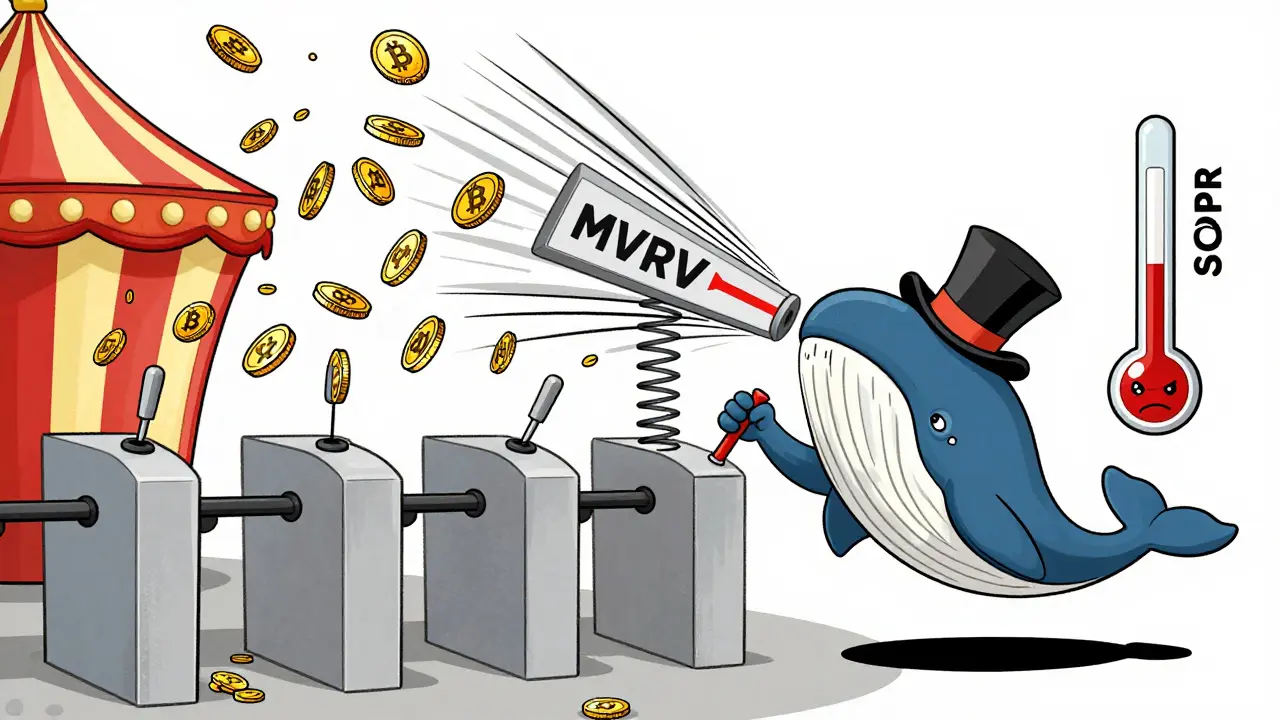
Where On-Chain Analysis Fails
It’s not magic. On-chain data has limits. Privacy coins like Monero and Zcash encrypt transaction details. You can’t track them. That’s the whole point - and it breaks most metrics. Ethereum adds another layer of complexity. A single transaction can trigger dozens of smart contract calls. So counting “transactions” is misleading. In 2023, Ethereum had 1.8 million daily transactions, but only 280,000 unique users. The rest were automated bots. Analysts now look at “effective transaction volume” - the actual economic activity behind the numbers. And then there’s stablecoins. On Ethereum, over 65% of transaction volume comes from USDT and USDC. That’s not real demand for ETH - it’s people using it as a bridge. If you don’t filter that out, you’ll think the network is booming when it’s just liquidity moving.How to Start Using On-Chain Metrics
You don’t need a PhD. Here’s how to begin:- Start with free tools. Use CoinGecko’s on-chain dashboard or Blockchain.com Explorer. They’re basic, but they show daily active addresses and exchange flows.
- Track one metric for 30 days. Pick Daily Active Addresses for Bitcoin. Write down the numbers. See how they move with price. You’ll start seeing patterns.
- Learn the context. A spike in active addresses during a bull market is normal. A spike during a bear market? That’s a red flag. Context changes everything.
- Combine metrics. Don’t rely on one. If active addresses are rising AND exchange outflows are increasing AND SOPR is above 1.1, you’ve got a strong signal.
- Watch for divergence. Price going up but on-chain activity flat or falling? That’s a warning sign. It happened before the 2021 Bitcoin top and again in 2023.

Tools of the Trade
There are dozens of platforms. Here’s what the pros use:- Glassnode: The gold standard for institutions. Their MVRV Z-Score and Realized Weighted Supply are industry benchmarks. Subscription is $1,999/year - steep, but accurate.
- CoinMetrics: Strong on Ethereum and DeFi metrics. Their Total Value Locked (TVL) data is widely cited.
- Chainalysis: Focused on compliance and illicit activity, but their data on wallet behavior is useful for traders too.
- Coinbase Advanced Dashboard: Free, but limited to 180 days of data. Good for beginners, not for deep analysis.
The Bigger Picture
On-chain analysis isn’t just for traders. Regulators use it to track money laundering. Exchanges use it to comply with KYC rules. Even central banks are watching Bitcoin’s supply distribution to understand decentralized finance. The market for blockchain analytics is exploding. It was worth $1.14 billion in 2022. By 2030, it’s expected to hit $39.7 billion. Why? Because the world is moving toward transparent, verifiable systems. Crypto is just the first. The most successful investors don’t rely on one metric. They combine on-chain data with macro trends. In 2023, Bitcoin’s active addresses were rising - but the Fed was hiking rates. Prices fell anyway. On-chain data showed demand, but macro conditions crushed it. That’s why Ark Invest’s model weights on-chain metrics at only 40% of their total valuation.Final Takeaway
On-chain metrics give you the truth. No hype. No PR. Just data. But truth alone isn’t enough. You need to know what it means. A spike in transaction volume could mean adoption - or a rug pull. A drop in SOPR could mean panic - or accumulation. The goal isn’t to predict the next moonshot. It’s to avoid the traps. To know when the crowd is getting greedy. To see when the whales are moving. To understand whether the network is growing - or just spinning its wheels. If you’re serious about crypto, stop staring at candlesticks. Start looking at the chain. The data is there. You just need to learn how to read it.Are on-chain metrics reliable for all cryptocurrencies?
No. On-chain metrics were built for Bitcoin and work best on simple payment blockchains. For Ethereum, Solana, or other smart contract chains, you need different metrics like Total Value Locked (TVL), contract interaction counts, or gas fee trends. Privacy coins like Monero and Zcash are largely invisible to on-chain analysis because transactions are encrypted. Always match the metric to the blockchain’s purpose.
Can I use on-chain data to predict price?
Not directly. On-chain metrics don’t predict price - they reveal behavior. For example, sustained exchange outflows often precede price rallies, but they don’t say when or how much. The best use is to confirm trends, not forecast them. Combine on-chain signals with macro trends (like interest rates or Fed policy) for higher accuracy. Ark Invest’s model improved prediction accuracy from 52% to 78% by adding macro data.
Is on-chain analysis only for professionals?
No. Free tools like CoinGecko and Blockchain.com Explorer give you access to daily active addresses and exchange flows. You don’t need to pay for Glassnode to start. The key is learning one or two metrics deeply. Track Bitcoin’s daily active addresses for a month. See how they move with price. That’s enough to beat 90% of retail traders who only look at charts.
Why does NVT ratio matter so much?
NVT (Network Value to Transaction) compares market cap to daily transaction volume. Think of it as price divided by usage. If NVT is high (above 100), the price is expensive relative to real activity - a sign of speculation. If it’s low (below 40), the network is undervalued. Since 2013, NVT above 150 has preceded 80% of Bitcoin’s major corrections. It’s not perfect, but it’s one of the most consistent warning signs in crypto.
How do I avoid misinterpreting on-chain data?
The biggest mistake is ignoring context. For example, high transaction volume on Ethereum might just be stablecoin transfers - not real demand for ETH. Or, a spike in active addresses could be bots, not humans. Always cross-check: Is volume rising with active addresses? Is SOPR above 1? Are coins leaving exchanges? If only one metric moves, it’s noise. If three align, it’s a signal. Also, avoid using Bitcoin metrics on altcoins. Each chain has its own rules.

9 Comments
Joydeep Malati Das
On-chain metrics offer a refreshing shift from the usual chart-watching circus. I’ve found that tracking daily active addresses over time gives a clearer sense of organic adoption than any RSI ever could. The key is consistency-don’t chase spikes, look for sustained trends. It’s not about timing the market, but understanding the pulse of the network.
Elisabeth Rigo Andrews
Let’s be real-NVT is the only metric that matters. When it hits 170, you’re either a fool or a masochist. The fact that retail still buys at these levels proves the market is a casino rigged by whales. Glassnode’s MVRV Z-score confirmed the 2021 top before the crash-why are people still ignoring institutional-grade data?
Johnny Delirious
As a financial analyst with over two decades of experience in traditional markets, I can confidently assert that on-chain analytics represent the most significant paradigm shift in asset evaluation since the advent of discounted cash flow modeling. The transparency afforded by immutable ledgers eliminates the informational asymmetry that has historically plagued capital allocation decisions. This is not merely an improvement-it is a revolution in financial discovery.
alvin mislang
YOU’RE ALL BEING MANIPULATED. 😡 The Fed’s printing money → stablecoins inflate → fake volume → you think crypto is booming. It’s a Ponzi dressed in blockchain clothes. SOPR is a lie. Exchange outflows? Probably wash trading. They want you to think you’re smart for tracking ‘on-chain’ data… while they drain your wallet. Wake up. 🚨
Kenneth Mclaren
Did you know that 87% of Bitcoin’s supply is held by less than 2% of wallets? And guess who controls those? Central banks. They use crypto to launder fiat. The ‘decentralized’ narrative is a cover. NVT? That’s just a distraction. The real signal is in the wallet clustering patterns-hidden in plain sight. No one talks about this because they’re scared. I’ve seen the reports. The truth is buried under layers of PR. 🕵️♂️
Jack and Christine Smith
ok so i tried tracking active addresses for a week and honestly? i got confused. like one day it went up but price dropped?? then next day it dropped but price went up?? i think i need a flowchart or something. maybe someone can make a meme about this? 🤔
Jackson Storm
Jack, you’re not alone-this stuff is confusing at first. Start with just one metric: daily active addresses on Bitcoin. Watch it for 30 days. Pair it with price. You’ll notice that when active addresses rise *and* price rises, it’s usually healthy. If price rises but addresses stay flat? That’s whales moving their own coins. No new buyers. That’s your red flag. Try it for a month-you’ll be ahead of 90% of traders already.
Raja Oleholeh
India’s crypto adoption is rising fast. Daily addresses up 300% since 2023. No charts needed. Just trust the data. 🇮🇳🔥
prashant choudhari
On-chain analysis is not a crystal ball. It’s a mirror. It reflects behavior, not intent. The real skill is in context. A spike in SOPR during a bull run means profit-taking. During a bear run, it means capitulation. The same number, two different stories. Learn the story behind the number.