
Stablecoin Risk Calculator
Stablecoin Value Risk Assessment
Calculate potential losses if a stablecoin drops below its $1.00 peg. Based on real-world events like the 2022-2023 de-pegging incidents mentioned in the article.
Your Risk Assessment
Based on historical events: USDT dropped to $0.94 in 2022, USDC to $0.85 after SVB collapse, DAI to $0.96 in 2022. Always keep stablecoin exposure below 35% of your portfolio as recommended in the article.
When you trade Bitcoin or Ethereum on a crypto exchange, you’re probably not using dollars, euros, or yen. You’re using stablecoin trading pairs-like BTC/USDT or ETH/USDC. These pairs are the invisible backbone of crypto markets. They let you buy, sell, and hold value without the wild swings of Bitcoin or the delays of bank transfers. But behind their simplicity lies real risk. If you’re trading crypto, you need to understand how these pairs work, why they dominate the market, and what can go wrong.
Why Stablecoin Trading Pairs Rule Crypto Markets
Over 95% of all spot trading volume on major exchanges happens through stablecoin pairs. That’s not a coincidence. It’s because they solve a problem traditional fiat pairs can’t: 24/7 access without banks. Think about it. If you want to trade Bitcoin for USD, you’re stuck waiting for banks to open. Crypto markets never sleep, but banks do. Stablecoins bridge that gap. You can sell Bitcoin at 3 a.m. on a Sunday and instantly hold a digital dollar equivalent-no wire transfers, no weekend delays, no foreign exchange fees. Traders save about 0.5% to 1.2% per trade compared to fiat pairs, according to Coinbase’s 2022 data. The most common stablecoins? USDT (Tether), USDC (USD Coin), and DAI. Together, they make up over 93% of the $165 billion stablecoin market as of late 2023. USDT alone handles nearly 7 out of every 10 trades. Why? Liquidity. On Binance, BTC/USDT has an order book depth of 2.7 BTC within 0.1% of the price. BTC/USDC? Only 1.9 BTC. That difference matters when you’re trying to enter or exit a big position without moving the market.How Stablecoins Stay Stable (And When They Don’t)
Not all stablecoins are built the same. Their stability depends entirely on how they’re backed-and that’s where the risks start. Fiat-backed stablecoins like USDT and USDC claim to hold $1 for every coin in circulation. USDC publishes monthly audits by Grant Thornton. Tether only releases quarterly, unaudited reports. That transparency gap matters. In March 2023, USDC briefly dropped to $0.85 after Silicon Valley Bank collapsed, because part of its reserves were tied up there. Traders saw delays, frozen withdrawals, and panic. USDT held its peg, but only because Tether kept redeeming-even as rumors swirled about its reserves. Crypto-backed stablecoins like DAI are different. They’re over-collateralized. To mint $1 of DAI, you lock up $1.50 to $2 in Ethereum or other crypto. That sounds safe-until the market crashes. When ETH dropped 60% in 2022, DAI briefly de-pegged to $0.96. The system survived, but only because its governance kicked in and raised collateral requirements. It’s a band-aid fix, not a bulletproof system. Then there’s the ghost of UST. Algorithmic stablecoins like TerraUSD didn’t hold reserves at all. They used complex code to maintain the peg by minting and burning tokens. When confidence dropped in May 2022, the whole thing collapsed in 72 hours. $45 billion vanished. Traders with leveraged LUNA/UST positions lost everything. The Federal Reserve called it a “stark reminder” of how fast runs can happen in crypto.The Hidden Risks You Can’t Ignore
Stablecoins feel safe because they’re called “stable.” But they’re not risk-free. Counterparty risk is the big one. When you hold USDT, you’re trusting Tether Limited. When you hold USDC, you’re trusting Circle and its banking partners. If either company fails, or if regulators shut them down, your “dollar” could lose value. In 2023, Binance users reported over 140 incidents where USDT deposits didn’t credit due to blockchain congestion. Coinbase had 83 cases of USDC withdrawals delayed over 24 hours during volatility spikes. De-pegging events happen more often than you think. In 2022 and 2023, USDT traded as low as $0.94 on some exchanges. USDC hit $0.85. DAI dipped below $0.97. These aren’t theoretical risks-they’re real, documented events. Traders who didn’t have stop-losses set at 0.8% below the peg lost money fast. Regulatory pressure is mounting. The U.S. Stablecoin Transparency Act of 2023 would force all trading pairs to use only 100% cash or Treasury-backed reserves. That could kill algorithmic stablecoins like DAI if they can’t meet the standard. Europe’s MiCA rules, effective since June 2024, require daily redemption rights and 100% liquid reserves. That’s expensive. EY estimates it could raise operational costs by 2% annually.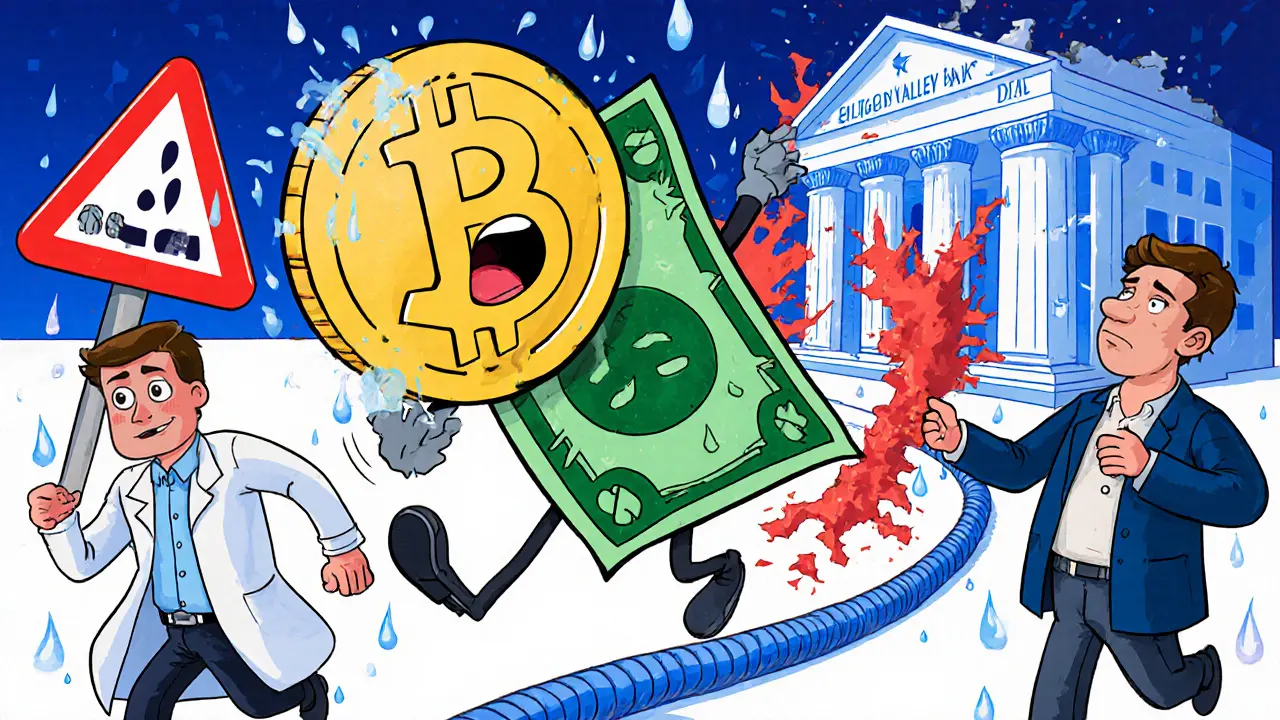
What the Experts Say
J.P. Morgan’s strategist Nikolaos Panigirtzoglou calls stablecoins “a digital, on-chain form of fiat money.” That’s true. They’re the closest thing crypto has to cash. But Federal Reserve Governor Christopher Waller warns they could become “systemic risks.” If a major stablecoin collapses, it could trigger cascading liquidations across DeFi protocols, lending platforms, and exchanges. McKinsey’s 2023 report says stablecoin pairs now fuel “two-thirds of all cross-border crypto transactions.” That’s huge. And dangerous. In emerging markets like Nigeria and Turkey, stablecoin pairs make up 98% of crypto volume. Why? Because local currencies are unstable, and banks block access to dollars. Crypto isn’t just speculation there-it’s a lifeline. But that also means the world’s most vulnerable populations are relying on digital dollars that aren’t regulated like real ones.How to Trade Stablecoin Pairs Safely
If you’re trading, here’s what actually works:- Use USDC for transparency-it’s audited monthly, backed by cash and Treasuries, and accepted by Fidelity and Coinbase.
- Use USDT for liquidity-it’s the deepest pair on every major exchange, but keep your exposure under 35% of your portfolio.
- Monitor reserve reports-Circle’s website shows real-time USDC reserve composition. Tether’s reports are harder to interpret.
- Set stop-losses at 0.8% below the peg-if USDT drops to $0.992, get out. Don’t wait for it to hit $0.95.
- Track on-chain data-use Glassnode or CryptoQuant to see if a stablecoin’s circulating supply is growing too fast. Sudden spikes mean new minting, which could signal trouble.

The Future of Stablecoin Trading Pairs
The landscape is shifting fast. In October 2023, Paxos stopped issuing BUSD after pressure from New York regulators. BUSD’s trading volume dropped from 8% to under 2% in months. That’s a warning: regulation is real. New players are emerging. First Digital Trust’s FDUSD combines fiat reserves with blockchain-backed collateral. JPMorgan’s JPM Coin is used for institutional trades but isn’t open to retail. And the European Central Bank is testing a Digital Euro, launching around 2027. When that happens, it could compete with or even replace stablecoins in Europe. J.P. Morgan predicts CBDC-stablecoin interoperability will create a new generation of trading pairs by 2025-2026. That sounds technical, but it means you might soon trade BTC against a central bank digital dollar-not a private stablecoin. For now, stablecoin trading pairs are here to stay. They’re faster, cheaper, and more accessible than anything else in crypto. But they’re not money. They’re digital IOUs. And like any IOU, their value depends entirely on trust.Frequently Asked Questions
Are stablecoin trading pairs safer than trading crypto against Bitcoin?
Yes, but only for short-term trading. Trading ETH against BTC means you’re exposed to both assets’ volatility. With a stablecoin pair like ETH/USDC, you lock in the dollar value of your ETH. That makes it easier to protect profits or cut losses without selling your crypto. But stablecoins carry their own risks-like de-pegging or issuer failure-so they’re not risk-free.
Should I use USDT or USDC for my trades?
It depends. If you want the deepest liquidity and lowest slippage, USDT is still the best choice-it’s on every exchange and has the highest volume. But if you care about transparency and regulatory safety, USDC is better. It’s audited monthly, backed by cash and U.S. Treasuries, and used by institutional players like Fidelity. Most experienced traders split their exposure: use USDT for active trading, USDC for holding.
Can stablecoins really lose their peg?
Yes, and it’s happened multiple times. USDT dipped to $0.94 in 2022. USDC fell to $0.85 in March 2023 after Silicon Valley Bank failed. DAI briefly dropped to $0.96 during the 2022 crypto crash. Even Tether, the biggest stablecoin, isn’t immune. These aren’t rare events-they’re warnings. Always assume a stablecoin can de-peg. Use stop-losses and don’t keep all your funds in one stablecoin.
Why are stablecoin pairs so popular in Nigeria and Turkey?
Because local currencies are unstable and banks block access to dollars. In Nigeria, inflation hit 33% in 2023. In Turkey, it was over 60%. People use stablecoins like USDT to preserve value and send money across borders without government interference. Stablecoin pairs aren’t just for trading-they’re a financial escape hatch for people in countries with broken banking systems.
What happens if Tether or Circle goes bankrupt?
If Tether or Circle can’t redeem your USDT or USDC for dollars, the stablecoin could lose its peg permanently. That’s not a theoretical risk-it’s a legal and financial one. In 2023, regulators started demanding proof of reserves. If a company can’t prove it has the cash to back every coin, it could be shut down. Traders holding large amounts of either stablecoin could face total losses. That’s why experts recommend never putting more than 35% of your portfolio in any single stablecoin.

5 Comments
Mark Adelmann
Stablecoin pairs are the real MVPs of crypto trading-no doubt. I’ve been switching between USDT and USDC based on which one’s got the tightest spread that day. Keeps my slippage low and my sanity intact.
imoleayo adebiyi
In Nigeria, we don’t trade stablecoins because we want to speculate-we trade them because our naira loses value faster than a phone battery in the sun. USDT isn’t a financial tool here, it’s survival. I’ve sent money to my sister in Ghana using USDT while her bank froze her account for ‘suspicious activity.’ That’s the real story behind the charts.
ola frank
The structural fragility of fiat-backed stablecoins stems from their reliance on centralized custodianship and opaque reserve composition. Tether’s quarterly unaudited attestations represent a critical information asymmetry that violates the core tenets of decentralized trust minimization. The 2023 USDC de-pegging event was not an anomaly-it was a systemic exposure of maturity mismatch between short-term liabilities and illiquid long-term assets held in commercial paper and corporate bonds. Regulatory frameworks like MiCA and the U.S. Stablecoin Transparency Act are merely band-aids on a hemorrhaging artery. The only sustainable model is on-chain, algorithmically stabilized, and fully collateralized-yet even DAI’s over-collateralization is vulnerable to correlated asset crashes. We are not building money; we are constructing fragile financial derivatives masquerading as currency.
Angel RYAN
Just set a stop at 0.992 and walk away. No need to overthink it. USDT for trades, USDC for holding. Simple. Done.
Ben Costlee
I get why people love USDT-it’s everywhere, the liquidity is insane, and it’s been around longer than most of us have been trading. But I’ve watched too many new traders treat it like cash and then panic when it dips to $0.98. It’s not cash. It’s a promise from a company that doesn’t have to answer to the Fed. I’ve started keeping half my stablecoin balance in USDC just to sleep at night. And yeah, I know DAI’s the ‘decentralized’ option, but I’ve seen how messy it gets during a crash. It’s like trusting a house built on stilts during a hurricane. We need to stop pretending these are safe. They’re just the least dangerous option we’ve got right now. And if you’re in a country where your own currency is falling apart? You don’t get to be picky. You just take what works and hope the system doesn’t break before you can get out.