Taiwan Crypto Payment Calculator
How to Buy Crypto in Taiwan
Due to Taiwan's banking restrictions, you must use alternative payment methods. This calculator estimates costs and time for compliant methods.
Payment Methods
Results
Note: Fees include exchange rates and processing costs. Unregistered platforms may violate Taiwan's VASP regulations.
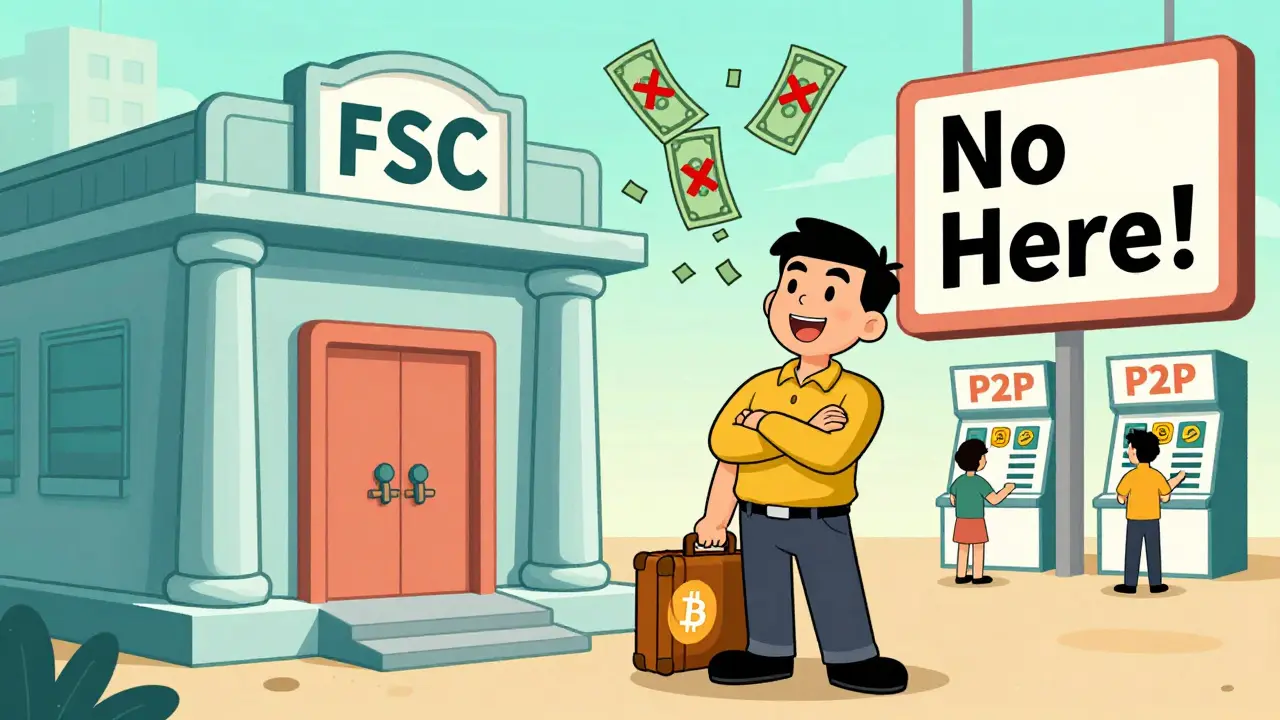
When you live in Taiwan and want to buy Bitcoin, you can’t just link your bank account like you would in the U.S. or Europe. It’s not illegal to own crypto here-but the banks won’t touch it. That’s the reality of Taiwan’s selective banking crypto restrictions, a system designed to let people trade digital assets while keeping traditional finance safely separated from the wilder side of crypto.
Why Banks Can’t Touch Crypto in Taiwan
The rules aren’t new, but they’re stricter than ever. Back in 2014, Taiwan’s Financial Supervisory Commission (FSC) told local banks: no Bitcoin, no crypto exchanges, no converting dollars to coins through your checking account. That ban didn’t just apply to Bitcoin-it extended to any service that let customers use their bank cards or wire transfers to buy crypto. By 2022, the FSC made it even clearer: credit card purchases for crypto were now treated the same as gambling or stock trading, meaning banks had to block them outright. This wasn’t about stopping people from owning crypto. It was about stopping banks from becoming middlemen. The goal? Prevent money laundering, stop risky speculation from spilling into the broader financial system, and protect regular depositors from crypto’s volatility. And it worked-Taiwan avoided the kind of bank collapses tied to crypto exposure seen elsewhere.How People Still Buy Crypto Without Bank Support
If you can’t use your bank, how do you buy Bitcoin? The answer: you find other ways. Most Taiwanese crypto users rely on registered Virtual Asset Service Providers (VASPs)-exchanges that have passed government checks for anti-money laundering and cybersecurity. MaiCoin, Taiwan’s largest local exchange, handles about $70 million in trades every day and has over 1.2 million users. But here’s the catch: you can’t deposit money directly from your bank to MaiCoin. Instead, users turn to third-party payment processors, peer-to-peer platforms like LocalBitcoins or Paxful, or even cash deposits at convenience stores. Some use international exchanges like Binance or Kraken that are registered with Taiwan’s FSC, then transfer funds through offshore accounts or e-wallets like LINE Pay or PayPal (where available). Reddit threads in r/Taiwan are full of tips: “Use a friend’s overseas account,” “Try Payoneer,” “Cash-in at 7-Eleven via a P2P broker.” It’s clunky. It’s slower. But it works. And it’s exactly what regulators wanted: crypto activity happening outside the banking system, with oversight focused on the exchanges, not the banks.The VASP Registration Rule That Changed Everything
Before 2025, crypto exchanges in Taiwan operated in a gray zone. Some registered voluntarily. Others didn’t. That changed on January 1, 2025, when the FSC made registration mandatory. Now, any company offering crypto trading, custody, or conversion services must apply, prove their AML controls, and pass cybersecurity audits. Failure means fines up to NT$5 million (about $155,900) or even jail time for executives. As of late 2024, only 23 exchanges completed the process. That’s not a lot-but it’s enough to create a clean, regulated market. The ones that made it, like MaiCoin and Bitrue Taiwan, now follow strict rules: customer funds must be kept separate from company money, cold storage is required, and all transactions are logged for regulators. The result? Users feel safer. Reviews on local sites show average ratings of 4.2/5 for registered platforms, compared to 3.8/5 for those still struggling with compliance.
Security Tokens vs. Crypto: Two Different Rules
Not all digital assets are treated the same in Taiwan. If a token represents ownership in a company, like shares in a startup, it’s a security-and falls under the Securities and Exchange Act. Those are tightly regulated, require prospectus filings, and can’t be sold to unqualified investors. But if it’s Bitcoin, Ethereum, or Solana? Those are just “virtual commodities.” They’re not money. Not securities. Just digital items you can buy and sell. That distinction matters because it lets the government regulate high-risk financial products without banning everyday crypto use. You can still trade ETH all day long-you just can’t use your credit card to do it.The Stablecoin Shift Coming in June 2025
Here’s where things might change. The FSC is preparing new rules for stablecoins-digital tokens pegged to real money, like USDT or USDC. Right now, those are unregulated and banned from bank integration. But starting in June 2025, Taiwan will allow regulated stablecoins tied to the New Taiwan Dollar (TWD). That means banks could soon be allowed to issue or support government-approved stablecoins. This isn’t a softening of the ban-it’s a controlled expansion. Think of it like this: the government is saying, “We don’t trust USDT. But if we build our own digital dollar, backed by the Central Bank, then yes, banks can work with that.” The Central Bank of the Republic of China (Taiwan) has already finished testing a prototype for a Central Bank Digital Currency (CBDC), using existing digital voucher systems. If that pilot succeeds, it could become the first legal digital currency in Taiwan-and the only one banks will be allowed to touch. That could mean future apps where you pay for groceries with a TWD-backed stablecoin, all processed through your regular bank account. But Bitcoin? Still blocked.
Who Benefits? Who Gets Left Behind?
The system favors regulators and compliant businesses. Compliance experts from PwC Taiwan say the VASP rules are among the clearest in Asia. They reduce fraud, protect consumers, and give legitimate crypto firms a path to operate legally. But it’s harder for startups. Setting up a VASP costs between NT$2 million and NT$5 million ($62,000-$155,900) just to meet compliance standards. Many small teams can’t afford it. And even after registration, finding a bank to handle payroll or vendor payments is nearly impossible. Most crypto firms now use offshore banking or crypto-native payment providers like Mercury or Stripe (where available), which adds complexity and cost. Retail users? They’re adapting. About 2.3 million Taiwanese-roughly 10% of the population-own crypto. Daily trading volume hits $200 million. Growth is steady at 15% year-over-year. People aren’t giving up. They’re just finding smarter, more indirect ways in.What’s Next? The Slow Evolution of Control
Taiwan isn’t going to lift its banking ban on Bitcoin anytime soon. The risks are too high. But the door is cracking open for government-backed digital money. The CBDC and regulated TWD stablecoins could become the new normal-not as replacements for crypto, but as alternatives that bring digital money back into the banking fold, under strict control. That means the future of crypto in Taiwan won’t be about breaking the rules. It’ll be about working within them. The exchanges that survive will be the ones that play by the FSC’s book. The users who thrive will be the ones who adapt to the workarounds. And the banks? They’ll stay out of crypto-except for the ones the government creates.FAQ
Can I use my Taiwanese bank account to buy Bitcoin?
No. Taiwanese banks are legally prohibited from offering any services related to cryptocurrency purchases, including direct transfers, credit card payments, or exchange services. This rule has been in place since 2014 and was reinforced in 2022. To buy crypto, you must use registered exchanges with third-party payment methods like P2P platforms, e-wallets, or offshore accounts.
Are crypto exchanges legal in Taiwan?
Yes, but only if they’re registered with the Financial Supervisory Commission (FSC) as Virtual Asset Service Providers (VASPs). Since January 1, 2025, all crypto exchanges operating in Taiwan must be registered. Unregistered platforms are illegal and face fines up to NT$5 million or criminal charges. Only 23 exchanges have completed registration as of late 2024.
Is Bitcoin illegal in Taiwan?
No, Bitcoin is not illegal. Taiwan classifies Bitcoin and other cryptocurrencies as “virtual commodities,” not currency or securities. You can legally own, trade, and hold Bitcoin. The restrictions only apply to banks and financial institutions-they can’t facilitate transactions. Individuals are free to buy and sell crypto through registered exchanges or peer-to-peer channels.
What’s the difference between a stablecoin and Bitcoin in Taiwan’s rules?
Bitcoin is a speculative virtual commodity with no backing, and banks can’t touch it. Stablecoins like USDT or USDC are also currently banned from banking integration. But starting in June 2025, Taiwan will allow regulated stablecoins pegged to the New Taiwan Dollar (TWD), issued by licensed financial institutions. These government-backed digital tokens may eventually be usable through banks, unlike Bitcoin or Ethereum.
Can I use my credit card to buy crypto in Taiwan?
No. Since July 2022, Taiwan’s FSC has explicitly banned credit card acquirers from processing payments for cryptocurrency purchases. This rule treats crypto like gambling or speculative trading-prohibited for credit-based transactions. You must use alternative payment methods like bank transfers via third-party processors, cash deposits, or peer-to-peer trades.
How many people in Taiwan own cryptocurrency?
As of late 2024, an estimated 2.3 million Taiwanese citizens-about 10% of the population-own some form of cryptocurrency. Despite banking restrictions, daily trading volume across registered platforms exceeds $200 million, with Bitcoin and Ethereum making up 65% of activity. User growth is steady at 15% year-over-year, showing that restrictions haven’t stopped adoption-they’ve just redirected it.
What happens if a crypto exchange doesn’t register with the FSC?
Unregistered exchanges face severe penalties: fines up to NT$5 million (around $155,900), suspension of operations, and criminal charges against executives that can lead to up to two years in prison. The FSC actively monitors and shuts down unlicensed platforms. Users are advised to only use exchanges listed on the official FSC VASP registry to avoid scams and legal risk.
Is a Central Bank Digital Currency (CBDC) coming to Taiwan?
Yes. The Central Bank of the Republic of China (Taiwan) completed its feasibility study for a CBDC in late 2023. Prototype testing began in late 2024 using the country’s existing digital voucher infrastructure. If successful, a government-backed digital New Taiwan Dollar could launch as early as 2026, offering a regulated digital alternative to private cryptocurrencies and potentially allowing banks to participate in digital currency transactions for the first time.

9 Comments
Sarah Locke
This is actually kind of beautiful in its own way. Taiwan’s not banning crypto-they’re just refusing to let banks become the wild west’s ATM. It’s like saying, ‘You can have your dragons, but don’t make me feed them.’ Smart. People are still trading, still growing, still innovating-just without dragging the whole financial system into the chaos. Kudos to the FSC for knowing when to say no.
And that CBDC pilot? That’s the real win. Not because it’s crypto, but because it’s *controlled* innovation. Imagine paying for your bento box with a digital TWD that’s as stable as your grandma’s dumpling recipe. That’s the future-and it’s not even sci-fi anymore.
Christy Whitaker
Of course they banned it. People are idiots with money. If you let them use credit cards for crypto, they’ll buy Dogecoin instead of groceries and then cry when their rent is late. This isn’t innovation-it’s just gambling with better branding. And now they’re gonna make a government stablecoin? Perfect. More control. More surveillance. More of the same.
Nancy Sunshine
It’s fascinating how Taiwan has engineered a regulatory ecosystem that simultaneously permits individual autonomy while insulating systemic infrastructure. The classification of Bitcoin as a ‘virtual commodity’ rather than a currency or security represents a sophisticated legal taxonomy-one that avoids the pitfalls of both outright prohibition and unregulated financialization.
The VASP registration framework, with its NT$2M–5M compliance burden, creates a high barrier to entry, which, while excluding smaller actors, ensures that only entities with robust AML/CFT protocols operate domestically. This is not merely regulation-it’s institutional architecture.
Furthermore, the impending introduction of a TWD-pegged stablecoin under central bank oversight signals a deliberate pivot toward sovereign digital monetary sovereignty, not crypto adoption per se. This is not a concession to decentralized finance-it’s a reassertion of centralized monetary authority through technological means. A masterclass in policy nuance.
Alan Brandon Rivera León
Been following this for a while. Honestly, the way Taiwan’s handling this is way more mature than most Western countries. No one’s saying ‘crypto is evil’-they’re just saying ‘banks aren’t the right place for this.’
My cousin in Taipei uses Payoneer to fund his MaiCoin account, then cashes out via 7-Eleven P2P. It’s messy, yeah, but it works. And honestly? He’s safer than my buddy in Texas who used his Chase card to buy Shiba Inu and got his account frozen for ‘suspicious activity.’
The CBDC thing? That’s the quiet revolution. Not ‘crypto is coming to banks’-it’s ‘banks are becoming crypto, but on our terms.’ Respect.
Ann Ellsworth
Let’s be brutally honest: this isn’t regulation-it’s performative governance. The FSC is playing chess while the rest of the world is playing checkers. The ‘virtual commodity’ distinction is a semantic sleight-of-hand designed to placate libertarian purists while maintaining de facto control.
And let’s not pretend the VASP registry is about consumer protection-it’s a cartelization tool. Only 23 players? That’s not ‘regulated’-that’s ‘captured.’ The NT$5M fine? That’s not a deterrent-it’s an entry fee for oligopolists. And now they’re gonna launch a CBDC? Of course they are. Because nothing says ‘freedom’ like a state-issued digital currency with full transactional surveillance.
Meanwhile, the average user is stuck using Payoneer and 7-Eleven kiosks like it’s 2012. This isn’t innovation. It’s exclusion dressed up as prudence.
Heather Hartman
I love how Taiwanese people just… adapted. No drama. No riots. No ‘crypto is the future’ hype. They just found a way. P2P at 7-Eleven? Payoneer? Friends overseas? That’s real resilience.
And the fact that they’re building their own digital dollar instead of letting USDT run wild? That’s not fear-that’s wisdom. You don’t have to love crypto to respect smart boundaries.
Also, 10% of the population owns it? That’s insane. And they’re doing it without banks? That’s the kind of grassroots tech adoption we should be celebrating, not over-regulating.
Jess Bothun-Berg
So… you can’t use your bank. You can’t use your card. You need to use ‘third-party processors’-which means what? Someone’s sketchy uncle in the Philippines? You’re telling me a 2.3 million-person market is being held together by cash deposits at 7-Eleven and Payoneer? That’s not a system. That’s a dumpster fire with a license plate.
And now they’re gonna issue a CBDC? Oh, great. So now the government will track every single coffee purchase you make with a ‘digital TWD’-but you still can’t buy Bitcoin? This isn’t policy. It’s psychological warfare.
Joe B.
Let’s break this down statistically. The 15% YoY growth in crypto ownership despite banking restrictions suggests that demand elasticity is extremely high-meaning the ban is effectively a tax on convenience, not a deterrent. The $200M daily volume on registered VASPs indicates that the market has already internalized the friction costs of P2P and offshore transfers.
Moreover, the 23 registered VASPs represent a 92% concentration of market share among licensed entities, which, under antitrust economics, suggests the emergence of a quasi-monopolistic oligopoly. The NT$5M fine threshold is functionally a barrier to entry that eliminates small players, effectively creating a regulatory moat for incumbents.
Now, the CBDC pivot: this isn’t an evolution-it’s a strategic reclamation. By allowing only state-backed stablecoins to interface with banks, the FSC is effectively nationalizing the digital payment layer while privatizing the speculative layer. This bifurcation ensures that financial stability is preserved, but wealth accumulation remains outside the public ledger-creating a two-tiered monetary system where the state controls the rails, but the people still ride the wild trains.
And yet, the fact that 10% of the population participates in this underground economy suggests a cultural resilience that regulatory frameworks simply cannot suppress. The real story here isn’t regulation-it’s human adaptability under institutional constraint.
Rod Filoteo
They say it’s about money laundering… but who’s really being protected? The banks? The government? Or the elite who control the CBDC? I’ve seen the reports. The FSC’s ‘registered’ exchanges are all linked to offshore shell companies. The real crypto traders? They’re using Monero through Telegram bots. The 7-Eleven thing? That’s just a front. They’re laundering through convenience store receipts.
And now they want to launch a digital dollar? That’s not a currency-it’s a tracking chip. They’ll know when you buy rice, when you pay rent, when you send money to your cousin in the Philippines. And Bitcoin? Still banned. Why? Because it’s anonymous. Because it can’t be controlled.
This isn’t regulation. It’s surveillance with a smile. The FSC isn’t protecting the people-they’re protecting their power. And you? You’re just the data point they’re monetizing.