
You typed "Tokenomica crypto exchange" into your search bar because you want to make money. Maybe you saw an ad on social media promising huge returns, or a friend sent you a link claiming this is the next big thing in cryptocurrency trading. You are looking for a review to see if it’s safe to deposit your hard-earned cash. Here is the honest truth that most generic review sites won’t tell you: as of August 2026, there is no legitimate, regulated cryptocurrency exchange called Tokenomica.
This isn't just a gap in my research. A deep dive into regulatory databases from the United States, the European Union, and major financial hubs reveals zero records of a licensed entity by this name. The term "tokenomics" is a real concept-it refers to the economic structure of a digital asset-but using it as a brand name for an exchange is a classic red flag used by scammers to sound technical and trustworthy. If you are holding your mouse over the "Deposit" button on a site called Tokenomica, stop. Read this entire guide before you lose your funds.
The Confusion Between Tokenomics and Exchanges
To understand why this platform feels suspicious, we need to clear up a common mix-up. Tokenomics is the study of how digital assets function within blockchain ecosystems, including supply models, governance, and utility. When investors analyze a new coin, they look at its tokenomics. They ask: Is the supply capped? Who holds the majority of tokens? How are validators rewarded?
Scammers know that retail investors love talking about "good tokenomics." So, they build fake websites with names like "Tokenomica," "CryptoMetrics," or "BlockFinance" to borrow credibility from these buzzwords. A real exchange, like Coinbase or Kraken, focuses on liquidity, security, and execution speed. They don't try to redefine the industry's terminology in their logo. If a platform's primary marketing pitch is based on a vague promise of "revolutionary tokenomics" without listing specific coins, fees, or leadership, it is likely a facade designed to collect deposits that will never be withdrawn.
Red Flags: How to Spot a Fake Exchange
Since Tokenomica lacks a verifiable footprint, let’s look at the standard playbook these fraudulent platforms use. If you visit a site claiming to be Tokenomica, check for these specific signs. If you see even two of them, close the tab immediately.
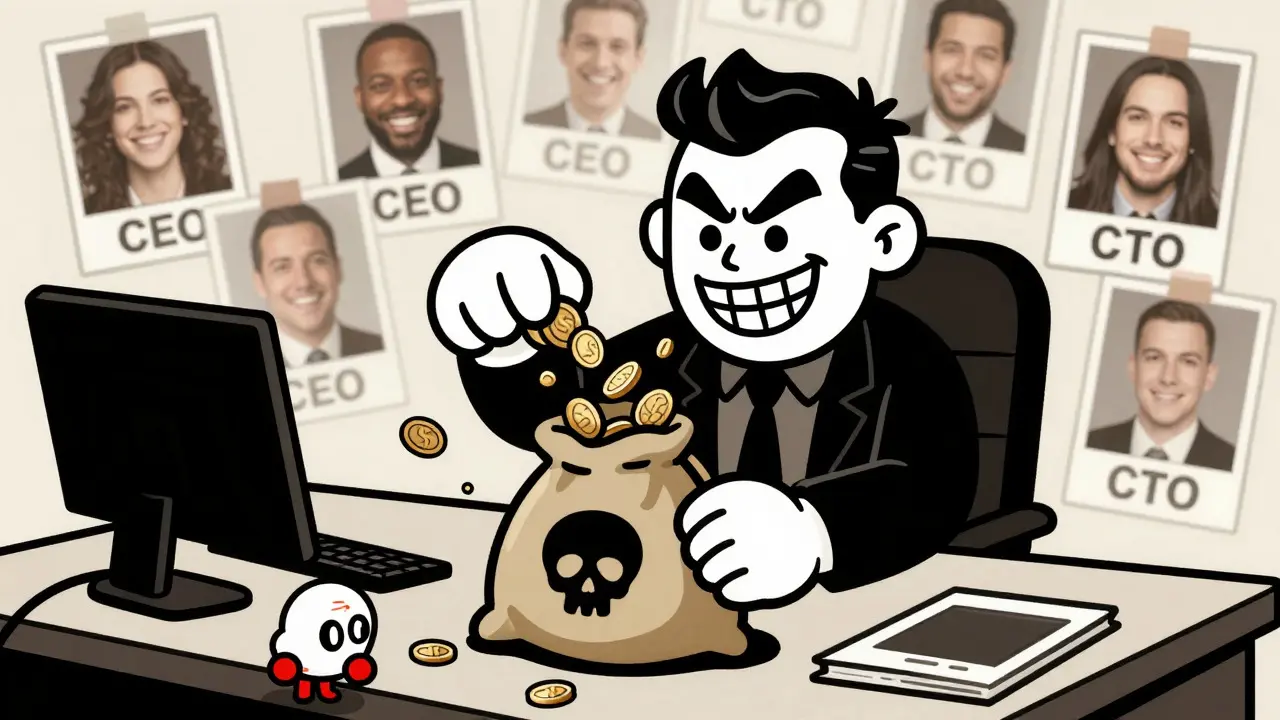
- Anonymous Leadership: Legitimate exchanges list their CEO, CTO, and compliance officers with links to their LinkedIn profiles. Fake sites use stock photos of smiling professionals with generic names like "John Smith" or "Sarah Connor." Click the bio links. Do they lead to real, detailed professional histories, or do they go nowhere?
- Generic Contact Info: Look for a physical address. Does it say "123 Main Street, New York" but when you plug it into Google Maps, it’s a residential house or a vacant lot? Or worse, does the site only offer a Telegram support chat? Regulated entities require email addresses and phone numbers.
- Unrealistic Returns: If the homepage promises "guaranteed daily profits" or "AI-driven bots that never lose," run away. Volatility is the nature of crypto. No one can guarantee profit. This is the hallmark of a Ponzi scheme, where early users are paid with money from later victims.
- Poor Website Quality: Check the URL. Is it a weird domain extension like .xyz, .top, or .info? Does the site load slowly? Are there spelling errors in the footer? Professional fintech companies spend millions on UX design. Scammers spend hundreds on a template.
- Pressure to Deposit via Crypto Only: While many exchanges accept bank transfers, scams almost exclusively demand Bitcoin (BTC) or Ethereum (ETH) deposits. Why? Because blockchain transactions are irreversible. Once you send that ETH to their wallet, it is gone forever. There is no chargeback option like there is with a credit card.
How to Verify Any Crypto Platform in 2026
In 2026, the regulatory landscape has tightened significantly. The Securities and Exchange Commission (SEC) in the US and the European Securities and Markets Authority (ESMA) have cracked down on unregistered platforms. Before you trust any exchange, perform this three-step verification process.
- Check Regulatory Licenses: Go directly to the regulator's website, not the exchange's "About Us" page. In the US, search the SEC's Investment Adviser Public Disclosure database. In Europe, check the ESMA register. If Tokenomica isn't there, it is operating illegally in those jurisdictions.
- Analyze Domain Age: Use a free tool like WHOIS lookup. If the website was registered less than six months ago, treat it with extreme caution. Established exchanges have domains that are years old. Scammers burn through domains quickly as they get shut down.
- Search for Independent Audits: Legitimate platforms publish regular proof-of-reserves reports conducted by third-party accounting firms like Deloitte or KPMG. These reports prove that the exchange actually holds the user funds they claim to hold. If Tokenomica cannot produce a recent, verifiable audit, assume your money is sitting in a personal wallet owned by the operator.
Comparison: Tokenomica vs. Legitimate Alternatives
To help you pivot to a safe option, here is how a typical fake platform compares to established leaders in the 2026 market. Note that while Binance, Coinbase, and Kraken have faced regulatory hurdles, they remain transparent about their operations, leadership, and fee structures.
| Feature | Tokenomica (Suspected Scam) | Coinbase / Kraken (Regulated) |
|---|---|---|
| Regulatory Status | Unknown / Unlicensed | Licensed in US/EU/UK |
| Leadership Transparency | Anonymous or Stock Photos | Publicly Listed Executives |
| Fund Security | No Proof of Reserves | Regular Third-Party Audits |
| Withdrawal Process | Often Delayed or Blocked | Automated and Fast |
| Customer Support | Telegram / Chatbots Only | Email, Phone, Live Chat |
If you are looking for low fees, consider Kraken or Bybit. If you prioritize ease of use and insurance coverage, Coinbase remains the gold standard for beginners. For advanced traders who need high leverage and deep liquidity, Phemex offers institutional-grade infrastructure with 99.999% uptime. None of these platforms hide behind vague branding.
What Happens If You Already Deposited?
If you have already sent funds to Tokenomica, time is critical. First, do not panic-buy more coins if they tell you to pay a "tax" or "verification fee" to withdraw. This is a secondary scam. Once you pay the first fee, they will invent another reason to keep your money.
Take screenshots of everything: the website, your transaction hashes, any chat logs with support, and emails. Then, file a report with your local consumer protection agency. In the US, you can file a complaint with the FTC and the SEC. If you used a credit card, contact your bank immediately to dispute the charge, though success rates vary depending on whether the charge was processed as a purchase or a gift card equivalent. Report the incident to the FBI's Internet Crime Complaint Center (IC3). While recovering funds from crypto scams is difficult due to the decentralized nature of blockchains, reporting it creates a paper trail that helps authorities track down operators.
Why Trust Matters More Than Features
In the world of finance, features matter less than trust. You can have the slickest interface, the lowest fees, and the widest selection of altcoins, but if you don't trust the custodian holding your keys, the platform is useless. Bitcoin was created specifically to solve the problem of trusting intermediaries. Ironically, centralized exchanges now act as those intermediaries. That is why due diligence is non-negotiable.
When evaluating an exchange, ask yourself: What happens if the CEO disappears tomorrow? With a regulated exchange like Gemini, which is publicly traded, there is corporate accountability. With a shadowy platform like Tokenomica, the answer is usually silence. Always prefer platforms that have survived multiple market cycles, including the bear markets of 2018 and 2022. Survival indicates resilience and proper capital management.
Safer Alternatives for 2026 Trading
Instead of risking your capital on an unverified platform, consider these vetted options based on your needs:
- For Beginners: Coinbase offers FDIC-insured USD holdings (up to limits) and simple interfaces. It is ideal if you just want to buy Bitcoin or Ethereum and hold it.
- For Advanced Traders: Kraken provides excellent spot trading pairs and futures contracts with competitive fees. Their customer service is renowned in the industry.
- For High-Frequency Trading: Phemex and Bybit offer robust API access, low latency, and deep order books for those who trade frequently.
- For Self-Custody Enthusiasts: Consider using a decentralized exchange (DEX) like Uniswap combined with a hardware wallet like Ledger or Trezor. This removes the counterparty risk of an exchange entirely.
Remember, the goal of investing is wealth preservation and growth, not gambling with unknown entities. Stick to platforms that are transparent, regulated, and have a long track record of operational integrity.
Is Tokenomica a scam?
While definitive legal judgment requires court proceedings, all available evidence suggests Tokenomica is a fraudulent platform. It lacks regulatory licenses, has anonymous leadership, and uses a confusing name derived from the general concept of "tokenomics" rather than a distinct brand identity. Proceed with extreme caution and avoid depositing funds.
What is the difference between tokenomics and a crypto exchange?
Tokenomics is an analytical framework used to evaluate the economic viability of a cryptocurrency project, including its supply schedule and utility. A crypto exchange is a marketplace where users buy and sell these assets. Tokenomica appears to conflate the two to sound authoritative, but they are fundamentally different concepts.
How can I verify if a crypto exchange is legitimate?
Check for regulatory licenses in your jurisdiction (e.g., SEC in the US, FCA in the UK). Verify the domain age using WHOIS tools. Look for public leadership teams with verifiable LinkedIn profiles. Finally, ensure the platform publishes regular, third-party audited proof-of-reserves reports.
What should I do if I lost money to Tokenomica?
Stop all further payments immediately. Gather all evidence, including transaction IDs and communication logs. File a report with your national consumer protection agency (like the FTC in the US) and the FBI's IC3. Contact your bank if you used fiat currency, though recovery is difficult if you sent cryptocurrency directly.
Are there any safe alternatives to Tokenomica?
Yes. For safety and regulation, Coinbase and Kraken are top choices in 2026. For advanced trading features, Phemex and Bybit offer robust platforms with high liquidity. Always choose exchanges that are transparent about their fees, leadership, and security audits.

7 Comments
Carl Michaud
The entire narrative of "regulated" exchanges is a facade designed to lull the retail investor into a false sense of security while the institutional players manipulate the order books. Tokenomica might be a scam, but Coinbase and Kraken are merely state-sanctioned fronts for surveillance capitalism. The real red flag isn't anonymous leadership; it's the KYC/AML protocols that strip you of financial sovereignty under the guise of protection. They want your data more than your money because in the post-privacy era, information is the ultimate commodity. Don't fall for the binary choice between a known thief and an unknown one; both serve the same hegemonic structure.
Eric Zehr
Great breakdown here! It’s really important to stay vigilant with these new platforms popping up every week. I know how exciting it can be to find what looks like a high-yield opportunity, but taking that extra step to verify licenses saves so much heartache later. Thanks for sharing these specific red flags about anonymous leadership and generic contact info-it makes the due diligence process feel much more manageable for beginners who might otherwise get swept up in the hype.
Matt Kay
another fake exchange. always the same story. just use binance or something normal already
Matthew Smith
the moral decay of society is evident when we trust algorithms over human intuition yet again. tokenomics is not a brand it is a concept stolen by thieves. why do we allow this? because we are complicit in our own deception. the system is rigged from the start. trust no one. especially not the regulators who sleep while the wolves eat the sheep. it is a philosophical failure of modern finance.
Candice Cornett
actually most people are too dumb to read anyway. they see green arrows and deposit their rent money. its not the scammers fault its the victims fault for being gullible. stop whining about regulation and learn how to code. if you cant tell a .xyz domain is sketchy you deserve to lose it all. simple as that.
Dave Kjendal
look at all these experts talking. nobody knows anything. the market goes up then down. tokenomica is probably fine or maybe not. who cares. just buy bitcoin and hold it. everything else is noise. i dont even check reviews anymore. too much effort. just pick a name that sounds cool and hope for the best. thats life.
Kat Bennett
I’ve been following crypto trends for years now and it’s fascinating how the tactics evolve but the core psychology remains exactly the same. Scammers prey on hope and fear, which is why education is such a powerful tool against them. I really appreciate how this article breaks down the difference between actual tokenomics and just using buzzwords to sound credible. It’s easy to get overwhelmed by all the technical jargon, but focusing on basics like regulatory checks and proof-of-reserves really cuts through the noise. I think many people forget that patience is key in investing, and rushing into unverified platforms usually leads to regret rather than rewards. Keeping a skeptical eye open is definitely the best defense we have.