
Here’s the tricky part about Opal: it isn’t just one thing. If you search for "What is Opal (OPAL) crypto coin," you’re likely hitting a wall of confusion because two completely different projects share this ticker. One is a legacy blockchain from 2014 called OpalCoin, a privacy-focused altcoin that barely trades today. The other is a newer, Ethereum-based decentralized exchange token also using the OPAL symbol. This article focuses on the original OpalCoin, the historical project that defined the name, while clarifying why mixing them up can cost you money.
Why does this matter? Because liquidity is near zero for the old coin, and the new DEX token has its own risks. Understanding the difference protects your portfolio. We’ll break down the history, the tech specs like the X13 algorithm, and the current market reality so you know exactly what you’re looking at before you buy or hold.
The Origin Story: From OnyxCoin to OpalCoin
To understand OpalCoin, you have to look back at its predecessor, OnyxCoin V2. In August 2014, the crypto world was still young, and community-driven forks were common ways to fix perceived developer missteps. The story goes that the original OnyxCoin developers allegedly abandoned the project after selling a large premine-coins created before public mining began. The community wasn’t having it. They forked the code, removed the premine, adjusted block rewards, and rebranded the project as OpalCoin.
The first block of the Opal chain was mined on September 12, 2014. This wasn’t a corporate launch with a fancy whitepaper team in Silicon Valley. It was a grassroots effort, announced on Bitcointalk by a user with the pseudonym "MUSCLEGIRLS." There is no verified CEO, no major venture capital backing, and no clear legal entity behind it. This anonymity is both its charm and its biggest red flag today. If you’re used to coins backed by transparent foundations, Opal feels like a relic from a more chaotic era of crypto.
Technical Specs: Hybrid Consensus and X13 Mining
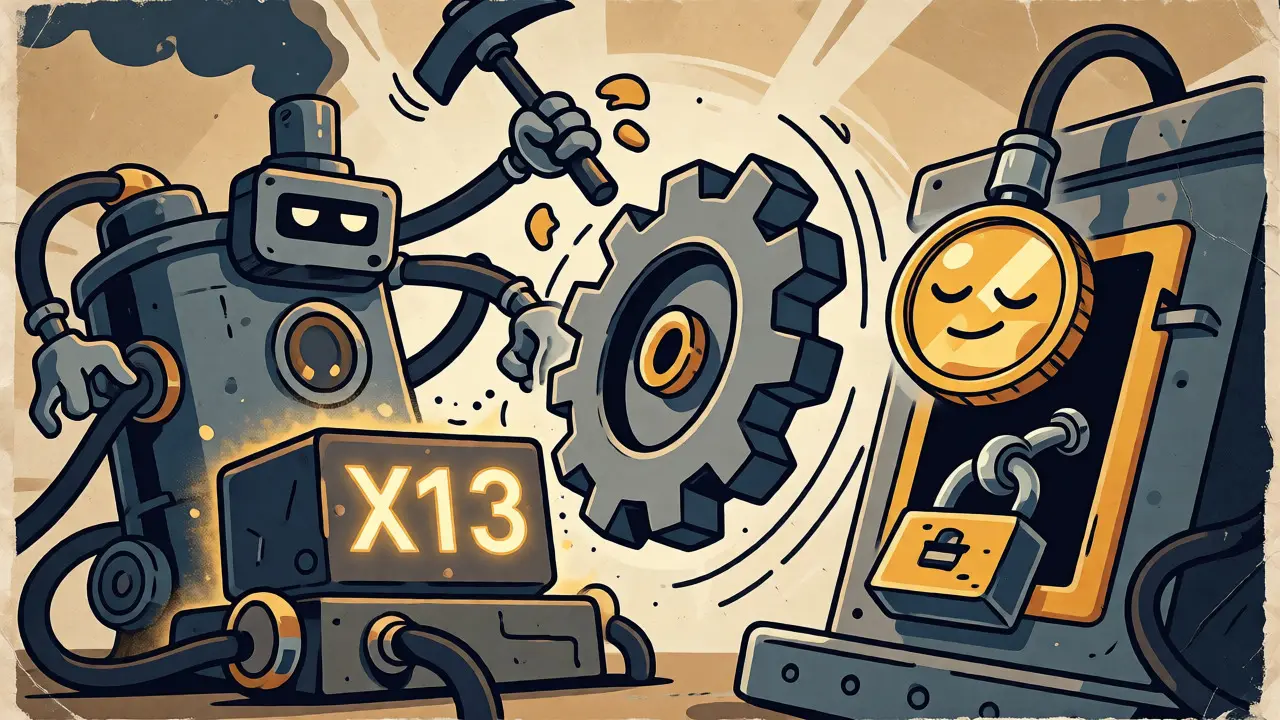
OpalCoin wasn’t trying to be Bitcoin 2.0; it was trying to be faster and more private. It uses a hybrid Proof-of-Work/Proof-of-Stake consensus model. Here’s how it works: initially, miners use computational power to secure the network via the X13 hashing algorithm. After block 15,000, the network shifts primarily to Proof-of-Stake, where holders lock up their coins to validate transactions and earn interest.
The technical parameters are specific and somewhat outdated by modern standards:
- Block Time: 90 seconds (much faster than Bitcoin’s 10 minutes).
- RPC Port: 51990.
- P2P Port: 50990.
- PoS Interest: 5% annual rate.
- Staking Age: Minimum 24 hours.
The reward schedule started low (15 OPAL per block) to prevent early hoarding, then jumped to 1,000 OPAL per block until the transition to staking. Unlike Bitcoin, there is no hard cap on total supply because staking creates new coins indefinitely. This inflationary model means holding OPAL without staking dilutes your position over time.
Privacy Features: Opaque Addresses and Encrypted Messaging
Privacy was Opal’s main selling point. The wallet software included features for encrypted messaging and "opaque" addresses. The idea was to obscure transaction details, making it harder for outsiders to trace who sent money to whom. Think of it as an early attempt at what Monero does now, but with less sophisticated cryptography.
However, don’t confuse this with true anonymity. Opal doesn’t use ring signatures or zk-SNARKs (zero-knowledge proofs). Its privacy relies on obfuscation rather than cryptographic guarantees. Independent audits are scarce, and there’s no data proving its anonymity set rivals modern privacy coins. If you need guaranteed privacy for sensitive transactions, Opal’s claims are best viewed as aspirational design goals rather than proven security features.
Market Reality: Liquidity, Supply, and Confusion
This is where things get messy. As of October 2026, market data for legacy OpalCoin is inconsistent across major trackers. CoinGecko reports approximately 1 billion circulating tokens with a market cap around $245,000. CoinMarketCap lists a supply closer to 15 million. Why the huge discrepancy? Likely due to indexing errors, stale metadata, or confusion with the newer Ethereum-based OPAL token.
Liquidity is extremely thin. You might find OPAL listed on small exchanges like YoBit, often paired with WAVES or BTC. Daily trading volume can hover near zero. This means if you buy $1,000 worth of OPAL, you might struggle to sell it without crashing the price. It’s not a coin for active traders; it’s a speculative hold for those betting on a revival that hasn’t happened yet.
| Feature | Legacy OpalCoin (2014) | Newer Opal DEX Token (Ethereum) |
|---|---|---|
| Blockchain | Own Chain (X13) | Ethereum (ERC-20) |
| Primary Use Case | Payments & Privacy | Perpetual DEX Governance/Utility |
| Consensus | Hybrid PoW/PoS | DeFi Protocol Mechanics |
| Liquidity | Very Low (<$10k daily) | Moderate (Varies by season) |
| Risk Level | High (Abandonment risk) | Medium (Smart contract risk) |
How to Buy and Store Legacy OPAL Safely
If you decide to invest in legacy OpalCoin, proceed with caution. First, verify you are buying the correct asset. Check the contract address or blockchain explorer. For the legacy coin, you need a desktop wallet compiled from source or downloaded from the official GitHub repository. The codebase hasn’t seen major updates in years, so ensure your operating system supports the older libraries (like LevelDB).
Backup your wallet.dat file immediately. Losing this file means losing your coins forever. There is no cloud recovery service for OpalCoin. When sending funds, double-check the recipient address format. Sending OPAL to an Ethereum address will result in permanent loss. Given the lack of active development, assume the software may have unpatched vulnerabilities. Only store amounts you are willing to lose entirely.
Is OpalCoin Still Relevant in 2026?
Let’s be honest: OpalCoin is largely inactive. The GitHub repository shows minimal commits, few stars, and no recent releases. Community engagement on social media is sporadic at best. While the concept of a fast, private, hybrid-consensus coin was innovative in 2014, it has been outpaced by specialized chains like Zcash and Monero, which offer superior privacy technology, and by DeFi platforms that offer higher yields.
The newer Ethereum-based Opal DEX is gaining some traction with audits and roadmap updates, but that’s a different animal. If you’re looking for exposure to the "Opal" brand, make sure you know which one you’re buying. The legacy coin is a zombie project-alive technically, but dead commercially. Unless you have a sentimental attachment to early altcoins or believe in a massive resurgence driven by nostalgia, OpalCoin offers limited utility compared to modern alternatives.
What is the difference between OpalCoin and the Opal DEX token?
OpalCoin is a standalone blockchain launched in 2014 using the X13 algorithm. The Opal DEX token is an ERC-20 token on Ethereum associated with a newer decentralized exchange. They share the ticker OPAL but operate on different networks with different use cases and risks.
Is OpalCoin safe to hold?
Safety depends on your definition. Technically, the blockchain is secure but inactive. Practically, the risk is high due to low liquidity, potential abandonment, and lack of ongoing development. It is not suitable for large capital allocations.
Can I mine OpalCoin today?
Mining is largely obsolete for OpalCoin since the network transitioned to Proof-of-Stake after block 15,000. Users are expected to stake their coins to earn 5% annual interest rather than mine new blocks.
Where can I buy OPAL crypto?
Legacy OPAL is available on small exchanges like YoBit. The newer Ethereum-based OPAL token may be found on DEXs like Uniswap or centralized exchanges listing Ethereum assets. Always verify the network before depositing.
Does OpalCoin have a maximum supply?
No, OpalCoin does not have a hard maximum supply. The initial Proof-of-Work phase issued a fixed amount, but the Proof-of-Stake mechanism continues to create new coins through staking rewards, leading to indefinite inflation.
