
Imagine walking into a Moscow café and trying to pay for your coffee with Bitcoin. You might think it’s a modern, tech-savvy move, but in Russia, you’d likely get a confused look from the barista and a legal headache for yourself. As of late 2025, cryptocurrency is not considered legal tender in Russia. While you can own it, buy it, and sell it as an investment asset, using it directly to buy goods or services within the country remains strictly prohibited by federal law.
This distinction between ownership and usage is where most people get tripped up. The Central Bank of Russia has maintained a hardline stance against domestic crypto payments, viewing them as a threat to monetary stability. However, the story isn’t all black and white. There are specific, narrow exceptions for international trade, and new rules coming in 2026 are set to tighten enforcement significantly. If you’re a business owner, an expat, or just curious about the digital economy in Eastern Europe, understanding these nuances is critical to avoiding hefty fines.
The Core Rule: Ownership vs. Payment
Let’s clear up the biggest misconception first. It is not illegal to hold cryptocurrency in Russia. You can have a wallet full of Ethereum or USDT on your phone without breaking any laws. What is illegal is using that crypto as a medium of exchange for domestic transactions. This means if you sell a used car to your neighbor, you cannot accept Bitcoin as payment. You must convert that crypto into Russian Rubles before the transaction is finalized.
The logic behind this ban stems from Article 140 of the Civil Code, which defines the Ruble as the only legal currency. The government views cryptocurrencies as "digital financial assets" or property, similar to how they might view gold bars or foreign currency held abroad. They are assets you can trade, but they aren't money you can spend at the grocery store. This approach aims to protect the sovereignty of the Ruble and prevent capital flight through unregulated channels.
For individuals, this creates a practical hurdle. If you want to use crypto funds for daily life, you need a compliant intermediary. This usually involves selling your crypto on an exchange (often a foreign one, since major local exchanges are restricted) and transferring the Rubles to your bank account. Direct peer-to-peer transfers for goods remain in a legal gray area that authorities are actively working to close.
The Experimental Legal Regime: A Loophole for Business?
If you think the door is completely shut, there’s a small window open for businesses. In 2024, Russia launched the Experimental Legal Regime (ELR), a pilot program designed to test digital assets in controlled environments. This regime allows specific companies to use cryptocurrency for international settlements, primarily to bypass sanctions-related banking restrictions.
Under the ELR, selected Russian exporters and importers can invoice foreign partners in stablecoins like USDT or other approved digital currencies. This has become increasingly vital for trade with countries in Asia, Africa, and Latin America, where traditional SWIFT transfers are slow or blocked. The volume of crypto-facilitated trade hit roughly 1 trillion rubles in 2025, showing that while domestic spending is banned, cross-border utility is growing.
However, this privilege is not available to everyone. Participation is limited to "highly qualified investors" and specific corporate entities approved by the Ministry of Finance. Ordinary citizens cannot use the ELR to pay for their vacation in Turkey or buy electronics from China directly with Bitcoin. It is strictly a B2B tool for sanctioned industries seeking alternative payment rails.
New Fines Coming in 2026
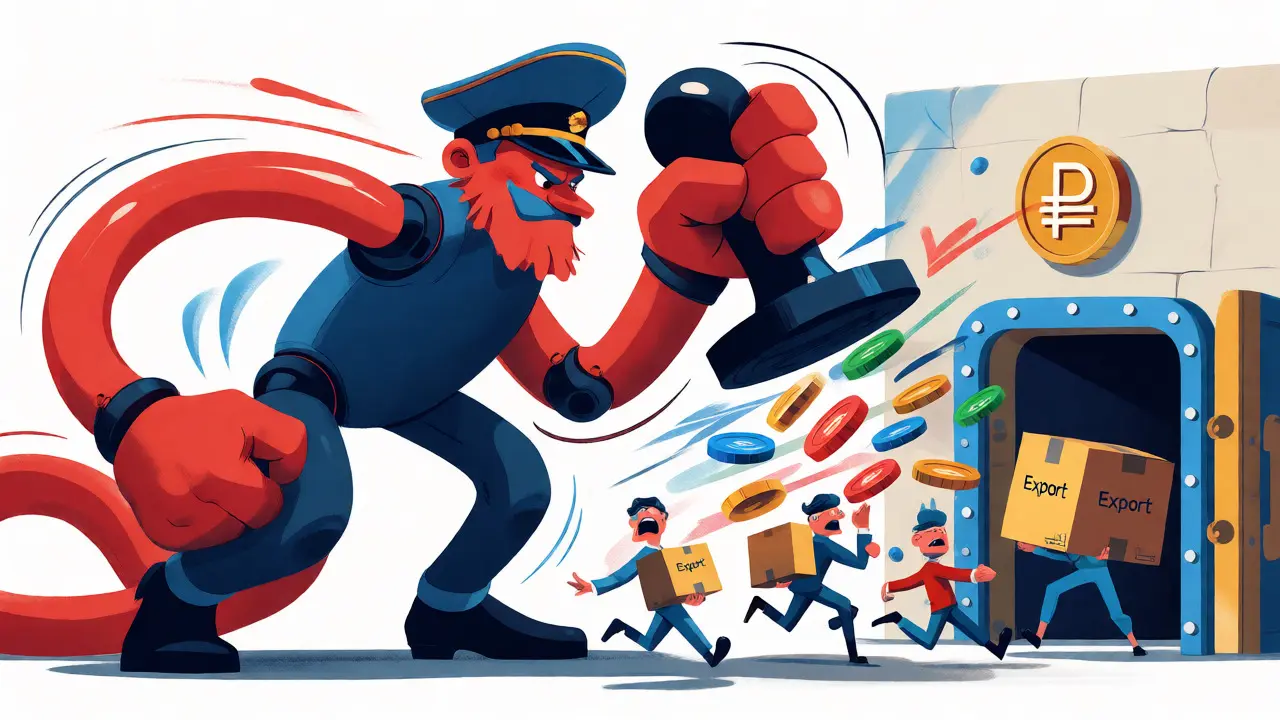
You might wonder, "If the rule exists, why do I hear about people still paying in crypto?" Until recently, the penalty structure was vague. Authorities could deem a transaction void, meaning you had no legal recourse if someone didn't deliver the goods, but direct fines were inconsistent. That changes in 2026.
The State Duma’s financial market committee, led by Anatoly Aksakov, has drafted legislation introducing explicit administrative penalties. These fines target both individuals and companies who violate the prohibition on domestic crypto payments. The goal is to eliminate the "shadow economy" aspect of crypto transactions, where deals happen off the books to avoid taxes and regulations.
| Offender Type | Fine Range (Rubles) | Additional Consequences |
|---|---|---|
| Individuals | 100,000 - 200,000 | Confiscation of crypto used in payment |
| Legal Entities | 700,000 - 1,000,000 | Confiscation of crypto; potential license reviews |
These numbers are significant when compared to average incomes. For many Russians, a 200,000-ruble fine represents several months' salary. Moreover, the confiscation clause means you lose the asset itself, not just the value of the transaction. This dual penalty structure is designed to make unauthorized crypto payments economically risky enough to deter casual users.
Tax Obligations: You Still Owe Your Share
Just because you can’t spend crypto doesn’t mean you don’t owe taxes on it. In fact, the tax code treats cryptocurrency gains similarly to other investment income. If you bought Bitcoin at $20,000 and sold it at $30,000, you made a profit, and that profit is taxable.
Russian residents must report all crypto-related income by April 30 for the previous year and pay the due taxes by July 15. The rates depend on your total annual income, typically falling under the standard personal income tax brackets (13% to 15%). Mining rewards, staking yields, airdrops, and NFT sales are all included in this calculation. The key requirement is converting the crypto value to Rubles at the official Central Bank exchange rate on the date of the transaction.
Failure to report can lead to severe consequences. If you fail to declare transactions totaling over 45 million rubles across two of the last three years, you could face criminal liability. Penalties range from heavy fines to forced labor or imprisonment of up to five years. Even smaller omissions trigger fines of 50,000 rubles plus 40% of the unpaid tax amount. With automated detection systems improving, hiding these transactions is becoming harder.

Why Is Adoption Dropping Despite Interest?
It seems counterintuitive, but Russia’s global ranking in cryptocurrency adoption dropped in 2025, falling out of the top 10 according to Chainalysis data. This decline happened despite a surge in interest following the geopolitical shifts of 2022. Why the drop? Largely due to regulatory uncertainty and the lack of accessible local infrastructure.
Major centralized exchanges have either exited the market or operate with limited functionality for Russian users. This forces citizens to rely on foreign platforms or peer-to-peer networks, which come with higher fees and security risks. When combined with the threat of new fines, many casual users are retreating from active trading to simple holding, or moving entirely into the Digital Ruble, the state-backed central bank digital currency.
The Digital Ruble offers a middle ground. It’s programmable, fast, and fully legal for payments. While it lacks the decentralization of Bitcoin, it solves the payment friction problem that keeps many users away from private crypto. For now, the government is pushing the Digital Ruble as the primary innovation in payments, keeping private crypto in the box labeled "investment."
Practical Tips for Navigating Russian Crypto Laws
If you live in Russia or do business there, here is how you stay safe:
- Always Convert First: Never hand over crypto directly for goods. Sell it for Rubles first, then transfer the cash or bank funds.
- Keep Detailed Records: Use spreadsheet software or specialized tools to track every buy, sell, and swap. You need proof of cost basis for tax season.
- Watch the Exchange Rates: Taxes are calculated based on the Central Bank rate, not necessarily the rate you got on Binance. Discrepancies can trigger audits.
- Beware of P2P Scams: Without regulated local exchanges, peer-to-peer markets are rife with fraud. Verify counterparty reputation carefully.
- Monitor Legislative Changes: The 2026 fines are just the start. Keep an eye on updates from the Ministry of Finance regarding the expansion of the ELR.
The landscape is evolving. While the Treasury Department has hinted at potentially widening investor access, the Central Bank remains skeptical. For now, treat crypto as a volatile asset class, not a currency. The convenience of digital money hasn’t outweighed the regulatory risk in Russia yet, but the pressure from international trade realities continues to push boundaries.
Is it illegal to own Bitcoin in Russia?
No, owning Bitcoin and other cryptocurrencies is legal. Russian citizens can buy, hold, and sell digital assets as investments. The prohibition applies specifically to using them as a method of payment for goods and services within the domestic market.
Can I pay for groceries with crypto in Moscow?
Technically, yes, some merchants might accept it informally, but it is not legally recognized as payment. Doing so exposes both you and the merchant to fines starting in 2026. Most legitimate businesses require conversion to Rubles before completing the sale.
What happens if I don't report my crypto profits?
You face administrative fines and penalties on unpaid taxes. For large undisclosed amounts (over 45 million rubles), you could face criminal charges, including imprisonment of up to five years. Automated monitoring systems are making it easier for tax authorities to detect unreported activity.
Are there any exceptions for international payments?
Yes, under the Experimental Legal Regime (ELR), select companies can use crypto for cross-border settlements. This is intended to facilitate trade with non-Western partners and bypass sanctions. This exception does not apply to ordinary consumers or domestic transactions.
How much will the fines be in 2026?
Draft legislation proposes fines of 100,000 to 200,000 rubles for individuals and 700,000 to 1,000,000 rubles for companies. Additionally, the cryptocurrency used in the illegal payment may be confiscated by the state.
