
It was supposed to be the end of poverty through code. In September 2021, El Salvador made global headlines by becoming the first nation in history to adopt Bitcoin as official legal tender. President Nayib Bukele promised that this move would slash remittance costs, bring financial inclusion to the unbanked, and attract foreign investment. It was a bold gamble on a volatile digital asset. Fast forward to mid-2026, and the picture is far more complicated. The dream of a Bitcoin-powered economy has collided with harsh economic realities, international pressure, and strict new restrictions.
You might wonder why a country would risk its entire financial stability on a currency that can swing 20% in a single day. For El Salvador, the answer wasn't just about technology; it was about survival. The nation had been dollarized since 2001, meaning it lost control over its own monetary policy. Remittances from Salvadorans abroad make up more than 20% of the GDP, but sending that money home via traditional banks or services like Western Union often cost families 7% to 10% in fees. Bukele argued that Bitcoin could cut those fees to near zero. But did it work? The data suggests otherwise.
The Initial Push: How the Government Tried to Force Adoption
To understand where things stand today, you have to look at how aggressively the government pushed this agenda. When the 2021 Bitcoin Law passed, it didn’t just allow Bitcoin; it mandated it. Businesses were legally required to accept Bitcoin if they had the means to do so. To sweeten the deal, the government launched the "Chivo" wallet app. They offered free $30 worth of Bitcoin to anyone who downloaded it, plus discounts on gasoline for users who paid with crypto.
| Feature | Implementation Detail | Outcome |
|---|---|---|
| Legal Status | Bitcoin accepted alongside USD for all debts and taxes | Created legal confusion; most transactions remained in USD |
| Incentives | $30 free Bitcoin bonus + gas discounts | High initial downloads, low long-term retention |
| Infrastructure | Bitcoin ATMs deployed nationwide | Many ATMs broken or unused due to high fees |
| Government Holdings | Direct purchase of BTC using state funds | Significant losses during bear markets |
On paper, the numbers looked promising at first. By early 2022, more Salvadorans had Lightning Network wallets than traditional bank accounts. However, quantity doesn't equal quality. A survey conducted by researchers from the National Bureau of Economic Research (NBER) revealed a stark truth: while half the households downloaded the app, very few actually used it for daily transactions. Among early adopters, over 60% never made a transaction after spending their free bonus. Another 20% hadn't even spent the free Bitcoin yet. The active user base turned out to be young, educated, male, and already banked-the exact opposite of the unbanked population the policy aimed to help.
The Economic Reality Check: Why It Stalled
So, what went wrong? The core issue was usability versus volatility. Imagine trying to buy groceries when the price of your cart changes every hour. For small businesses, accepting Bitcoin meant dealing with complex exchange rate risks. Even though the government provided an instant conversion system to U.S. dollars, the technical infrastructure was shaky. The Chivo app crashed repeatedly, and many citizens reported difficulty setting up wallets. For an elderly person in a rural village, navigating cryptocurrency keys and seed phrases was not just difficult; it was impossible without extensive training.
Furthermore, the cost savings narrative fell apart. While peer-to-peer Bitcoin transfers are cheap, using the government’s Chivo wallet involved fees that often exceeded those of traditional remittance services. Families abroad still preferred sending money via established channels because they trusted them. The promise of "financial inclusion" remained unfulfilled because the tool itself was too complex for the target audience. Instead of empowering the poor, the initiative largely benefited tech-savvy speculators.

International Pressure and the IMF Loan Deal
The biggest turning point came not from within El Salvador, but from Washington. The International Monetary Fund (IMF) had warned against the Bitcoin experiment from the start, citing macroeconomic instability and lack of transparency. For years, El Salvador struggled to secure loans because credit rating agencies downgraded the country’s debt status, viewing the Bitcoin strategy as a sign of weakened governance.
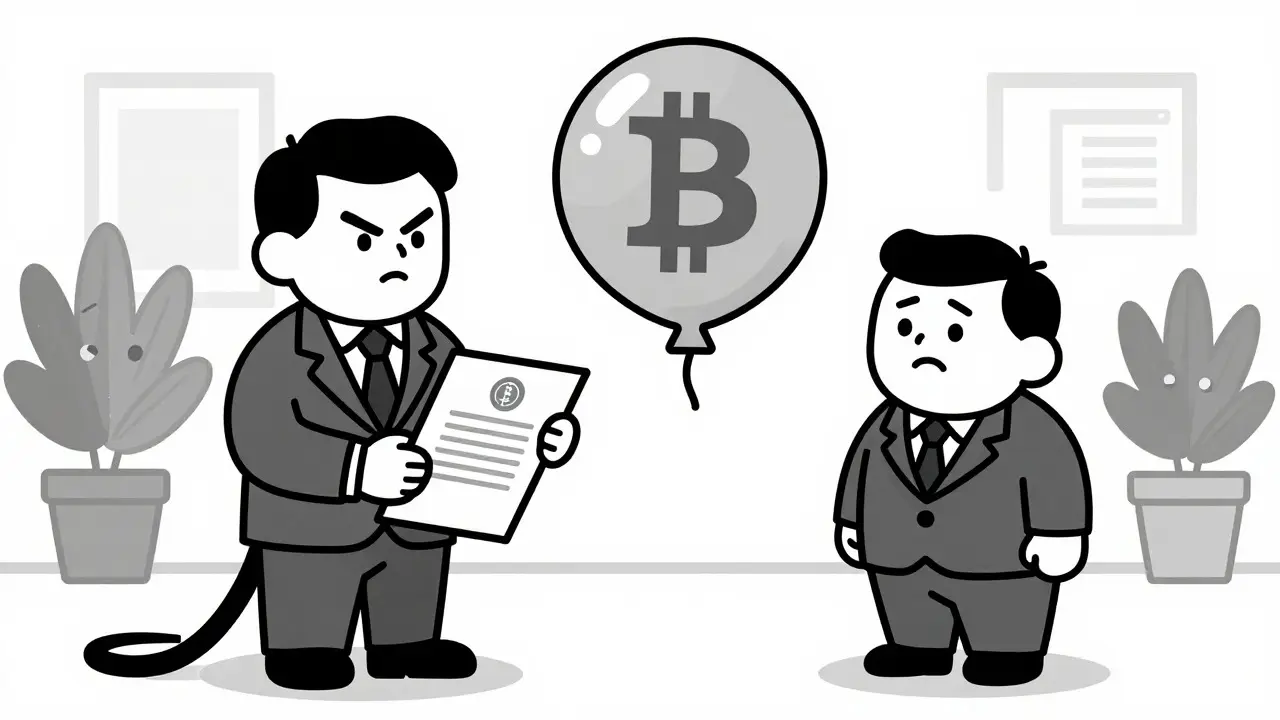
In 2024, facing fiscal strain, El Salvador finally agreed to a $1.4 billion loan deal with the IMF. This agreement came with heavy strings attached. The most significant restriction? El Salvador had to partially limit its involvement with Bitcoin. The IMF required the country to stop treating Bitcoin as a primary reserve asset and to improve fiscal transparency. This marked a major retreat from Bukele’s maximalist vision. It signaled that even a pioneering nation cannot ignore the rules of global finance indefinitely.
This concession was crucial. It showed that while Bitcoin remained legal tender, its role in the national economy was being scaled back. The government could no longer use public funds to buy Bitcoin aggressively, nor could it force private sectors to absorb the risks of crypto volatility. The "restrictions" mentioned in recent news aren't just bureaucratic hurdles; they are survival mechanisms imposed by the need for international capital.
Current Status: A Hybrid System Under Scrutiny
As of July 2026, El Salvador exists in a strange hybrid state. Bitcoin is still legal tender, but it is rarely used for everyday purchases. Most Salvadorans continue to use U.S. dollars for daily life. The government maintains its Bitcoin holdings, but the aggressive buying spree has cooled significantly due to the IMF conditions. The focus has shifted from mass adoption to managing the existing portfolio and stabilizing the broader economy.
Critics argue that the experiment has been a net loss. The Economist noted in March 2025 that the Bitcoin initiative brought more costs than benefits, draining resources that could have been spent on healthcare or education. Proponents counter that El Salvador gained visibility as a crypto hub, attracting some tourism and niche investment. However, these gains pale in comparison to the billions spent on infrastructure, subsidies, and potential losses in the government's Bitcoin treasury.
The lesson here is clear: technology alone cannot fix structural economic problems. Without trust, ease of use, and stability, even the most innovative financial tools will fail to gain traction among the general public. El Salvador’s journey serves as a cautionary tale for other nations considering similar moves. It highlights the tension between ideological innovation and practical economic management.
What This Means for Other Countries
If you are a policymaker or an investor watching this space, take note. El Salvador’s experience demonstrates that forcing cryptocurrency adoption top-down rarely works. Organic growth requires solving real pain points-like high fees or lack of access-in a way that is simpler than the current alternative. Until then, Bitcoin remains a speculative asset rather than a functional currency for the masses.
The restrictions imposed by the IMF are not necessarily a defeat for Bitcoin itself, but a check on government overreach. They remind us that national economies are interconnected. You cannot isolate a country’s financial system from global standards without paying a price. For El Salvador, that price has been high, but the experiment continues, albeit in a much quieter, more regulated form.
Is Bitcoin still legal tender in El Salvador in 2026?
Yes, Bitcoin remains legal tender in El Salvador as of 2026. However, its practical usage has declined significantly. Most daily transactions are conducted in U.S. dollars, and the government has scaled back its aggressive promotion efforts due to IMF loan conditions.
Why did the IMF restrict El Salvador's Bitcoin policies?
The IMF restricted El Salvador's Bitcoin policies to ensure macroeconomic stability and fiscal transparency. The fund cited concerns about the volatility of Bitcoin affecting national reserves and the lack of clarity in how the government managed its crypto assets. These restrictions were part of a $1.4 billion loan agreement in 2024.
Did the Chivo wallet succeed in bringing financial inclusion?
No, the Chivo wallet did not achieve widespread financial inclusion. While download numbers were initially high, surveys show that the majority of users stopped using the app after spending their free Bitcoin bonuses. The active user base consisted mainly of young, educated, and already banked individuals, missing the intended unbanked demographic.
How much does El Salvador hold in Bitcoin?
El Salvador's exact Bitcoin holdings fluctuate with market prices, but the government has historically held thousands of BTC. Due to the 2024 IMF agreement, the pace of new acquisitions has slowed, and the focus has shifted to managing existing assets rather than aggressive accumulation.
Are there penalties for not accepting Bitcoin in El Salvador?
Initially, the law mandated acceptance, but enforcement was inconsistent. In practice, many businesses found ways to avoid strict compliance due to technical difficulties and consumer preference for USD. Recent regulatory shifts under IMF pressure have softened the mandatory aspect, focusing more on voluntary integration.
Has El Salvador's credit rating improved since the Bitcoin adoption?
Not significantly. Credit rating agencies continued to view the Bitcoin strategy as a risk factor. The 2024 IMF loan helped stabilize finances, but the country's debt status remains challenging compared to regional peers. The focus now is on meeting IMF requirements to gradually improve creditworthiness.

7 Comments
Lisa Chong
It is not hard to see the strings being pulled from above. The IMF did not just walk in there to help with some fiscal transparency nonsense. They walked in because they wanted to crush the only thing that could threaten their monopoly on currency control. Think about it. Why else would they call it 'volatility' when it was really just freedom? The elites hate that a peasant in San Salvador can send money without asking permission from a bank manager who hates his guts. This whole narrative about 'economic stability' is a lie fed to you by people who want to keep you poor and dependent. They broke the Chivo app on purpose. I bet my last dollar that the bugs were planted by CIA contractors. You are all sheep following the herd back into the cage of fiat slavery while pretending you care about 'data'. Wake up before they take away your remaining rights too.
Heather Austin
i mean look at the numbers honestly the adoption stats were always gonna be weird for a crypto rollout like this
most people dont understand seed phrases or lightning networks so yeah the elderly folks got left behind thats just reality not conspiracy stuff
the chivo wallet had too many issues with uptime and fees were higher than western union sometimes which makes sense technically speaking
but saying it was a total failure ignores that they actually built infrastructure that didnt exist before its more of a mixed bag i think
Ran Tao
Oh please, spare me the naive optimism 🙄. It wasn't a 'mixed bag,' it was an absolute circus of incompetence! Bukele played us all for fools while burning billions on vanity projects that looked cool on Instagram but meant nothing to the average taco vendor trying to buy milk. The entire experiment was a spectacle designed to distract from the rotting core of their governance structure. And now? Now we have the vultures circling with the IMF picking the bones clean 💀. Typical. Always typical. The masses cheer for the illusion of change while the real power structures tighten their grip. What a tragic farce we’ve witnessed 😒.
Shay Thomson
I feel for the people caught in the middle of this ideological war. It’s heartbreaking to see a nation try so hard to leapfrog decades of financial exclusion only to be slapped down by global institutions that demand conformity over innovation. But maybe there’s a lesson here about patience and organic growth rather than forced mandates. Perhaps the next phase will be quieter, more sustainable, and less about headlines and more about actual utility for the everyday citizen. We should hold space for both the critique and the hope.
Russ Fincham
The data doesn’t lie, though most people refuse to read it properly. The NBER survey clearly indicated that the demographic using Bitcoin was already banked, educated, and male. That directly contradicts the stated goal of financial inclusion for the unbanked. When you strip away the political rhetoric, you’re left with a failed pilot program that cost millions in subsidies and technical debt. The IMF intervention wasn’t oppression; it was a necessary correction to prevent total fiscal collapse. Ignoring basic economic principles leads to exactly this kind of disaster.
Jessie Smith
One must ponder the nature of value itself. Is it not merely a collective hallucination agreed upon by the masses? El Salvador attempted to shift the hallucination from green paper to digital code, yet the underlying psychological framework remained unchanged. The volatility was not a bug but a feature of a system transitioning from trust-based to verification-based economics. However, the human element-greed, fear, ignorance-remained the constant variable. Thus, the failure was not technological but anthropological. We are simply not ready to hold the keys to our own destiny without first destroying them through our own hands. A tragedy of epic proportions, indeed.
Drew M
To be fair, the tech stack was never going to win over grandma in rural El Salvador overnight 🤷♂️. It’s like handing someone a smartphone and expecting them to code an app without tutorials. The ambition was admirable, truly, but the execution lacked the nuance required for mass-market adoption. Still, kudos to Bukele for trying something bold when everyone else is asleep at the wheel 😴. Maybe in ten years we’ll look back and say it was the right step at the wrong time. Only history will judge, my friends ✨.