
Imagine joining a group where your active participation doesn't just earn you a badge or a shoutout, but actual ownership in the community's future. That is the core promise of social tokens. These digital assets are changing how online groups operate, shifting power from platform owners to the people who actually build and sustain those spaces.
Social tokens are not just another cryptocurrency for trading. They are tools designed to align incentives, reward contribution, and create shared value. For community leaders and members alike, they offer a way to escape the extractive models of traditional social media, where platforms profit from user data while users get little in return. Instead, these tokens allow communities to capture their own economic value.
What Are Social Tokens?
To understand why these tokens matter, we first need to define what they are. A social token is a digital asset issued by an individual creator, a brand, or a community. Unlike Bitcoin or Ethereum, which serve as general-purpose money or store of value, social tokens derive their worth from the specific network they represent. Their value is tied directly to the utility they provide within that ecosystem.
Linda Xie, a pioneer in this space and co-founder of Scalar Capital, categorized social tokens into three main types in her foundational 2021 guide:
- Personal Tokens: Issued by individuals (like artists or influencers) to monetize their personal brand and grant fans access.
- Creator Tokens: Similar to personal tokens but often focused on intellectual property or specific creative outputs.
- Community Tokens: Issued by decentralized groups to govern resources, allocate funds, and coordinate collective action.
The key distinction here is intent. While personal tokens might focus on supporting a single artist, community tokens focus on building a shared treasury and decision-making structure. This shift from "fan club" to "cooperative" is what makes them powerful for long-term community building.
Shared Ownership Creates Aligned Incentives
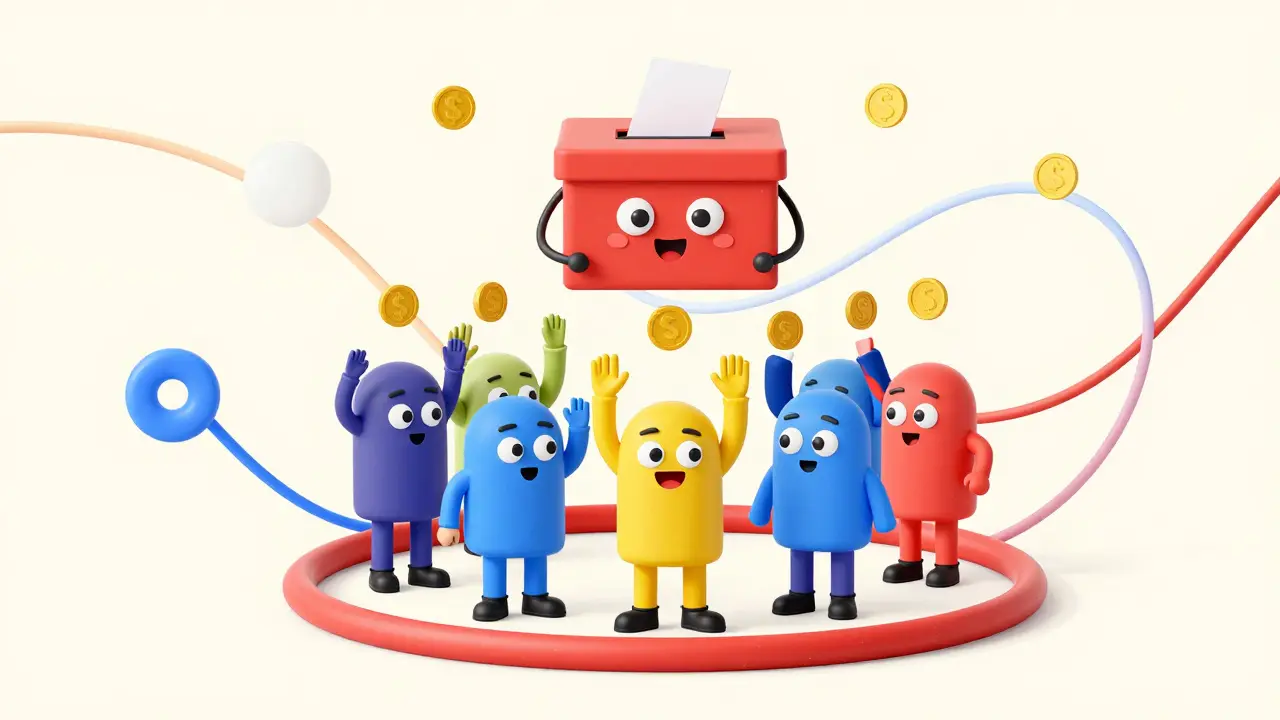
The biggest problem with traditional online communities is misaligned incentives. Platform owners want maximum engagement to sell ads, even if that means promoting outrage or low-quality content. Users want meaningful connection, but they have no stake in the platform's success. Social tokens fix this by introducing shared ownership.
When members hold tokens, they become stakeholders. If the community grows and becomes more valuable, the tokens they hold may appreciate. This creates a natural alignment: everyone benefits when the group succeeds. Linda Xie noted that this shared ownership contributes to "long-term value alignment," meaning members are motivated to contribute high-quality work because they are essentially investing in their own portfolio.
A prime example is Friends With Benefits (FWB). This community used its $FWB token to build a treasury that grew to over $10 million by late 2021. Token holders didn't just watch; they voted on how to spend those funds, whether it was for events, grants, or operational costs. This turned passive lurkers into active participants who cared about the community's financial health.
Governance: Real Power, Not Just Voting Rights
Governance is perhaps the most transformative feature of social tokens. In traditional organizations, voting is often symbolic or limited to board elections. With social tokens, governance is continuous and granular. Holders can vote on treasury allocations, project directions, membership standards, and even code upgrades.
This isn't theoretical. The Gitcoin community implemented quadratic funding, a mechanism powered by token-based voting, to distribute $1.3 million to public goods projects in Q4 2021 alone. Quadratic funding ensures that broad support matters more than deep pockets, preventing wealthy whales from dominating decisions entirely. Similarly, the Index Coop community allowed members holding over 1,000 INDEX tokens to propose governance changes, resulting in 27 successful proposals in 2021 with a 78% voter turnout-a stark contrast to the 5-15% participation rates seen in traditional DAOs or associations.
For community leaders, this decentralizes leadership. It reduces the burden on founders to make every decision and distributes responsibility across the network. As Sidecar AI highlighted, this reimagines traditional board structures, creating a more community-centric system where power flows to those who contribute.
Tiered Access and Exclusive Experiences
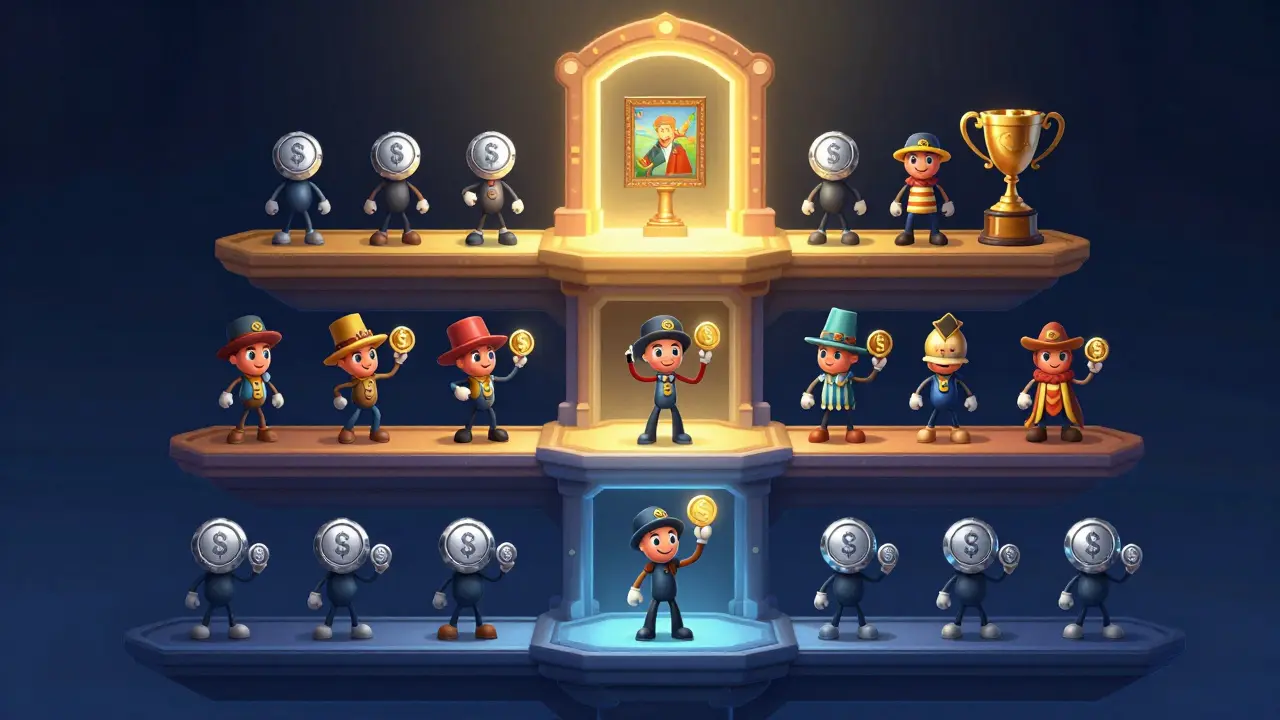
Beyond governance, social tokens solve the practical problem of access control. Traditionally, creators use paid subscriptions (like Patreon) to gate content. However, these subscriptions are rigid: you pay monthly, regardless of how much value you get, and you lose access the moment you stop paying.
Social tokens enable dynamic, tiered access. Holding a certain number of tokens can automatically unlock private Discord channels, exclusive webinars, or physical merchandise. Smart contracts handle the verification, eliminating manual checks and reducing fraud. For instance, the Whale (WHALE) token community offered virtual art exhibitions to holders of 10+ tokens and physical art pieces to holders of 100+. This tiered model increased their retention rate by 65% in Q3 2021.
Consider a professional association that wants to host expert-led Zoom webinars. By requiring a specific token to join, they ensure only committed members attend. A case study by Sidecar AI showed that implementing token-gated webinars reduced unauthorized access by 100% and boosted paid membership by 40% within three months. The token acts as proof of investment, signaling that the member is serious about being part of the group.
Incentivizing Contribution and Engagement
One of the hardest challenges in community building is keeping people engaged after the initial hype fades. Social tokens address this by creating economies where contribution is rewarded. Members can earn tokens by writing articles, moderating chats, developing software, or organizing events.
BanklessDAO demonstrated this effectively. They distributed their BANK token to contributors based on the value of their work. Within six months, this incentive structure led to a 300% increase in active contributors. Unlike static loyalty points that expire or have limited use, these tokens could be traded, held for appreciation, or used for governance, giving them real-world utility.
This model also helps with recruitment. Linda Xie predicted that social token communities would hire people for part-time or full-time roles, offering compensation in tokens. BanklessDAO validated this by employing over 200 contributors across 15 working groups by early 2022, paying them partially in community tokens. This creates a new labor market where skills are valued and compensated transparently on-chain.
Economic Sustainability and Monetization
For creators and community founders, sustainability is key. Traditional monetization methods-ads, sponsorships, subscriptions-often require constant hustle and can alienate audiences. Social tokens offer a self-sustaining economic engine.
There are two main ways these tokens generate revenue:
- Primary Sales: Creators issue new tokens to raise capital. For example, a mid-tier influencer sold tiered tokens (Silver, Gold, Platinum) ranging from $50 to $500, generating $120,000 in initial sales.
- Secondary Market Royalties: When members trade tokens on secondary markets, smart contracts can automatically send a percentage (e.g., 5-10%) back to the creator. This turns every resale into a recurring revenue stream.
Additionally, as the community grows, the token's value may appreciate. The $FWB token rose from $1.50 at launch to over $40 by November 2021. Early members benefited from this growth, reinforcing their loyalty. This "appreciation model" aligns the creator's success with the community's financial well-being, creating a virtuous cycle of growth and reward.
Building Portable Social Graphs
Social tokens also help solve the "cold start" problem for new communities. How do you find your first 100 true believers? By leveraging existing social graphs. Platforms like RabbitHole issue NFT badges for completing learning quests, which signal specific skills or interests. These badges act as credentials, allowing users to discover and join aligned communities easily.
Collab.Land, a tool for token-gating, processed over 5 million verifications monthly by late 2022. This infrastructure allows communities to interconnect. If you hold a token in one crypto education community, you might automatically get access to a related DeFi protocol's testnet. This cross-pollination creates network effects that standalone platforms cannot achieve, fostering a broader ecosystem of interconnected, value-aligned groups.
| Feature | Traditional Community (Discord/Patreon) | Social Token Community |
|---|---|---|
| Ownership | Platform owns the data and relationships | Members share ownership via tokens |
| Governance | Top-down, founder-led decisions | Decentralized voting on treasury and rules |
| Monetization | Subscriptions, ads, donations | Token sales, secondary royalties, treasury yields |
| Portability | Locked to one platform | Portable across apps using wallet addresses |
| Incentives | Static rewards (badges, tiers) | Dynamic value (tradeable, appreciating assets) |
Challenges and Risks to Consider
While the benefits are significant, social tokens are not without risks. Volatility is a major concern. If a token's price crashes, members may feel discouraged, and the community's treasury could shrink rapidly. Founders must design robust tokenomics that include mechanisms to stabilize value, such as buyback-and-burn programs or staking rewards.
Regulatory uncertainty also looms. Depending on jurisdiction, social tokens might be classified as securities, which brings complex legal requirements. Communities must navigate these waters carefully, often consulting legal experts to ensure compliance. Additionally, the technical barrier to entry remains high for non-crypto-native users. Managing wallets, gas fees, and seed phrases can be daunting. Solutions like account abstraction and fiat on-ramps are helping, but usability must continue to improve for mass adoption.
Next Steps for Community Builders
If you are considering launching a social token, start with clear goals. Do you need governance? Funding? Access control? Define the primary utility before issuing tokens. Choose a blockchain that balances cost and security; Polygon and Solana are popular choices for their low transaction fees, while Ethereum offers the deepest liquidity and security.
Engage your early adopters in the design process. Let them vote on token parameters like supply cap, distribution schedule, and voting mechanisms. This builds trust and ensures the token reflects the community's values. Finally, focus on building genuine utility. A token without real-world use cases will eventually lose value. Tie it to tangible benefits: exclusive content, governance rights, or revenue sharing.
What is the difference between a social token and a regular cryptocurrency?
Regular cryptocurrencies like Bitcoin aim to be universal money or stores of value. Social tokens are specific to a particular person, brand, or community. Their value is derived from the utility they provide within that specific ecosystem, such as access to content or voting rights, rather than general market speculation alone.
How do I buy or sell social tokens?
You typically buy social tokens through specialized platforms like Roll, Rally, or Opensea, depending on the blockchain. You'll need a crypto wallet (like MetaMask) to connect to these platforms. Once purchased, tokens can often be traded on decentralized exchanges (DEXs) if there is sufficient liquidity, or held for utility within the community.
Are social tokens legal?
The legality depends on your jurisdiction and how the token is structured. If a token promises profits based on the efforts of others, it may be classified as a security by regulators like the SEC in the US. Many communities structure tokens as utility assets to mitigate this risk, but legal advice is essential before launching.
Can I use social tokens for business payments?
Yes, some communities use tokens for internal compensation. For example, a DAO might pay freelancers in its native token for services rendered. However, converting these tokens to fiat currency for taxes or personal expenses requires selling them on an exchange, which involves market risk due to price volatility.
What happens if the community fails?
If a community loses relevance or activity, the demand for its token usually drops, leading to a decrease in value. In extreme cases, the token may become worthless. This is why diversification is important; members should not invest more than they can afford to lose, and communities should focus on sustainable utility rather than speculative hype.
