Nigeria Crypto Trading Estimator
Nigeria Crypto Market Data
From the article:
- 42% of traders reported being scammed
- 67% of users had bank accounts frozen
- 2022 crypto volume: $18.3 billion (3.1% of informal economy)
- 32% of global Paxful escrow trades came from Nigeria
Your Estimated Returns
Remember: In the underground economy, trust was built through test trades and community blacklists as described in the article.
When Nigeria’s Central Bank banned banks from handling cryptocurrency transactions in February 2021, most expected crypto activity to vanish. Instead, it exploded. By the time the ban was lifted in December 2023, Nigeria had become the second-most crypto-adoption-heavy country in the world, according to Chainalysis. Not because people were breaking the law - but because they found ways to work around it. The ban didn’t stop crypto. It just pushed it underground.
The Ban That Backfired
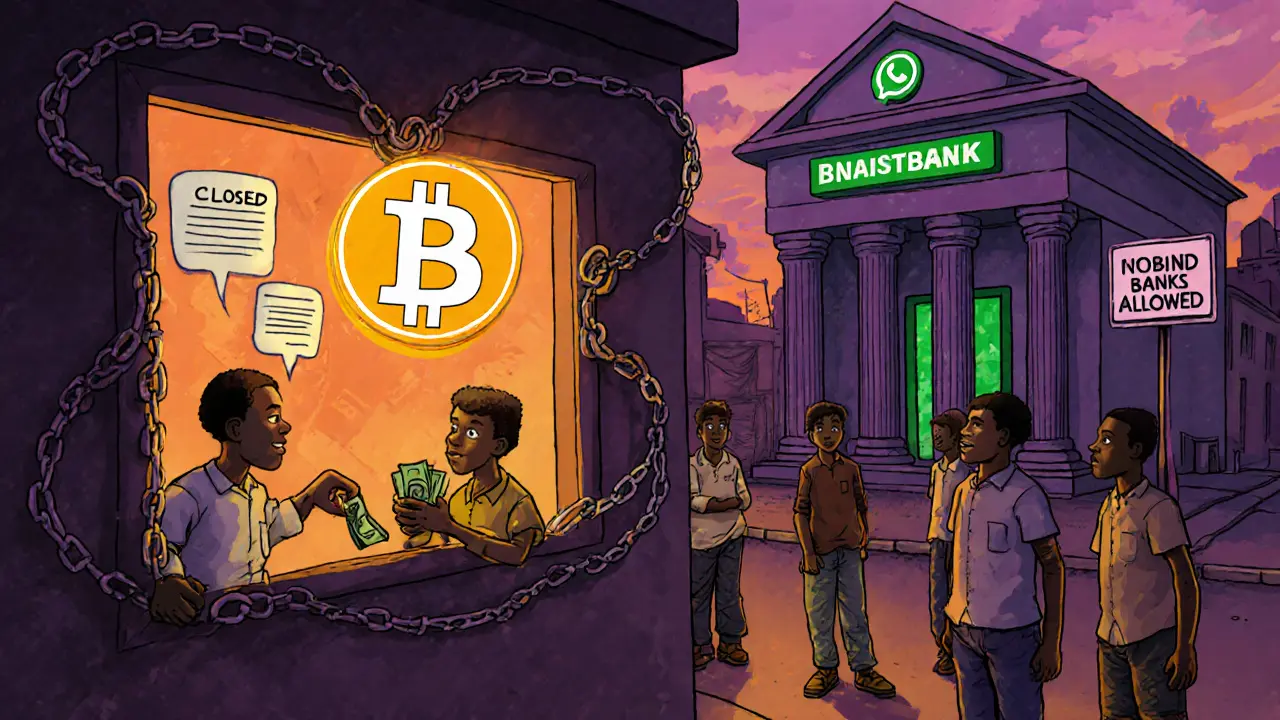
The Central Bank of Nigeria didn’t outlaw crypto itself. It told banks: “Don’t touch it.” That meant no deposits, no withdrawals, no accounts for crypto exchanges. But it didn’t say you couldn’t buy Bitcoin with cash from your neighbor. That loophole became the backbone of a $56.7 billion crypto economy in just one year. People didn’t stop trading. They just stopped using banks. Instead, they turned to peer-to-peer platforms like Binance P2P. By late 2022, over 1.2 million Nigerians were using it every month, moving around $150 million in naira for crypto. That’s not a small side hustle. That’s a parallel financial system.How People Traded Without Banks
Trading crypto in Nigeria during the ban wasn’t like clicking a button on Coinbase. It was messy, manual, and deeply personal. Most traders used WhatsApp groups to find buyers and sellers. You’d message someone, agree on a price, then send naira via bank transfer. The seller would release Bitcoin once the money hit their account - or so they promised. But banks were watching. If you received a large crypto payment, your account could freeze overnight. That’s why most traders stuck to small transfers - under ₦500,000 ($600) - to avoid suspicion. Some used mobile money apps like Opay or PalmPay. Others paid with airtime credits, which could be instantly converted to cash through local vendors. The most trusted traders developed their own rules. One common practice: a test trade. Before sending thousands, you’d send ₦5,000 first. If the crypto came through, you knew they were legit. Community-run blacklists circulated in WhatsApp groups with 50,000+ members. If someone scammed you, you added them to the list. Others avoided them. It wasn’t government regulation. It was crowd-sourced trust.The Rise of the P2P Network
Binance P2P became the unofficial national exchange. It didn’t need a bank license. It didn’t even need to be in Nigeria. All it needed was internet and people willing to trade. The platform’s escrow system held crypto until payment was confirmed - a simple but powerful idea. In 2022, Nigerian users accounted for 32% of all Paxful escrow trades globally. Other platforms followed. Quidax, a Nigerian-born exchange, processed ₦8.2 billion ($10 million) monthly. Bundle linked crypto trades directly to mobile money. These weren’t big corporations. Many were young developers who saw a gap and built solutions. YouTube became the classroom. Channels like “Crypto With Tolu” grew to 247,000 subscribers with videos titled “How to Trade Crypto Without Getting Your Account Frozen” or “5 Red Flags in P2P Trades.” These weren’t ads. They were survival guides.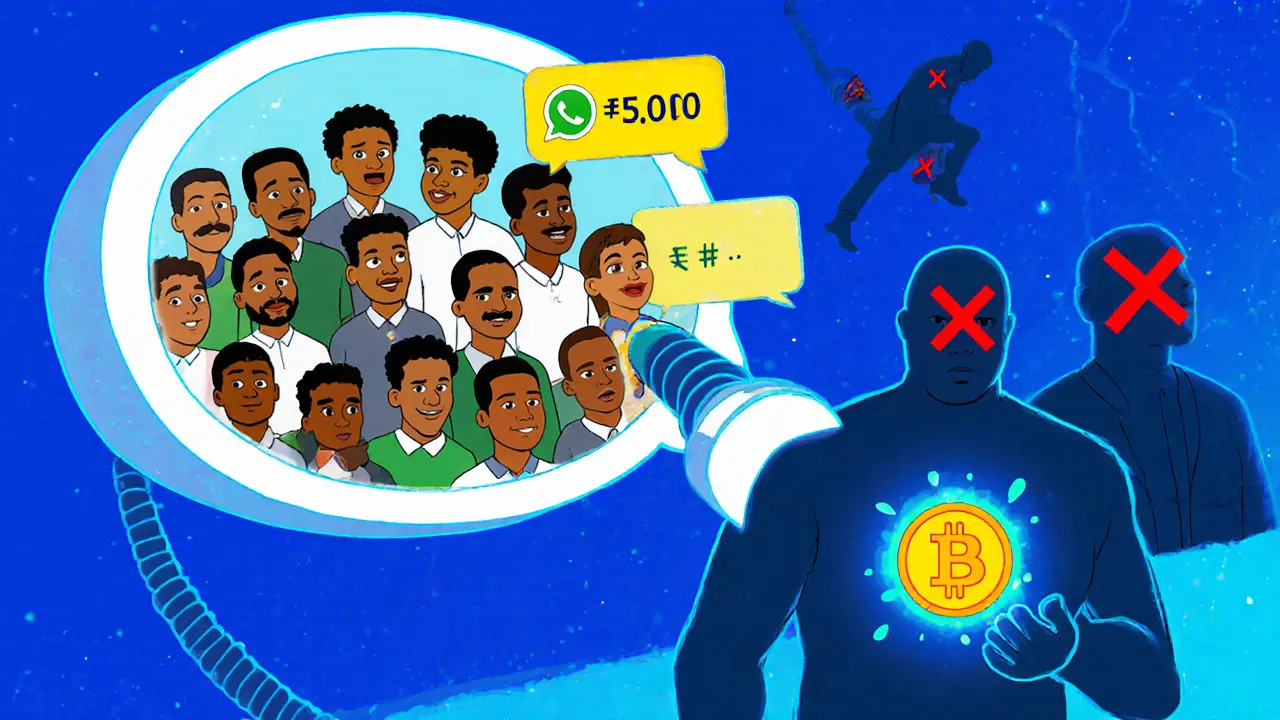
Who Was Trading - And Why
It wasn’t just investors. Students used crypto to pay for tuition when banks blocked international transfers. Small business owners bought goods from overseas suppliers using Bitcoin because traditional payment processors refused to serve them. Freelancers got paid in crypto because PayPal and Stripe wouldn’t let them withdraw naira. A 2022 survey found 68% of underground traders were under 35. Nearly half were students. Almost a third ran small businesses. These weren’t speculators chasing moonshots. They were people using crypto to survive a broken financial system. One Reddit user, LagosTrader87, started with ₦5,000 in March 2021. By December 2022, he had ₦2.3 million - enough to pay for his university fees. Another, AbujaInvestor, lost ₦380,000 to a scammer on Telegram. No police report helped. No bank reversed it. That’s the risk.The Cost of Going Underground
For every success story, there were two failures. Forty-two percent of traders reported being scammed at least once. Sixty-seven percent had bank accounts frozen after receiving crypto payments. Banks didn’t ask questions - they just shut accounts down. FATF, the global anti-money laundering watchdog, called Nigeria’s underground market one of Africa’s biggest risks for fraud and laundering. They weren’t wrong. With no KYC checks, no identity verification, and no oversight, bad actors slipped through. But here’s the twist: the underground system had more accountability than the formal one. If you scammed someone on Binance P2P, you got blacklisted. If you defrauded a bank, you got a loan. The community enforced rules. The system didn’t.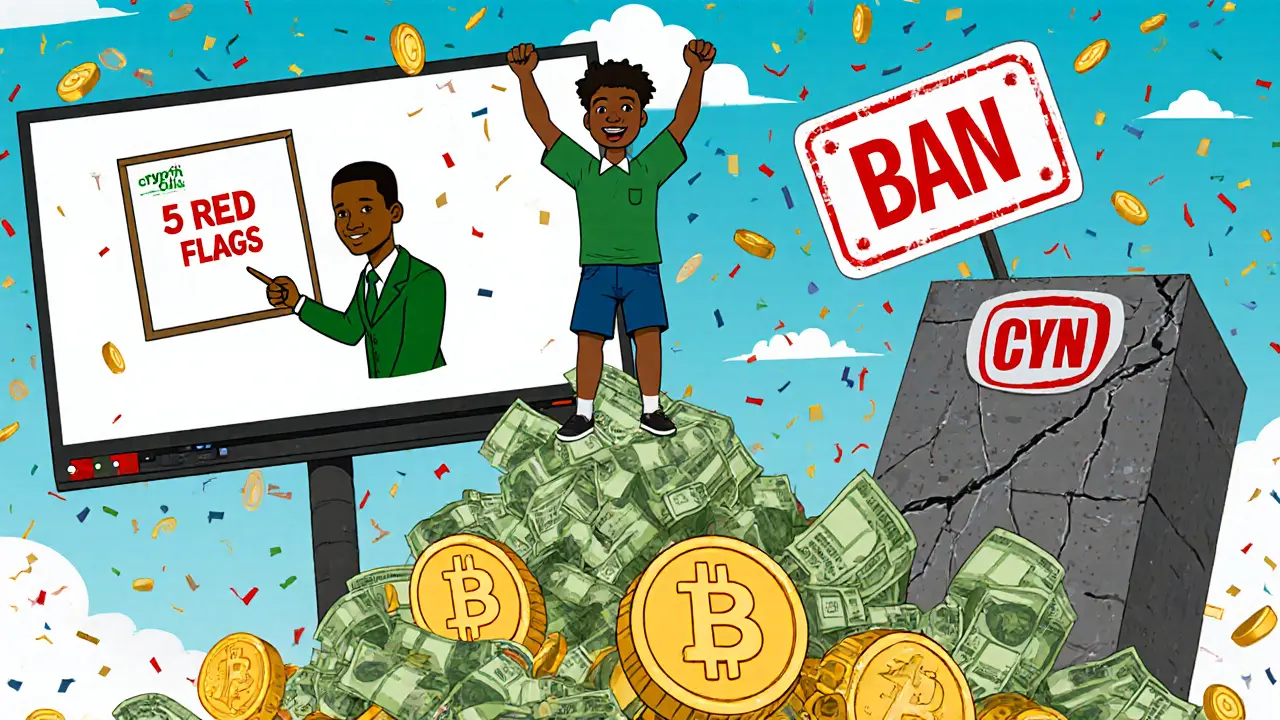
Why the Ban Didn’t Work - And Why It Still Matters
The CBN thought cutting off banks would kill crypto. Instead, it forced innovation. Nigeria’s crypto volume in 2022 was $18.3 billion - 3.1% of the country’s entire informal economy. It outpaced Egypt, Algeria, and even South Africa. When the ban lifted in December 2023, the CBN didn’t welcome crypto. They just said: “Trade, but don’t use banks.” Then, in February 2024, they banned Binance P2P. Again. The message was clear: they didn’t want to regulate crypto. They wanted to control it. But control had already slipped away. By then, 89% of Nigerians viewed crypto as a legitimate tool - even if the government didn’t. The underground economy didn’t disappear. It became part of the culture.What Happens Now?
The Investments and Securities Act of March 2025 officially recognized crypto as a financial security. That’s a big step. But a new 25% tax on crypto profits, starting in 2026, might push some activity back underground. Why pay 25% to the government when you can trade with your neighbor for free? The legacy of the ban isn’t just in the numbers. It’s in the mindset. Nigerians learned that money doesn’t need permission to move. That trust can be built without banks. That innovation thrives when institutions fail. The underground crypto economy didn’t just survive the ban. It rewrote the rules - and forced the world to pay attention.Was cryptocurrency illegal in Nigeria during the ban?
No. The Central Bank of Nigeria only banned financial institutions - banks and payment processors - from facilitating crypto transactions. Individuals could still buy, sell, and hold crypto. The ban targeted banks, not people. This loophole allowed the underground economy to grow.
How did Nigerians trade crypto without banks?
They used peer-to-peer (P2P) platforms like Binance P2P, Paxful, and Quidax. Traders connected via WhatsApp and Telegram, agreed on prices, and sent naira through bank transfers, mobile money, or even airtime credits. Escrow systems held crypto until payment was confirmed. Many used small test trades to verify trustworthiness before larger deals.
What was the biggest risk of trading crypto underground in Nigeria?
The biggest risks were scams and frozen bank accounts. About 42% of traders reported being scammed, often by sellers who disappeared after receiving payment. Meanwhile, 67% had their personal bank accounts frozen because banks flagged crypto-related transactions as suspicious - even if the user did nothing wrong.
Why did Nigeria rank #2 in global crypto adoption during the ban?
Because Nigerians had no other choice. With high inflation, unreliable banking, and limited access to foreign currency, crypto became a lifeline. Students paid tuition, freelancers got paid, and small businesses imported goods. The ban didn’t stop demand - it just forced people to build better tools to meet it.
Did the ban hurt or help crypto adoption in Nigeria?
It helped - dramatically. Before the ban, Nigeria ranked 28th in global crypto adoption. After, it jumped to #2. The ban created a crisis that sparked innovation. People built community trust systems, local platforms, and educational content. The underground economy didn’t just survive - it became the most advanced crypto network in Africa.
Is crypto still underground in Nigeria today?
Not entirely, but parts of it still are. While licensed exchanges now operate legally, the P2P model remains popular. The CBN still blocks banks from handling crypto, and the new 25% tax on profits may push some traders back to informal channels. The culture of peer-to-peer trading is now deeply embedded - and unlikely to disappear.

5 Comments
Ben Costlee
This is one of those rare cases where government overreach accidentally built something better than what existed before. Nigerians didn’t just adapt-they reinvented finance from the ground up. No central authority, no bureaucracy, just people trusting each other with a WhatsApp message and a ₦5,000 test trade. That’s not chaos. That’s community-powered resilience.
I’ve seen crypto used as a lifeline in other countries, but this? This was a full-scale civic hack. The fact that blacklists became the de facto KYC system says more about institutional failure than individual greed. The banks froze accounts. The people froze scammers.
And now the government wants to tax it? After forcing people into this system? That’s like taxing water after you dammed the river and left people thirsty.
There’s a lesson here for every country that thinks regulation can crush innovation. You don’t stop demand. You just make it more dangerous, more creative, and more human.
I hope the world pays attention. This isn’t just about crypto. It’s about what happens when people are left to solve problems on their own.
Mark Adelmann
Man, I remember reading about this back in 2022 and just shaking my head. People were trading crypto with airtime credits. Airtime. Not even cash. Just phone minutes converted to money through some guy at the corner shop. That’s next-level ingenuity right there.
And the YouTube tutorials? Crypto With Tolu? That’s the real MVP. No fancy Wall Street jargon, just straight talk: ‘Don’t send more than 500k until you test with 5k.’ Simple. Deadly effective.
I wish my bank had that kind of community accountability. Here, if you get scammed, you call customer service and get a robot. In Nigeria, you got a WhatsApp group with 50,000 people who’ll name and shame you before lunch.
ola frank
The structural implications of this phenomenon are profoundly underanalyzed in mainstream discourse. The CBN’s monetary policy intervention-by targeting intermediaries rather than end-users-created a negative externality that catalyzed a decentralized financial network with emergent governance properties. This is not merely circumvention; it is institutional displacement.
The P2P ecosystem functioned as a non-state monetary authority, leveraging cryptographic trust mechanisms (escrow) coupled with social capital (blacklists, test trades) to enforce contract compliance in the absence of legal recourse. This constitutes a proto-institutional framework with higher transactional fidelity than the formal banking sector it supplanted.
Furthermore, the 42% scam rate, while alarming, is statistically comparable to pre-regulation informal credit markets in developing economies. What distinguishes this case is the scalability of trust via digital coordination. The network effect of WhatsApp-based reputation systems represents a novel form of distributed social contract.
That the CBN subsequently banned Binance P2P confirms their fundamental misunderstanding: they did not regulate. They weaponized obscurity. And in doing so, they validated the very premise of decentralized finance-that permissionless systems outperform controlled ones under duress.
imoleayo adebiyi
As a Nigerian, I lived this. I was one of those students paying tuition with Bitcoin because my bank blocked every international transfer. I lost ₦120,000 to a scammer on Telegram once. I cried that night.
But then I joined a WhatsApp group in Surulere. Someone posted a blacklist. I checked every seller before trading. I did test trades. I learned to read between the lines of messages. Slowly, I got better.
Now I work with a small fintech startup building tools for P2P traders. We don’t want to replace the banks. We want to give people tools to protect themselves when the banks won’t help.
The ban didn’t create crypto. It revealed how much we already trusted each other. That’s the real story.
Angel RYAN
This is the future right here