
Buying a memecoin feels less like investing and more like buying a lottery ticket at a gas station. You might hit the jackpot, or you might walk away with nothing but a receipt for your trouble. This is the reality of memecoin investment, a sector defined by extreme volatility, viral hype, and often, complete lack of utility. As we move through 2026, the landscape has shifted dramatically from the early days of internet jokes to a complex ecosystem involving celebrity endorsements, government experiments, and strict regulatory scrutiny. Understanding whether these digital assets are worth your money requires looking past the price charts and understanding what actually drives their value.
What Defines a Memecoin?
To understand the risk, you first need to understand the product. Unlike Bitcoin, which aims to be digital gold, or Ethereum, which powers smart contracts, memecoins have no technical innovation at their core. They originate from internet memes, viral jokes, or pop culture moments. The first was Dogecoin, launched in December 2013 by software engineers Billy Markus and Jackson Palmer as a satire on cryptocurrency speculation. Today, the category includes tokens like Shiba Inu (SHIB), Pepe (PEPE), and even political tokens like $TRUMP.
The defining characteristic of a memecoin is that its value is derived almost exclusively from social sentiment and community engagement rather than fundamental utility. Most operate on existing blockchain networks-ERC-20 tokens on Ethereum or SPL tokens on Solana-because building a new blockchain is expensive and unnecessary for a joke currency. This low barrier to entry means anyone can create a memecoin, which leads to a market flooded with thousands of projects, most of which have zero chance of survival.
The Reward Side: Why People Get Rich (And Why It’s Rare)
Let’s address the elephant in the room: yes, people make life-changing money with memecoins. The reward potential is what draws millions of retail investors into this space. The mechanics are simple: if you buy early enough, before the hype explodes, and sell before the interest fades, you can see returns that dwarf traditional markets.
Consider the case of Pepe (PEPE). Users who bought in during April 2023 when it traded at fractions of a cent saw massive gains as the token surged due to viral attention on social media platforms like X (formerly Twitter) and Reddit. One documented user experience showed a 650% return on a $500 investment in just one month. These stories fuel the "fear of missing out" (FOMO) that drives prices higher.
Dogecoin remains the king of longevity in this space. With a market cap exceeding $12 billion in late 2024, it has achieved something rare for a memecoin: merchant acceptance. Small businesses and online stores occasionally accept DOGE for payments, providing a sliver of real-world utility. However, this utility is minimal compared to its valuation. The primary reward here is still speculative trading based on community strength and brand recognition.
The Risk Reality: Volatility, Scams, and Total Loss
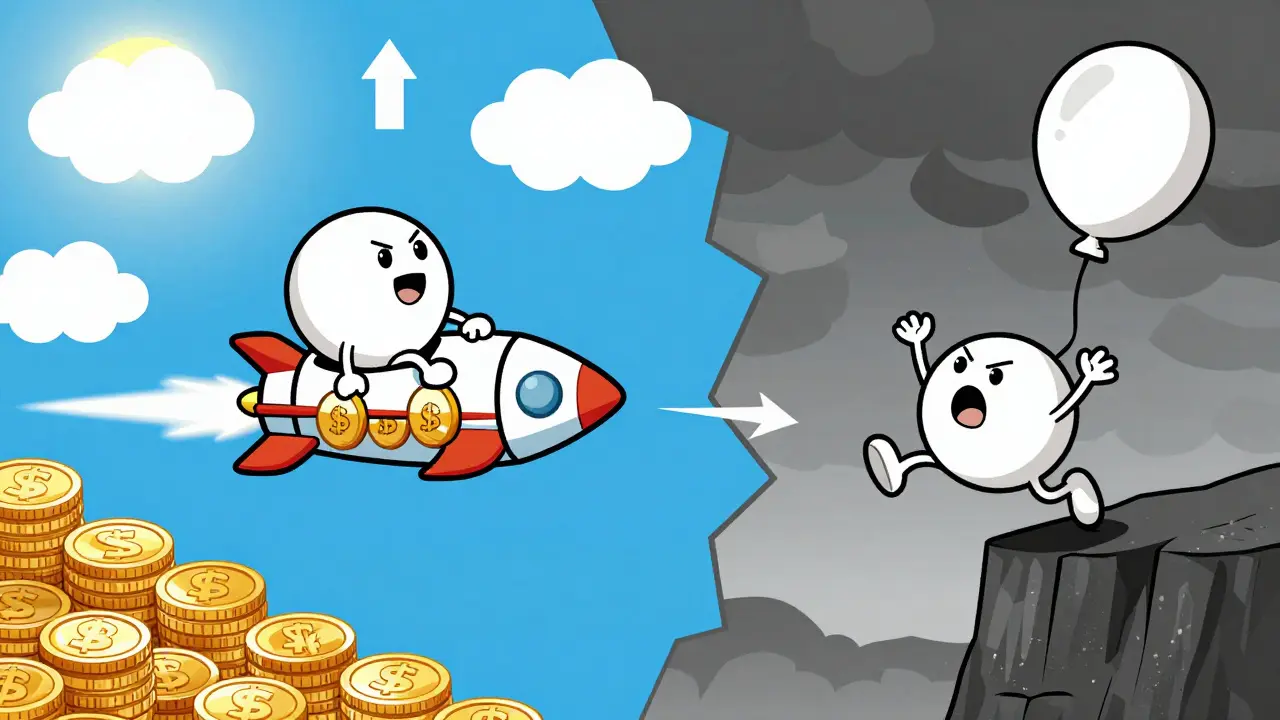
If rewards are the hook, risks are the trap. Memecoins are arguably the most volatile asset class available to retail investors. Weekly price swings of 150% to 200% are common, compared to Bitcoin’s typical 30% to 40% moves. This volatility isn’t driven by earnings reports or technological upgrades; it’s driven by tweets, influencer endorsements, and internet trends.
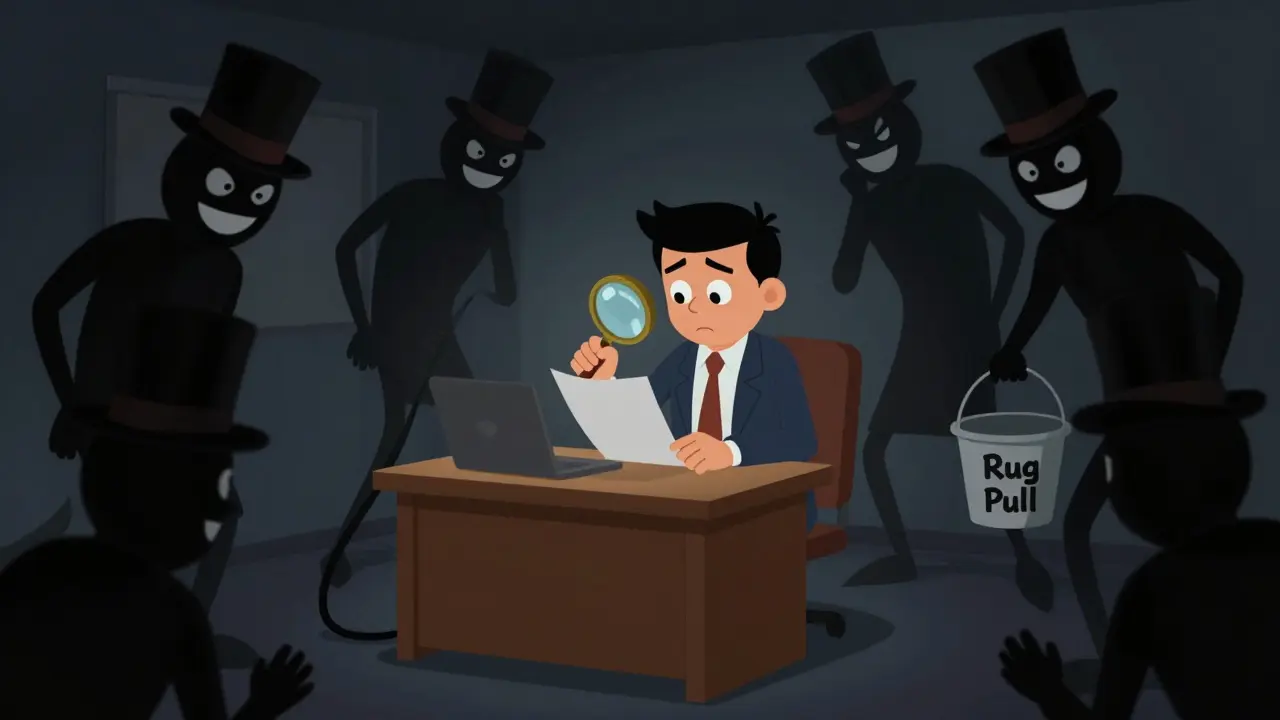
The most significant risk is the "pump-and-dump" scheme. Fraudulent creators launch a token, hype it up on Telegram or Discord groups, and then sell their holdings once retail investors buy in, causing the price to crash. In 2024 alone, databases tracked over 3,800 fraudulent memecoin projects. The infamous "Squid Game" token scam resulted in losses of over $6 million for investors who were locked out of selling their tokens after the developers disappeared.
Celebrity-endorsed tokens present a unique danger. The launch of the $TRUMP token in January 2025 serves as a cautionary tale. Announced via social media three days before a presidential inauguration, the token skyrocketed to a $27 billion market cap within 24 hours. By February 2025, it had crashed, resulting in an estimated $2 billion in cumulative losses for investors. Similarly, the Central African Republic’s national memecoin, $CAR, lost 95% of its value in a single day after legitimacy concerns arose. These examples show that even high-profile backing does not guarantee safety.
| Attribute | Memecoins (e.g., PEPE, SHIB) | Traditional Crypto (e.g., BTC, ETH) |
|---|---|---|
| Value Driver | Social sentiment, viral trends, FOMO | Utility, scarcity, network security, adoption |
| Volatility | Extreme (150-200% weekly swings) | High (30-40% weekly swings) |
| Regulatory Status | Classified as "collectibles" (SEC, Feb 2025) | Mixed; some classified as securities/commodities |
| Supply Model | Often infinite or quadrillions (psychological pricing) | Fixed supply (e.g., 21M BTC) or deflationary mechanisms |
| Long-term Viability | Low; dependent on sustained cultural relevance | Higher; backed by infrastructure and institutional use |
Regulatory Landscape: The SEC’s "Collectible" Verdict
In February 2025, the U.S. Securities and Exchange Commission (SEC) issued a memo that clarified the status of memecoins. They stated that meme coins are "akin to collectables" rather than securities because they typically have limited or no functionality and do not generate yield or convey rights to future profits. This classification sounds positive-it means they aren’t illegal-but it also strips away investor protections.
When an asset is a security, regulations exist to prevent fraud and ensure transparency. When it’s a collectible, like a Beanie Baby or a trading card, you’re on your own. The SEC opened 47 investigations into celebrity-endorsed memecoins by the end of 2024, signaling increased scrutiny. For investors, this means there is no recourse if a project turns out to be a scam. You cannot sue the SEC for your losses; you can only hope you did your due diligence.
How to Navigate Memecoin Investments Safely
If you decide to participate in this market, treating it as gambling rather than investing is the safest mindset. Here are practical steps to minimize your exposure to catastrophic loss:
- Never invest more than you can afford to lose. Allocate only a tiny fraction of your portfolio-perhaps 1% or less-to speculative assets. If you lose it all, your financial life should remain unaffected.
- Verify the contract address. Scammers create fake tokens with the same name as popular ones. Always copy the contract address directly from official sources, such as the project’s verified website or reputable data aggregators like CoinGecko.
- Check liquidity and lock status. Use tools like Etherscan or Solscan to see if the developers have locked the liquidity pool. If they haven’t, they can pull the funds and disappear at any time (a "rug pull").
- Avoid celebrity tokens unless you understand the risk. Tokens tied to public figures are highly susceptible to manipulation and regulatory action. The $TRUMP and $MELANIA tokens demonstrated how quickly political hype can turn into financial ruin.
- Use hardware wallets. Storing memecoins on exchanges exposes you to platform risks. Hardware wallets like Ledger or Trezor provide better security, though you must still be careful about connecting to malicious dApps.
Future Outlook: Will Memecoins Survive?
The future of memecoins is bifurcated. On one hand, regulatory pressure is mounting. Gartner predicts that memecoins will shrink to 4.7% of the crypto market by 2027 due to stricter oversight. On the other hand, retail interest remains strong, particularly in emerging markets where adoption rates are 18.7% higher than in developed nations.
For memecoins to survive long-term, they must evolve beyond pure speculation. Dogecoin’s development of merchant acceptance offers a blueprint, but it is insufficient for most projects. Without genuine utility-such as integration into gaming, entertainment, or decentralized finance protocols-most memecoins will likely fade away as the next viral trend emerges. The market is becoming crowded, and attention spans are short. Only those with strong communities and clear paths to utility will endure.
Are memecoins considered investments by the SEC?
No. In February 2025, the SEC clarified that memecoins are treated as "collectibles" rather than securities. This means they lack the regulatory protections associated with stocks or bonds, and investors bear full responsibility for their losses.
Why did the $TRUMP token crash so hard?
The $TRUMP token experienced a classic pump-and-dump pattern driven by pre-inauguration hype. After reaching a $27 billion market cap, interest waned, and large holders sold off, causing a massive crash that resulted in billions in investor losses.
Is Dogecoin a safe investment?
While Dogecoin is the most established memecoin with some merchant adoption, it remains highly volatile and speculative. Its value is still largely driven by social sentiment rather than intrinsic utility, making it risky for long-term wealth preservation.
How can I spot a memecoin scam?
Look for red flags like anonymous developers, unlocked liquidity pools, promises of guaranteed returns, and excessive hype on social media without substance. Always verify contract addresses and check community sentiment on independent forums.
What is the difference between a memecoin and Bitcoin?
Bitcoin has a fixed supply, robust security, and widespread institutional adoption. Memecoins typically have infinite or huge supplies, rely on social hype for value, and lack technical utility or institutional backing.
