
Imagine buying a collectible item where the manufacturer promises to destroy half of all existing units every year. Naturally, you’d expect the price of your piece to skyrocket. That is the core promise behind deflationary cryptocurrencies. Unlike traditional currencies that governments print endlessly, these digital assets are designed with built-in mechanisms to shrink their supply over time. The theory is simple: if demand stays steady or grows while supply shrinks, value goes up.
But as we move through 2026, the landscape has shifted dramatically from the early days of Bitcoin. It is no longer just about holding onto coins until they become "digital gold." The market has evolved into a complex ecosystem featuring automated burns, hybrid utility models, and algorithmic scarcity. For investors and developers alike, understanding how these mechanisms actually work-and where they might fail-is critical. Let’s break down what is driving this sector, which projects are leading the charge, and what pitfalls you need to watch out for.
How Deflationary Mechanisms Actually Work
To understand the future, we first need to look at the engine under the hood. Deflationary tokens generally rely on three main technical approaches to reduce supply. Knowing the difference helps you spot genuine scarcity versus marketing fluff.
- Fixed Supply Caps is a model where the maximum number of tokens is hard-coded into the blockchain protocol, ensuring no new tokens can ever be created beyond that limit. This is the classic Bitcoin approach. With a cap of 21 million BTC, the supply is finite. The scarcity comes from the fact that issuance slows down over time via "halvings," eventually reaching zero new production.
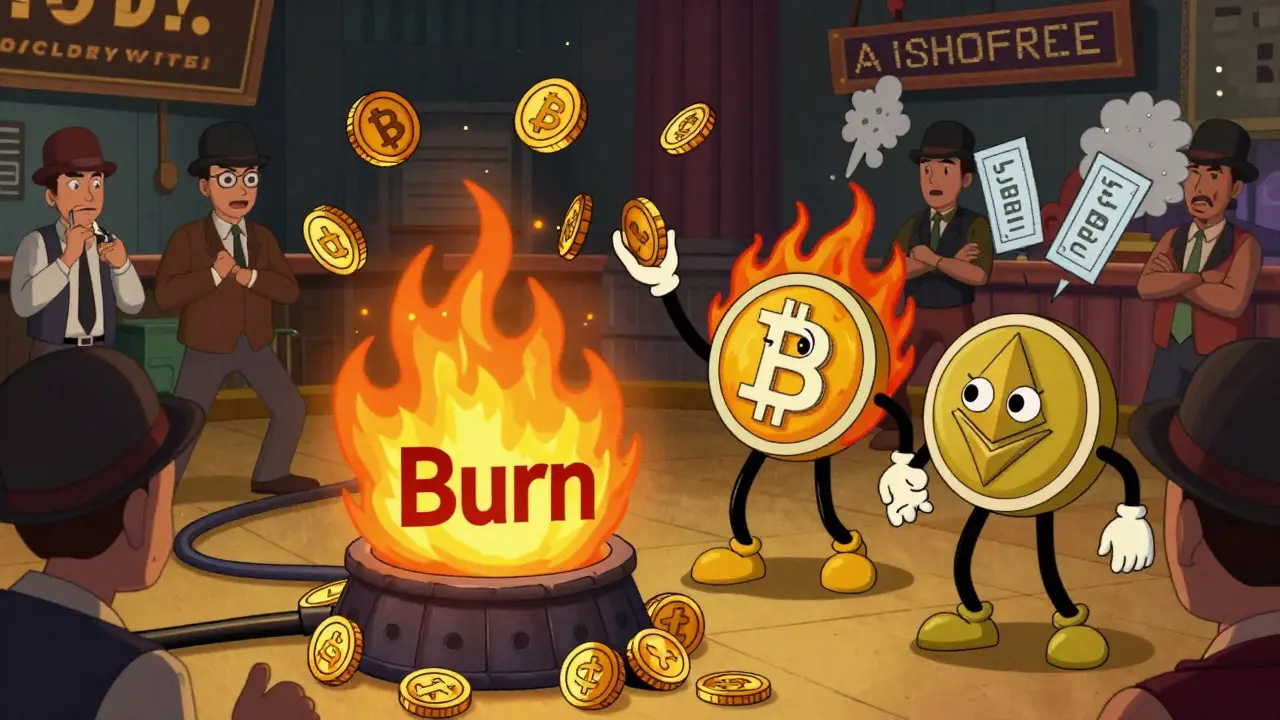
- Automated Token Burns is a process where a percentage of tokens is permanently removed from circulation through smart contract execution, often triggered by transactions or periodic events. Projects like BNB Chain use this method. Instead of waiting years for natural decay, they actively incinerate tokens based on specific metrics like price or block production. This creates a dynamic deflationary pressure that reacts to market conditions.
- Transaction-Based Deflation is a mechanism where a portion of every transaction fee is destroyed rather than paid to validators or miners, linking network usage directly to supply reduction. Ethereum’s EIP-1559 introduced this concept. When the network is busy, more fees are burned, potentially making the net supply decrease even as the base issuance continues. This ties deflation directly to user activity.
The key distinction here is predictability. Bitcoin’s deflation is slow and predictable. BNB’s is aggressive and tied to performance. Ethereum’s is variable and dependent on network congestion. Each model appeals to different types of investors and serves different economic purposes within its ecosystem.
Market Landscape in 2026: Who Holds the Power?
As of late 2025 and moving into 2026, the deflationary crypto market has matured significantly. According to data from HeLa Labs and CoinGecko, there are now over 47 active deflationary projects with a combined market capitalization exceeding $850 billion. That represents roughly 38% of the entire cryptocurrency market. This isn’t a niche anymore; it is a dominant force.
| Token | Mechanism | Supply Status | Volatility Profile | Key Risk |
|---|---|---|---|---|
| Bitcoin (BTC) | Fixed Cap + Halving | ~19.7M / 21M mined | Low relative to altcoins | High transaction fees during peaks |
| BNB | Quarterly Auto-Burn | 137.7M / 100M target | Moderate (burn-driven spikes) | Whale manipulation around burn dates |
| Ethereum (ETH) | Fee Burn (EIP-1559) | Variable (Net deflationary periods) | High (tied to DeFi/NFT activity) | Complex upgrade roadmap risks |
| Solana (SOL) | 50% Fee Burn | Dynamic based on usage | High growth potential | Network stability concerns |
Bitcoin remains the king of store-of-value narratives. With 97 of the top 100 institutional investment firms holding BTC as of Q3 2025, its status as "digital gold" is entrenched. However, it suffers from scalability issues. Transaction fees averaged $4.27 during peak times in late 2025, which is prohibitive for everyday micro-transactions.
On the other hand, BNB Chain has proven that aggressive deflation can drive utility. Changpeng Zhao (CZ) announced in October 2025 that their 33rd quarterly burn removed 1.44 million BNB tokens worth over $1.2 billion. This brings them closer to their goal of reducing the total supply to 100 million. The volatility here is higher because traders try to front-run these burns, but the long-term scarcity story is compelling.
Ethereum occupies a unique middle ground. It doesn’t have a hard cap, but its fee-burning mechanism means it can become deflationary during high-activity periods. In the first nine months of 2025 alone, Ethereum experienced net deflation for 127 days, burning approximately 1.2 million ETH. This makes it attractive for developers who want a scalable platform with an underlying asset that can appreciate without relying solely on speculative hype.
The Rise of Hybrid Models and New Entrants
The most exciting developments in 2026 are not coming from the giants, but from newer projects experimenting with hybrid models. Pure deflation-where you just hold and wait-is becoming less popular. Instead, we are seeing "utility-deflation" hybrids.
Projects like BullZilla ($BZIL) represent this next evolution. Launched in late 2025, they introduced a "Roar Burn Mechanism" that automatically reduces supply based on transaction volume, coupled with a staking platform offering high APYs. This attempts to solve the biggest flaw of deflationary tokens: hoarding. If users only hold, the network dies because there is no liquidity. By tying burns to activity and rewarding staking, these projects encourage participation while still reducing supply.
Solana also joined the fray with a tokenomics redesign in Q1 2025. By implementing a burn mechanism that removes 50% of transaction fees, Solana ensures that high network activity directly contributes to scarcity. This aligns the interests of users (who want a fast, cheap network) with holders (who want price appreciation). Blockpit’s analysis showed that this approach helped Solana maintain net deflation during periods of intense DeFi and NFT trading.
This shift toward hybrid models suggests that the future of deflationary crypto is not just about scarcity, but about creating ecosystems where scarcity enhances utility rather than hindering it.

Pitfalls and Risks: Is It All Just "Burn Theater"?
Not everything that claims to be deflationary is legitimate. Dr. Sarah Chen, Chief Economist at CoinDesk, warned in September 2025 that many tokens implement burns so minimal that they create "psychological rather than economic deflation." Her research found that 63% of deflationary tokens launched between 2022 and 2024 had burn rates below 0.1% annually. At that rate, it would take centuries to meaningfully impact supply.
This phenomenon is known as "burn theater." Projects announce flashy burn events to pump sentiment, but the actual amount destroyed is negligible compared to the total supply. For example, some projects burn tokens representing less than 0.0001% of total supply per quarter. Investors need to look past the marketing headlines and check the math.
Another major risk is reduced liquidity. Crypto Basic documented a 22% decrease in average transaction volume for deflationary tokens during bull markets compared to inflationary alternatives. Why? Because people are afraid to spend something they think will get more expensive tomorrow. This hoarding behavior can kill a network’s utility. If no one uses the token for payments or governance because they are too busy HODLing, the project becomes a dead end.
Additionally, regulatory scrutiny is increasing. The European Union’s MiCA framework recognizes deflationary mechanisms as legitimate, but the U.S. SEC has issued cautionary statements about potential manipulation risks in burn mechanisms. As regulations tighten, projects with opaque or centralized burn controls may face legal headwinds.
What to Watch for in 2026 and Beyond
Looking ahead, several trends will define the next phase of deflationary cryptocurrencies:
- Algorithmic Burns Tied to Real-World Metrics: We are moving away from static percentages toward dynamic algorithms that adjust burn rates based on market depth, volatility, or real-world economic indicators. Currently, 12 projects are testing this, but it is expected to grow.
- Cross-Chain Burn Mechanisms: Pioneered by projects like Hyperliquid in September 2025, cross-chain burns allow tokens to be destroyed across multiple blockchains, enhancing interoperability and broader scarcity effects.
- Community-Governed Burn Rates: With 37% of DAO-managed tokens adopting this feature, communities will increasingly vote on how much supply to burn, adding a democratic layer to tokenomics.
- NFT-Integrated Deflation: Some projects are linking NFT ownership to burn rights, allowing holders of specific digital art pieces to trigger additional token burns, merging two major crypto sectors.
For investors, the advice is clear: do not buy into the idea of deflation blindly. Look for projects with transparent mechanics, strong utility, and community engagement. A token that burns itself to zero but has no users is worthless. A token that balances scarcity with active use is where the real value lies.
What is the difference between deflationary and inflationary cryptocurrencies?
Inflationary cryptocurrencies increase their supply over time through mining rewards or staking incentives, which can dilute individual holdings. Deflationary cryptocurrencies reduce their supply through mechanisms like token burns or fixed caps, aiming to increase scarcity and potentially drive up value as demand remains constant or grows.
Is Bitcoin truly deflationary?
Yes, Bitcoin is considered deflationary due to its fixed supply cap of 21 million coins and its halving mechanism, which cuts the reward for mining new blocks in half approximately every four years. This reduces the rate of new supply entering the market, making it increasingly scarce over time.
What is "burn theater" in crypto?
Burn theater refers to projects that announce token burns primarily for marketing purposes, where the actual amount burned is negligible relative to the total supply. These burns have little to no impact on scarcity but are used to create hype and temporarily boost investor sentiment.
Why might deflationary tokens suffer from low liquidity?
Because deflationary tokens are expected to increase in value, holders often choose to hoard them rather than spend or trade them. This reduces the circulating supply available for transactions, leading to lower liquidity and potentially wider bid-ask spreads, which can make trading difficult during volatile periods.
Which deflationary cryptocurrency has the highest market cap?
As of late 2025, Bitcoin holds the largest market cap among deflationary cryptocurrencies, accounting for nearly 70% of the deflationary segment. BNB and Ethereum follow, with significant market shares driven by their respective burn mechanisms and ecosystem utilities.

9 Comments
Heather Austin
hey everyone just wanted to drop a quick note about the burn mechanisms mentioned here because its actually pretty simple if you look at the code. most people get confused by the difference between fixed caps and automated burns but really it comes down to whether the supply reduction is passive or active. bitcoin is passive because it just stops printing eventually whereas bnb actively destroys tokens based on performance metrics which creates a different kind of market pressure. i have been tracking these trends for years and the shift towards hybrid models like bullzilla is interesting because it tries to solve the liquidity problem that plagues pure deflationary assets. when everyone holds nothing moves so tying burns to transaction volume keeps the network alive while still reducing supply over time.
Ran Tao
oh wow another article pretending to understand economics 🙄 you guys are all missing the forest for the trees here. this whole concept of digital scarcity is a massive psyop designed to keep the little guys distracted from the real wealth transfer happening in traditional markets. nobody cares about your token burns when the central banks are printing trillions every single day. it is absolutely hilarious how everyone gets excited about burning 0.0001% of supply while ignoring the inflation rate of fiat currency which is eating their savings alive. wake up sheeple the matrix is feeding you lies through these crypto influencers who are probably dumping their bags right now 📉💀
Melissa Beckwith
while the previous commenter certainly brings an energetic perspective to the discussion, it is somewhat reductive to dismiss the entire sector as a mere psychological operation without acknowledging the nuanced economic principles at play, particularly regarding the velocity of money and the specific utility cases that emerge within high-throughput blockchains like solana which have successfully integrated fee-burning mechanisms to align user incentives with holder value accrual in a way that traditional monetary policy simply cannot replicate due to its inherent lag and political interference.
Lisa Chong
they want you to believe in this digital gold fairy tale so they can track every single transaction you make and sell your data to the highest bidder. the government knows exactly what you are buying and selling with these so called private coins. it is all part of the great reset agenda to eliminate cash entirely. do not trust the blockchain it is built on sand and controlled by elites in davos who laugh at your losses. stay awake and protect your privacy by using untraceable methods instead of falling for this tech bro propaganda that promises freedom but delivers surveillance.
Josephine Finlayson
i think it is important to approach this topic with an open mind; there are valid points on both sides of the argument regarding deflationary pressures. perhaps we can find common ground by focusing on the educational aspects of how these mechanisms function rather than getting bogged down in ideological debates? it seems that many participants are genuinely interested in understanding the technical differences between fixed supply caps and algorithmic burns, which is a wonderful opportunity for collective learning.
Tuan Nguyen
the average retail investor lacks the cognitive capacity to grasp the second-order effects of hyper-deflationary tokenomics, leading to inevitable market failures that only benefit the sophisticated institutional players who front-run these events. it is pathetic to watch the masses chase yield farming opportunities in projects like bullzilla without realizing they are merely providing liquidity for the insiders to exit their positions at a premium. true financial literacy requires understanding that scarcity without utility is merely a mathematical abstraction devoid of real-world value.
Hazel Fruitman
its so sad that people fall for this hype machine every single cycle. the ethics of burning resources for profit are questionable at best. we should be focusing on sustainable technologies not destroying digital tokens to pump prices. it feels greedy and selfish to hoard assets while others struggle. maybe if we cared more about community than capital gains we would see better outcomes for everyone involved in this space.
Autumn Story
i really appreciate the detailed breakdown provided in the original post! it helps clarify some of the confusion surrounding the different types of deflationary models. i hope everyone continues to share their insights respectfully because learning from each other is such a positive experience. let us keep the conversation constructive and supportive as we navigate these complex financial landscapes together!
Mark Tuason
it appears that the distinction between predictable deflation and variable deflation is crucial for long-term portfolio strategy. investors might consider diversifying across different mechanism types to mitigate risk associated with regulatory changes or technological obsolescence. a balanced approach seems prudent given the current market volatility.