
Imagine owning the original digital master of your favorite song, rather than just paying a monthly fee to rent it from a streaming giant. For decades, we've been conditioned to believe that music is something we stream or download, but we never actually own it. Music NFTs is a way to use blockchain technology to create unique, verifiable digital assets linked to musical works, allowing artists to sell ownership or special access directly to fans. Also known as Musical Non-Fungible Tokens, these assets are flipping the script on how musicians make money and how fans support their idols.
The core difference: Access vs. Ownership
To understand why this matters, we have to look at how we consume music today. When you pay for a subscription to a streaming service, you aren't buying music; you're buying a ticket to a library. You have the right to listen, but you own zero percent of the asset. If the service disappears or the artist is removed, your access vanishes.
A Music NFT changes that. Instead of a license to listen, you hold a cryptographic token on a Blockchain (a digital, unchangeable ledger). This token proves you are the owner of a specific version of a song, an album, or even a unique piece of generative audio. It's like the difference between buying a poster of the Mona Lisa and owning the actual canvas. People can still listen to the song on Spotify, but you hold the "original" digital deed.
How does the technology actually work?
At its heart, a Music NFT is a smart contract. This is a piece of self-executing code that lives on a network like Ethereum or Solana. Each NFT has a unique ID and a specific address, making it impossible to forge or duplicate. The actual audio file is usually linked in the token's metadata.
There are a few different ways artists package these:
- Single Assets: One NFT equals one song. This is the most straightforward version.
- Bundles: An NFT that comes with a full album, digital artwork, and maybe a PDF of the lyrics.
- Generative Music: These are fascinating because the music is created by an algorithm on the blockchain. The code generates unique sounds in real-time, meaning no two owners have the exact same audio experience.
- Utility NFTs: These act like "membership cards." Owning one might give you lifetime backstage passes to concerts or early access to new merch.
| Feature | Streaming (Web2) | Music NFTs (Web3) |
|---|---|---|
| Ownership | Zero (Rental access) | Verifiable Digital Ownership |
| Artist Pay | Fractional per stream | Direct sale + Royalties |
| Intermediaries | Labels & Platforms | Direct Artist-to-Fan |
| Asset Value | Static/Decreasing | Potential for Appreciation |
Cutting out the middleman and fixing the payout
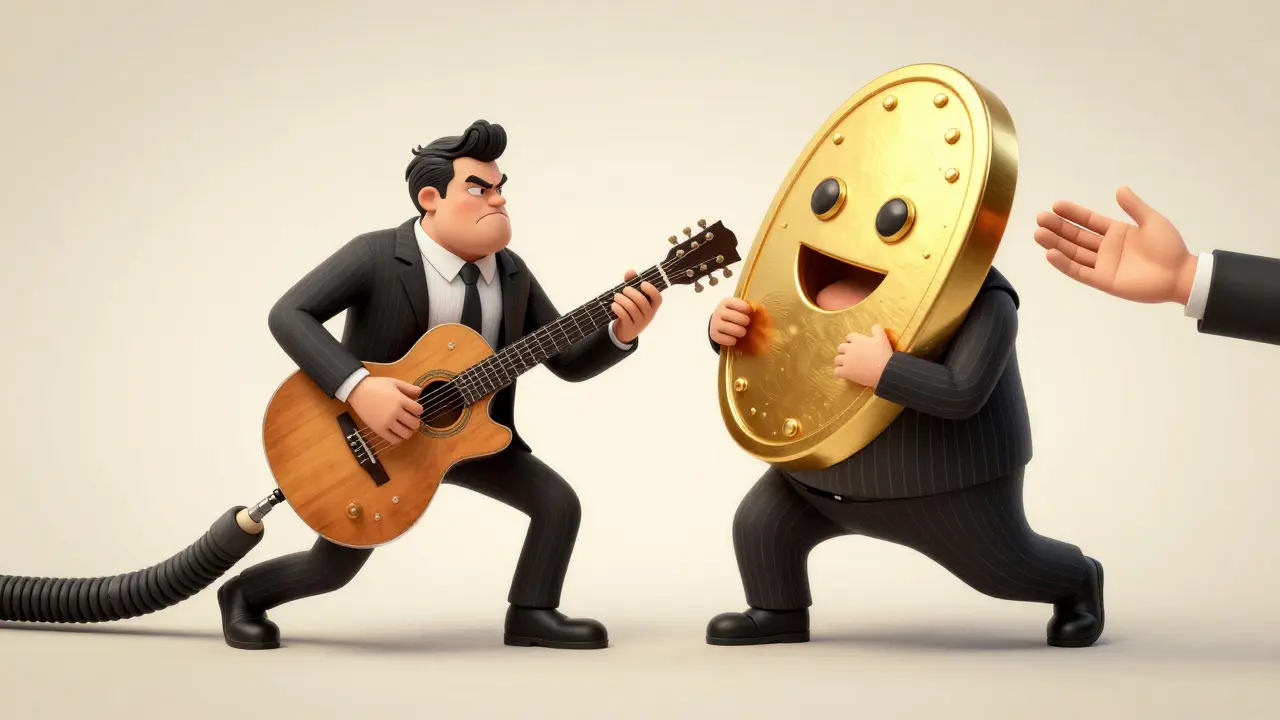
Let's be honest: the traditional music industry is notorious for taking a huge cut. Between record labels, distributors, and streaming platforms, an independent artist might need millions of plays just to pay their rent. Music NFTs bypass this entire pipeline.
When an artist sells an NFT, the money goes directly into their Crypto Wallet. But the real magic happens with secondary sales. In the old world, if you bought a vinyl record for $20 and later sold it for $1,000 because the artist became a superstar, the artist got nothing from that second sale. With NFTs, artists can program a royalty percentage (e.g., 10%) into the smart contract. Every time the NFT is resold on a marketplace, the artist automatically gets a cut of the profit forever.
Investing in artists through royalty sharing
One of the most disruptive parts of this movement is the shift toward "fan-investors." Some platforms, such as Opulous, allow artists to tokenize their future royalties. Instead of just buying a song, you're buying a share of the earnings that song generates over time.
Think of it as early-stage crowdfunding. You provide the artist with the capital they need to record an album today, and in exchange, you earn a percentage of the streaming revenue for the next few years. This turns fans from passive listeners into active partners who have a financial incentive to promote the music they love. If the song goes viral on TikTok, both the artist and the NFT holders win.
The hurdles: Why hasn't everyone switched?
Despite the hype, we aren't in a world where every musician is selling tokens. There are some significant roadblocks. For starters, the user experience is still a bit clunky. Asking a casual music fan to set up a seed phrase and manage a digital wallet is a big ask. Most people just want to hit "play," not navigate a blockchain explorer.
Then there's the volatility. Because Music NFTs are often traded as speculative assets, prices can swing wildly. This has led some to view the space as a "bubble" rather than a legitimate artistic tool. There are also lingering concerns about the environmental impact of certain blockchain networks, though the shift toward "Proof of Stake" mechanisms has drastically reduced the energy used by major networks.
What to watch for in the next few years
We are moving toward a hybrid model. We'll likely see a "Web2.5" experience where you can buy a Music NFT with a credit card, and the platform handles the blockchain stuff in the background. We're also seeing the rise of "phygitals"-where buying an NFT automatically triggers the shipment of a physical vinyl record or a piece of limited-edition clothing.
The ultimate goal isn't to kill streaming, but to augment it. Streaming is for discovery; NFTs are for ownership and deep connection. When these two worlds merge, we'll have a system where music is accessible to everyone, but the creators are finally paid what they're worth.
Do I need to know how to code to buy a Music NFT?
Not at all. Buying an NFT is similar to shopping on any other website. You'll just need a digital wallet (like MetaMask or Phantom) to hold your assets and some cryptocurrency to pay for them, though many newer platforms are starting to accept standard credit cards.
Can anyone still listen to the song if I own the NFT?
Yes. Owning the NFT is like owning the original painting in a museum. The museum (or the artist) can still let everyone see a print or a digital copy of the work. You own the provenance and the unique token, not necessarily the exclusive right to the audio unless the artist specifically programmed it that way.
Are Music NFTs just for famous artists?
Actually, they are most beneficial for independent artists. Emerging musicians can use NFTs to fund their first albums without needing a predatory record label contract, allowing them to keep 100% of their intellectual property.
What happens if the website hosting the music disappears?
This is a common risk known as "link rot." If the NFT only points to a URL on a private server, the file could vanish. To prevent this, many artists use decentralized storage like IPFS (InterPlanetary File System), which ensures the music stays available as long as at least one node in the network hosts it.
Is it a good investment to buy Music NFTs?
Like any collectible or stock, it's risky. The value depends entirely on the artist's future popularity and the demand from other collectors. You should view it primarily as a way to support an artist you love, with the possibility of financial gain as a secondary bonus.

7 Comments
Artavius Edmond
This is such a cool way to think about the future of art. I love the idea of fans actually having a stake in a musician's success instead of just being a number in a streaming algorithm. It feels way more community-driven and organic.
daniella davis
Ugh please. Only a total amateur would think this is some revolutionary discovery. The concept of digital scarcity is so basic and anyone with a modicum of taste knows the market is mostly just junk. Also, "phygitals" is literally the most cringe word I've ever read in my entire life. Honestly, the only people getting rich here are the platforms, not the actual artists, but sure, let's pretend this is a utopian dream for the indie scene while ignoring the obvious bubble. It's just glorified JPEGs with sound attached, and calling it an "investment" is just a way to trick naive people into buying overpriced tokens. I've seen this exact pattern in a dozen other speculative bubbles, and it always ends with the retail investors holding the bag while the elite exit. Truly embarrassing that we're still acting like this is new tech in 2024. The whole Web3 narrative is just a marketing ploy for venture capitalists who ran out of actual software to build. I can't even imagine the lack of critical thinking required to actually believe in the long term value of a "digital deed" to a song that is still available for free on YouTube. Give me a real vinyl record any day and stop pretending this is high art.
Kieran Smith
I think the idea of royalty sharing is super exciting! It's kinda like being a talent scout but for everyone. I'm sure as the tech gets easier to use, way more people will jump in. Love the vibe of supporting artists directlly!
Lane Montgomery
Too many steps. Just use PayPal.
EDOZIEM MICHAEL
ownership is a funny concept in the digital age because we are all just ghosts in a machine really
the blockchain is just another way to try and pin down the wind but the music itself remains free in the soul of the listener
logan bates
American artists should be the ones leading this and keeping the money in the US. No more sending profits to offshore platforms.
Mikayla Murphy
It's really heartening to see a path where creators can maintain their boundaries and intellectual property without being exploited by major corporations.