
Imagine trying to play slots or poker online, but instead of using a credit card, you pay with a cryptocurrency that lives on the lightning-fast Solana blockchain. That’s the core promise of BitNile Coin, also known by its ticker NILE. It’s not just another meme coin chasing hype; it’s a utility token designed specifically to power the BitNile.com social-gaming and virtual casino platform. If you’ve been wondering what this asset actually does, who controls it, and whether it has real-world use beyond speculation, you’re in the right place.
Launched in May 2025, NILE represents a strategic move by Hyperscale Data, Inc. to bridge traditional sweepstakes gaming with modern crypto infrastructure. But here’s the catch: understanding NILE requires untangling a few layers of corporate history and technical architecture. Is it a payment coin? A store of value? Or simply an entry ticket for digital games? Let’s break down exactly what BitNile Coin is, how it works on-chain, and why its supply concentration matters more than most investors realize.
The Origin Story: From Metaverse Idea to Solana Reality
To understand where NILE came from, we have to look back at the corporate lineage. The concept originated with Ault Alliance, Inc. (formerly BitNile Holdings), which announced an "in-world" NILE currency in February 2023. Back then, this wasn’t a tradable cryptocurrency. It was strictly a closed-loop virtual currency for their BITNILE.COM metaverse, meaning you couldn’t sell it or trade it outside the platform. It had zero monetary value in the broader market.
Fast forward to May 3, 2025. BitNile.com, Inc., an indirectly owned subsidiary of Hyperscale Data, launched a completely new, on-chain version of NILE on the Solana blockchain. This wasn’t just a rebrand; it was a fundamental shift. The new NILE is a Solana Program Library (SPL) token, minted with a fixed total supply of 500 billion units. Unlike its 2023 predecessor, this version is tradable on decentralized exchanges like Raydium. The goal? To let crypto-native users fund their gaming activities without relying solely on fiat currencies like the US Dollar.
Core Purpose: Bridging Crypto Liquidity and Social Gaming
So, what does NILE actually do? The whitepaper defines it as a utility cryptocurrency with three primary functions within the BitNile ecosystem:
- Payment Rail: Users can purchase "Nile Packages" using NILE. These packages contain virtual credits for playing casino-style games like slots, poker, and blackjack.
- Rewards Medium: BitNile uses NILE for promotional airdrops. If you hit certain engagement milestones or participate in marketing campaigns, you might receive NILE directly into your wallet.
- Prize Redemption Option: In specific cases, sweepstakes winners can choose to receive their prizes in NILE rather than cash, offering a crypto-denominated alternative where legally permissible.
It’s crucial to distinguish between the on-chain NILE token and the off-chain "Nile Tokens" used inside the game. When you buy a package with NILE, you get Nile Tokens for gameplay and sweeps coins for prize entries. Nile Tokens are non-redeemable for cash-they are purely for entertainment. Sweeps coins, however, are tied to sweepstakes mechanics that comply with U.S. gambling laws. This dual-layer architecture allows BitNile to accept crypto payments while staying within regulatory boundaries.
Technical Architecture: Why Solana?
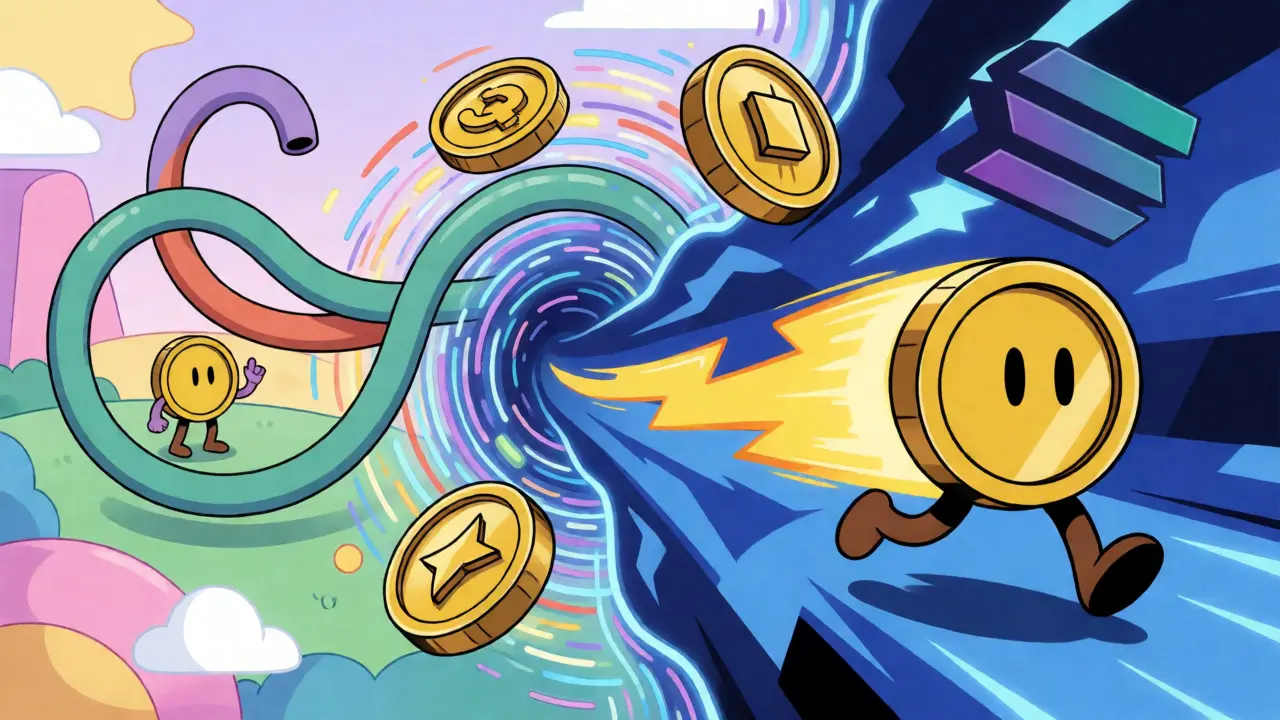
NILE runs on Solana, one of the fastest Layer 1 blockchains available today. Why did BitNile choose Solana over Ethereum or other chains? Speed and cost. Social gaming involves thousands of micro-transactions-spinning a slot machine, placing a small bet, claiming a reward. On Ethereum, these transactions could cost more in gas fees than the bet itself. On Solana, transaction fees are negligible, and confirmation times are measured in milliseconds.
| Attribute | Value |
|---|---|
| Blockchain | Solana (SPL Token) |
| Total Supply | 500,000,000,000 NILE |
| Launch Date | May 3, 2025 |
| Primary DEX | Raydium |
| Liquidity Lock | 2 Years (until ~May 2027) |
| Issuer | BitNile.com, Inc. (Subsidiary of Hyperscale Data) |
At launch, BitNile seeded initial liquidity on Raydium with 100 million NILE paired against 11 SOL. Importantly, these liquidity pair tokens were hard-locked via an immutable contract for two years. This lock-up signals a commitment to stability, preventing early liquidity providers from pulling out immediately and causing massive price volatility.
Tokenomics and Market Reality: The 99% Problem
If you look at price charts for NILE, you’ll see significant swings. As of mid-2025, prices ranged from roughly $0.000095 to $0.000414 per token. But here’s the critical detail often missed in casual reading: approximately 99% of NILE’s total supply was held by BitNile itself shortly after launch.
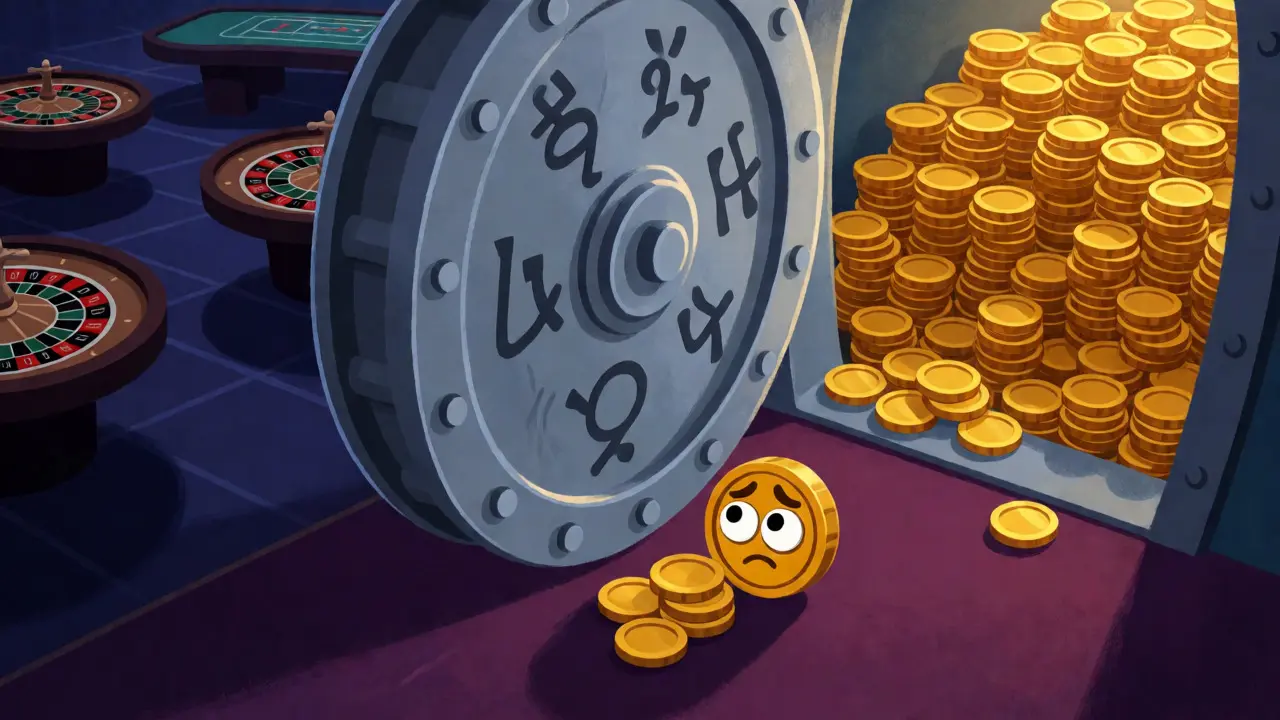
This extreme concentration means the "free float"-the amount of tokens actually available for public trading-is tiny, estimated at around 1% or 5 billion tokens. Because so few tokens are circulating, even small buy or sell orders can cause large percentage moves in price. Some aggregators report a circulating supply of near zero because they don’t count issuer-held tokens as freely tradable. This makes NILE’s market cap highly sensitive to sentiment and low-volume trades, rather than deep institutional interest.
How to Acquire and Use NILE
Getting your hands on NILE isn’t as simple as clicking "Buy" on Coinbase. As of late 2025, centralized exchange support is limited. Here’s the typical path for a user:
- Get a Solana Wallet: You need a compatible wallet like Phantom or Solflare.
- Fund with SOL: Buy Solana (SOL) on any major exchange and transfer it to your wallet.
- Swap on Raydium: Connect your wallet to Raydium.io, select the NILE/SOL pool, and swap your SOL for NILE.
- Deposit to BitNile: Transfer NILE to your BitNile.com account address to purchase Nile Packages.
Once inside the platform, you spend NILE to buy game credits. Remember, those game credits aren’t NILE themselves-they are internal assets. If you win a sweepstakes prize, you might opt to convert that prize back into NILE, closing the loop.
Risks and Considerations
Is NILE a good investment? That depends on your risk tolerance. It’s tightly coupled to the success of BitNile.com. If the platform grows its user base and integrates more crypto-friendly features, demand for NILE could rise. However, if adoption stalls, the token’s utility remains niche.
Regulatory compliance is another factor. By structuring games as sweepstakes and separating gameplay tokens from redeemable prizes, BitNile aims to stay compliant with U.S. laws. But regulations change. Any shift in how the SEC or state authorities view crypto-based sweepstakes could impact the model.
Finally, beware of confusion with the old 2023 NILE. Ensure you are interacting with the Solana SPL token (Contract Address: 7evZ2P7uyerbqtVMjvFav4Gr4KnmPtYEGALJoRKVpgFz) and not the obsolete in-platform currency.
Is BitNile Coin (NILE) a stablecoin?
No, NILE is not a stablecoin. Its price fluctuates based on market supply and demand on decentralized exchanges like Raydium. While it is pegged to utility within the BitNile platform, its external market value varies significantly.
Can I withdraw NILE to my bank account?
Not directly. NILE is a cryptocurrency. To get cash, you would typically sell NILE for SOL on a decentralized exchange, then transfer SOL to a centralized exchange that supports fiat withdrawals, such as Coinbase or Kraken.
What is the difference between NILE and Nile Tokens?
NILE is the on-chain cryptocurrency used to purchase packages. Nile Tokens are the off-chain virtual credits received inside the BitNile platform after purchasing a package. Nile Tokens are used for gameplay and are generally not redeemable for cash.
Who owns BitNile Coin?
The majority of NILE tokens are held by BitNile.com, Inc., which is an indirectly owned subsidiary of Hyperscale Data, Inc. (NYSE American: GPUS). Approximately 99% of the supply remained under issuer control as of mid-2025.
Where can I buy NILE?
As of late 2025, NILE is primarily traded on decentralized exchanges (DEXs) on the Solana network, with Raydium being the main venue. Centralized exchange listings are limited or pending.

4 Comments
Kathy Siew
omg the fact that 99% of supply is held by the issuer is actually insane, like who even trades this??
also i tried to buy some last week and got confused between nile tokens and the actual coin, total mess tbh 😅
Harish Ramaiah
😱 Oh my goodness! This is just so... sad. 😢
I really hope you guys are okay? 🥺 The concentration risk is terrifying!! 💀 I feel like I am going to cry reading about the low liquidity... 😭 It is just so heartbreaking for small investors!! 😤 Please be careful out there!! 🙏🙏🙏
Alexander James
It is absolutely vital that we remember the moral imperative here. We cannot simply ignore the regulatory landscape because it is convenient for us. The SEC is watching, and if BitNile fails to uphold the highest standards of compliance, they will not just lose money; they will lose their soul. We must demand transparency, not just from them, but from ourselves as a community. If we allow corner-cutting now, we pay for it later with interest.
Maegan Rust
I love how everyone is bringing such different perspectives to this table-it’s genuinely heartwarming to see such a vibrant discussion unfolding here! 🌈✨ Kathy, your point about the confusion between the token types is so valid, and it reminds me that user experience is often the biggest barrier to adoption, regardless of how shiny the tech stack is.
J Brock, I appreciate your energy and the emphasis on due diligence; it’s a gentle reminder that while excitement fuels markets, caution preserves capital. And Harish, your empathy for the smaller holders resonates deeply-those early adopters often bear the brunt of market whims, and acknowledging that emotional weight is crucial for a healthy community culture.
Alexander, while the moral lens is heavy, it underscores the necessity of ethical stewardship in crypto projects. When we weave all these threads together-the technical, the emotional, the regulatory-we get a much richer tapestry than any single viewpoint could offer alone. It’s a beautiful mosaic of concern and curiosity, and honestly, it makes me feel more optimistic about finding common ground amidst the noise. Let’s keep supporting each other through the ups and downs, because at the end of the day, we’re all navigating this digital frontier together. 🤝💖