
Most crypto coins are just tokens that trade on exchanges. But DerivaDAO (DDX) isn’t just a coin-it’s the heartbeat of a whole new kind of trading system. If you’ve ever traded crypto derivatives and felt stuck between slow, expensive decentralized exchanges and risky centralized ones, DerivaDAO was built for you.
What DerivaDAO Actually Does
DerivaDAO isn’t a wallet, a meme coin, or a simple DeFi yield farm. It’s a decentralized exchange for derivatives-things like futures, options, and perpetual contracts. Think of it like Binance or Bybit, but without a company running it. No CEO. No headquarters. Just code, rules, and people who hold DDX tokens making decisions together.
Here’s the problem it solves: on most decentralized exchanges (DEXs), trading derivatives is painfully slow. Every trade has to go through the Ethereum blockchain, which means high gas fees and delays of 10-30 seconds. On centralized exchanges, trades are fast, but you’re trusting your money to a single company that can freeze accounts, get hacked, or shut down overnight.
DerivaDAO cuts that trade-off. It gives you the speed of a centralized exchange with the security of a decentralized one. How? It uses a custom Layer 2 sidechain called DerivaDEX. This sidechain handles all trading activity off the main Ethereum network, so trades settle in under a second and cost almost nothing. But here’s the catch: it doesn’t cut Ethereum out completely. Every few minutes, the sidechain sends a cryptographic hash of the entire trading state back to Ethereum. That means if someone tries to cheat, the system can prove it-and punish them-using Ethereum’s security.
The DDX Token: More Than Just a Coin
DDX is the native token of DerivaDAO. It’s not just used to pay fees. It’s the voting power behind the whole system.
- Governance: Every DDX holder can propose changes to the protocol-like adjusting fees, adding new trading pairs, or changing how insurance works. They can also vote on proposals. The more DDX you hold, the more weight your vote carries.
- Fee discounts: If you pay trading fees in DDX, you get a discount. It’s a simple incentive to hold the token.
- Staking rewards: You can stake your stablecoins (like USDC) into the DerivaDAO insurance fund. In return, you earn DDX tokens. This isn’t just a yield farm-it’s how the platform protects traders from losses. If a position gets liquidated, the insurance fund covers the gap so no one else loses money.
DerivaDAO recently passed its first major proposal: letting DDX holders withdraw their tokens from trader wallets. That’s a big deal. It means the token is finally moving beyond just a governance tool and becoming something people can use, send, and hold like any other asset.
How Security Works Without a Central Authority
You might be thinking: "If trading happens off-chain, how is it safe?" That’s the smart part.
DerivaDAO doesn’t rely on zk-rollups or optimistic rollups-the two most common Layer 2 methods. Instead, it uses a network of operators who run code inside Trusted Execution Environments (TEEs). These are secure hardware environments that guarantee code can’t be tampered with. The operators validate trades, match orders, and update balances-but they can’t steal your funds or change the rules.
Every operator signs off on each batch of trades. Then, a single hash of the entire state gets sent to Ethereum. If even one operator tries to lie, the system detects it. And because Ethereum’s blockchain is public and immutable, the proof of cheating is permanent.
The smart contracts behind this system were audited by Quantstamp, a well-known blockchain security firm. They found no critical vulnerabilities. That’s rare for a new DeFi protocol.
Insurance Mining: The Secret Sauce
One of the most unique features of DerivaDAO is its insurance fund. On most derivative exchanges, when a trader’s position gets liquidated, the exchange takes their margin. That can create cascading losses if the market moves fast.
DerivaDAO fixes this with a two-layer insurance system:
- Insurance Mining: Users stake USDC or other stablecoins into a smart contract. In return, they earn DDX tokens. This money sits in a pool to cover losses.
- Fee Contributions: A portion of every trading fee on the platform goes into a second insurance pool. This grows over time as more people trade.
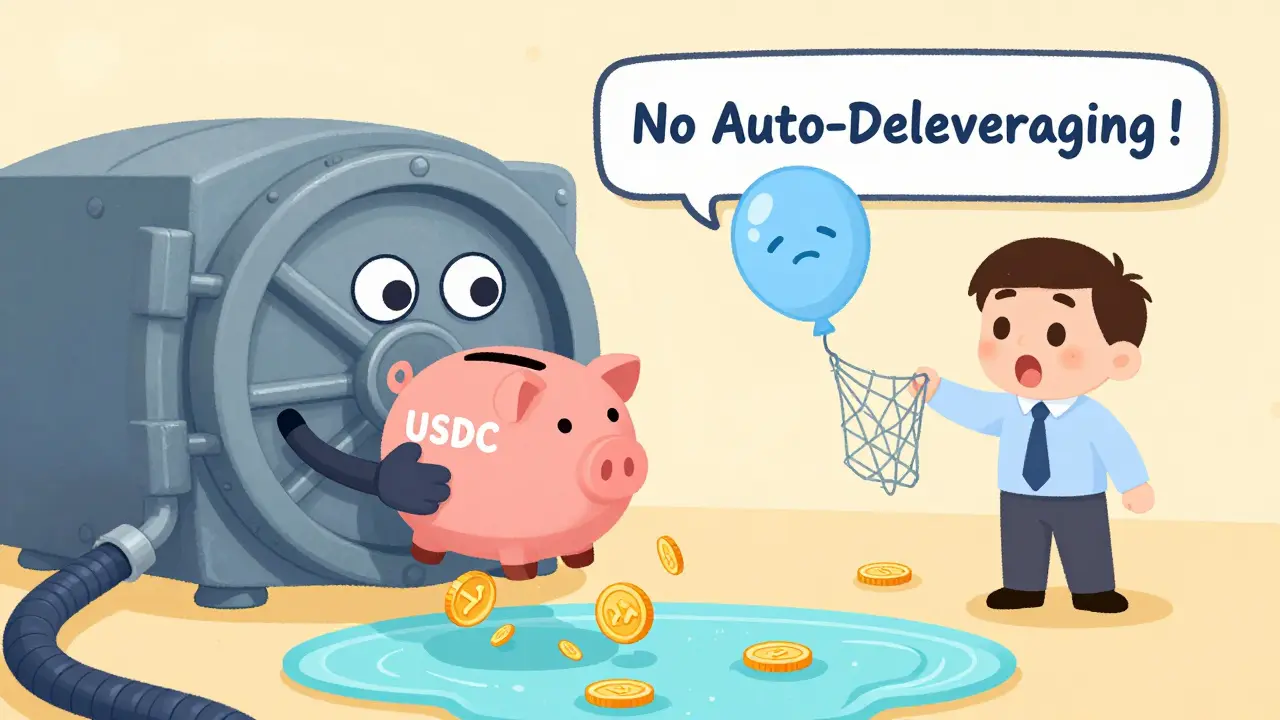
If a trader gets liquidated and their margin isn’t enough to cover the loss, the insurance fund steps in. No one else loses. No one gets auto-deleveraged. It’s designed to make trading safer, not riskier.
Current Status: Not Live Yet
As of March 2026, DerivaDAO’s governance interface is live. You can connect your wallet, see proposals, vote, and stake into the insurance fund. But the actual trading platform? It’s not open yet.
The team is still finalizing the frontend, stress-testing the sidechain, and onboarding operators. The launch is expected in the next few months. That’s unusual for a crypto project-most rush to launch, then fix bugs later. DerivaDAO is taking its time. That’s a good sign.

Market Data: Small But Growing
DDX is still in its early stages. As of March 2026:
- Price: $0.089615 USD
- Market cap: $1.67 million
- 24-hour volume: $13.77 USD
That’s tiny compared to major coins. But remember-this isn’t a coin trying to be the next Bitcoin. It’s a protocol that needs adoption to work. The real value isn’t in the price today. It’s in what happens when thousands of traders start using it.
DerivaDAO raised $2.7 million across two funding rounds. That’s enough to build the tech and hire the team. But it’s not enough to run marketing campaigns or pay for listings on big exchanges. That means growth will come from users-not hype.
Why This Matters
DerivaDAO isn’t just another DeFi project. It’s an attempt to solve one of crypto’s biggest unsolved problems: how to trade derivatives without giving up control.
Centralized exchanges like Binance have $100 billion in daily volume. But they’re vulnerable. Regulators can shut them down. Hackers can drain them. Users can’t audit their books.
Decentralized exchanges like Uniswap are safe, but they can’t handle complex trades. Order books are slow. Liquidity is thin. Fees are high.
DerivaDAO tries to have both. It’s not perfect. It’s not launched. But the design is thoughtful. The security model is solid. And the tokenomics are built around real utility-not just speculation.
If it launches successfully, it could become the go-to place for traders who want speed, safety, and true ownership. That’s rare. And it’s worth watching.

10 Comments
George Hutchings
This is actually one of the few DeFi projects that makes sense. No hype, no rug pulls. Just a solid Layer 2 for derivatives. I’ve been waiting for something like this since 2021.
Love that they’re not rushing. Quality over speed every time.
Derek Lynch
You guys are underestimating this. DerivaDAO isn’t just another DEX-it’s the first real shot at making derivatives trading accessible without centralized control. The insurance fund alone could change how liquidations work across the whole space. This isn’t a coin. It’s infrastructure.
iam jacob
idk man i just dont trust anything that says 'trusted execution environments' like its magic. sounds like apple with a blockchain sticker on it.
Jesse Pals
this is the kind of project that makes me wanna drop my phone and go for a hike 🌲 but then i remember crypto is the only thing keeping my soul from turning into a spreadsheet 📊💸
staked my USDC. not for the DDX. for the peace of mind. if this works? we’re all gonna look back and say 'wow that was actually chill.'
Diane Overwise
I’m sorry, but ‘insurance mining’ sounds like a Ponzi scheme dressed up in a hoodie. You’re rewarding people for putting money into a fund that pays out when others lose? That’s not innovation-that’s just risk redistribution with extra steps. And don’t get me started on ‘Trusted Execution Environments.’ If it’s trusted, why isn’t it centralized?
Patty Atima
low volume now but that’s because no one can trade yet. wait till the platform goes live. watch the numbers explode.
Lucy de Gruchy
Let’s be real. Every DeFi project claims to be ‘secure’ and ‘decentralized.’ But this one? The operators are still centralized entities running TEEs. That’s not decentralization-that’s a new kind of walled garden. And the fact that they’re not live yet? Classic. They’re hiding from scrutiny. I’ll believe it when I see it.
Ernestine La Baronne Orange
I’ve been following this since the whitepaper dropped, and honestly? I’m terrified. The insurance fund is brilliant, yes-but what happens when 10,000 traders all get liquidated at once? What if the TEEs get compromised? What if the Ethereum hash feed gets delayed? What if the operators collude? What if the DAO vote gets hacked? What if the team vanishes? What if the code has a bug no one caught? What if the market crashes and the USDC stakers panic? What if regulators shut it down? What if the community turns toxic? What if the UI is ugly? What if the gas fees for submitting state proofs spike? What if the token gets dumped? What if...? I’m not saying it won’t work-I’m saying I need a nap just thinking about all the ways it could fail. And yet... I still staked.
Taylor Holloman.
I like how this doesn’t try to be everything. It’s focused. Derivatives. That’s it. No meme coins. No yield farming gimmicks. Just a clean, thoughtful system that actually solves a real pain point. The fact that they audited with Quantstamp and took their time? That’s rare. I’ve seen too many projects burn out trying to be the next Solana. This one’s playing the long game. Respect.
sai nikhil
The concept is very impressive. DerivaDAO is not just another token. It is a protocol designed with deep understanding of market mechanics and user security. The insurance mechanism is particularly well-structured. I am hopeful that this will become a standard for decentralized derivatives trading in the future.