
Have you heard whispers about SAY Coin, a cryptocurrency that promises to revolutionize private communication in the Web3 era? It sounds exciting until you dig into the numbers. SAY Coin operates on the BNB Smart Chain (BEP-20) and serves as the native currency for the SAY network’s decentralized messaging apps. But here is the catch: while the underlying apps have millions of downloads, the token itself struggles with liquidity, unclear utility, and significant centralization risks.
If you are considering buying or holding SAY, you need to look past the hype. This guide breaks down what SAY actually does, how its economics work, and why experts remain cautious about its long-term viability.
The Core Concept: Decentralized Communication
SAY Coin aims to provide anonymous, secure, and private communication services through blockchain technology. The project was launched on November 1, 2024, by an anonymous team. Their mission is simple but ambitious: bring communication services to Web3 where user data sovereignty and confidentiality are paramount.
The ecosystem includes applications like 'Say To Do' and 'SeCuRet'. According to reports from Gate.com and CoinMarketCap in late 2024, these apps collectively reached 8 million downloads globally. Users span regions like Central Asia, East Asia, South America, and North Africa-areas where privacy concerns often drive adoption of encrypted messaging tools.
However, there is a disconnect between app usage and token usage. While the apps function well for encrypted messaging, many users report confusion about where and how to use the SAY token within the interface. Only about 28% of surveyed users could identify specific in-app uses for the token, suggesting that the utility bridge between the software and the cryptocurrency remains weak.
Technical Specifications and Tokenomics
To understand the value proposition, we must look at the hard data. SAY Coin is a BEP-20 token, meaning it relies entirely on the BNB Chain infrastructure for transactions. Its contract address is 0xef43bf8c6430a615bba48987ae2522e3a3be0a18.
The total supply is fixed at 5 billion tokens. Here is how that supply is allocated, based on documentation from Coincarp:
- Protocol Development (36%): 1.8 billion tokens. These have a 12-month cliff followed by 60 months of linear vesting.
- Reserves (26%): 1.3 billion tokens. These face a massive 48-month cliff before any vesting begins, followed by only 12 months of release. This creates a potential future supply shock.
- Public Sale (10%): 500 million tokens. 5% were available at the Token Generation Event (TGE), with the rest vesting over 24 months after a 2-month cliff.
- Team Allocation (8%): 400 million tokens. These vest over 36 months after a 24-month cliff.
- Marketing, Community, R&D, Advisors (20%): Distributed across various schedules, including some immediate releases.
This structure raises red flags for investors. The reserve allocation, which represents over a quarter of the total supply, sits dormant for four years before unlocking. If the market isn't strong enough to absorb 1.3 billion tokens once they start flowing, the price could collapse.
Market Performance and Liquidity Issues
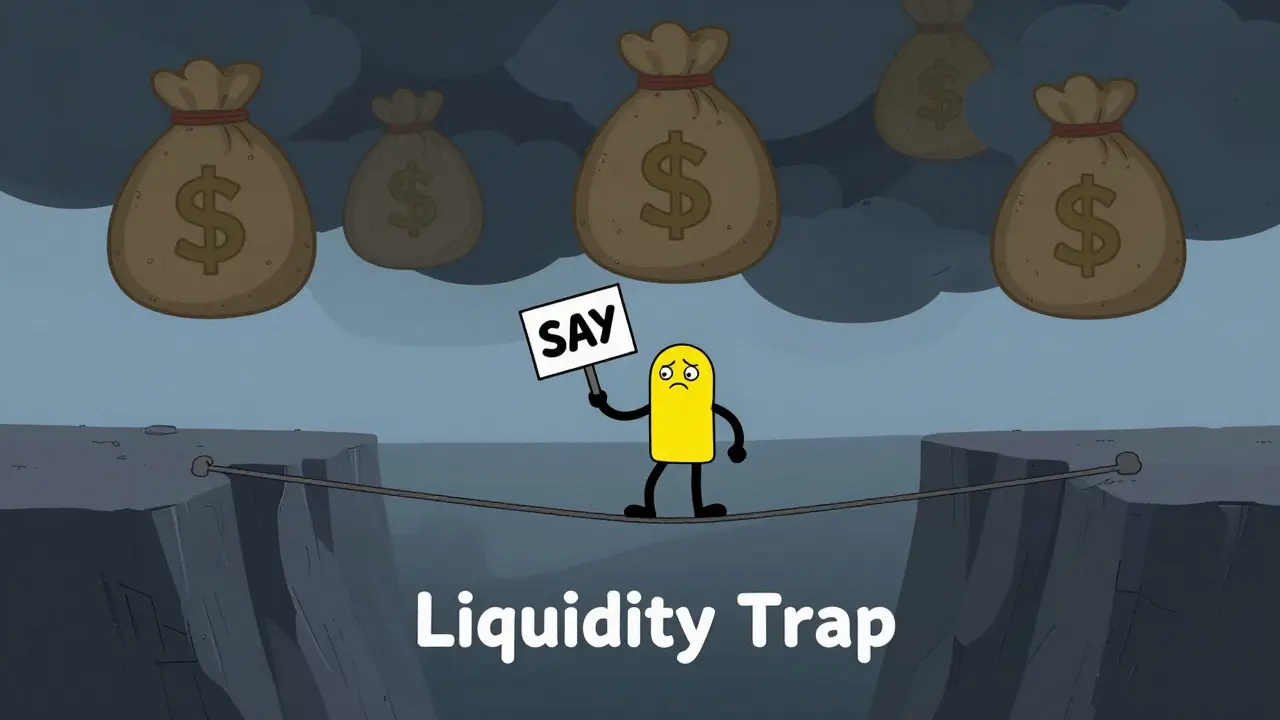
Let's talk money. As of late 2024 and early 2025, SAY Coin has shown extreme volatility and low liquidity. Prices varied wildly across exchanges due to fragmented trading volumes. On Gate.com, prices hovered around $0.0003, while Coinbase reported higher figures near $0.0009. This discrepancy highlights a lack of unified market depth.
The 24-hour trading volume rarely exceeds $100,000 across all platforms combined. For context, major cryptocurrencies move billions daily. Low liquidity means two things: high slippage when you try to sell large amounts, and susceptibility to manipulation by whales.
Rankings reflect this struggle. SAY Coin sits around rank #4,100 to #4,800 among all cryptocurrencies, depending on the tracker. Its fully diluted valuation (FDV) sits at roughly $4.5 million, but its actual circulating market cap is significantly lower, often under $1 million. Analysts note that the "market dominance" is effectively zero, making it highly vulnerable to broader market fluctuations.
| Feature | SAY Coin (SAY) | Status Network (SNT) | SignalToken (SGT) |
|---|---|---|---|
| Blockchain | BNB Smart Chain | Ethereum | Various |
| Market Cap (Approx.) | < $1 Million | ~$182 Million | ~$4.7 Million |
| Primary Utility | Decentralized Messaging Apps | Status App Ecosystem | Privacy Services |
| Liquidity Risk | High | Low | Medium |
| Centralization | High (Top 10 wallets hold 63%) | Lower | Medium |
Community Sentiment and Expert Analysis
User feedback is polarized. On Reddit, threads discussing SAY Coin often highlight the functional nature of the apps but criticize the tokenomics. One user noted, "The app actually works well for encrypted messaging, but the tokenomics seem designed for team dumping." Another common complaint is the ambiguity of token utility: "Nowhere in the app does it explain how or where to use SAY tokens."
Expert assessments are equally mixed but lean cautious. CoinGecko analysts described SAY as underperforming both the global crypto market and similar BNB Chain projects. Binance highlighted its extremely low market dominance and vulnerability to fluctuations. However, some bullish outliers, like CryptoInsight, projected 5-10x potential if the team successfully integrates token utility into their existing 8-million-user base.
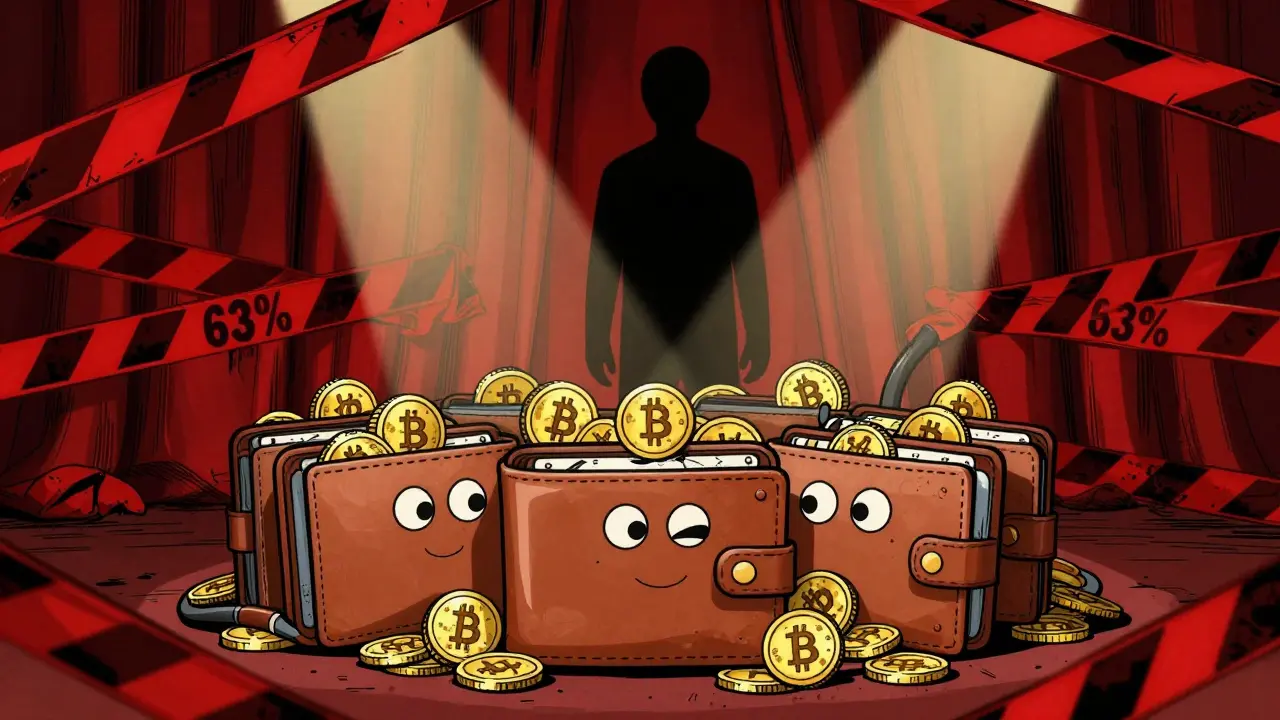
A critical risk factor identified by multiple analysts is the concentration of holdings. Blockchain explorer data shows that the top 10 wallets control approximately 63.2% of the circulating supply. This level of centralization contradicts the very ethos of decentralization and poses a severe risk of coordinated selling.
Risks You Must Consider
If you are thinking of investing, keep these risks front and center:
- Liquidity Trap: With daily volumes under $100K, exiting a position without significant loss can be difficult during downturns.
- Vesting Cliff: The 26% reserve allocation unlocks after 48 months. If not managed carefully, this could flood the market.
- Utility Gap: Despite high app downloads, less than 1% of users hold the token. Without clear incentives to use SAY within the apps, demand may remain speculative.
- Anonymous Team: An anonymous development team increases counterparty risk. There is no public accountability if issues arise.
- Regulatory Uncertainty: Privacy-focused tokens often face stricter scrutiny from regulators globally, which could impact exchange listings.
How to Add SAY Coin to Your Wallet
If you still decide to proceed, adding SAY to your wallet is straightforward. Since it is a BEP-20 token, you can use MetaMask or Trust Wallet.
- Open MetaMask and switch to the BNB Smart Chain network.
- Click "Import Tokens" and paste the contract address:
0xef43bf8c6430a615bba48987ae2522e3a3be0a18. - The token symbol (SAY) and decimals should auto-populate. Confirm and add.
Note that support quality for the project is rated poorly, with average response times of 72 hours for inquiries. Documentation for developers is also considered incomplete by community polls, so expect a rough ride if you encounter technical issues.
Is SAY Coin a good investment?
SAY Coin carries high risk due to low liquidity, high centralization, and unclear token utility. While the underlying apps have users, the token's performance has been volatile and underwhelming compared to competitors. It is suitable only for high-risk speculative portfolios, not for conservative investing.
What is the total supply of SAY Coin?
The total supply of SAY Coin is fixed at 5 billion tokens. Approximately 14.5% to 26.5% of this supply was in circulation as of late 2024, with the rest locked in various vesting schedules.
Which blockchain does SAY Coin use?
SAY Coin operates exclusively on the BNB Smart Chain as a BEP-20 token. This means transactions require BNB for gas fees.
Why is the price of SAY Coin so volatile?
Volatility stems from low trading volume (liquidity fragmentation), high concentration of holdings among top wallets, and speculative interest rather than fundamental utility-driven demand.
Are the SAY apps safe to use?
User reviews suggest the apps function well for encrypted messaging. However, safety in crypto also depends on code audits and transparency. Given the anonymous team, users should exercise caution regarding personal data security beyond standard encryption claims.
When do SAY Coin reserves unlock?
The 26% reserve allocation has a 48-month cliff, meaning no tokens are released for four years after launch. After that, they vest linearly over 12 months. This creates a potential supply shock window starting in late 2028.

6 Comments
Sharada Vakkund
Hey everyone, let's look at the big picture here because privacy is actually becoming a human right in many regions. The fact that they have 8 million downloads shows there is real demand for secure communication tools. We shouldn't just dismiss it because the tokenomics are messy right now. Many early projects struggle with utility integration before finding their footing. It is important to support projects that prioritize user sovereignty even if the financials aren't perfect yet.
John Gonzalez Bentham
thats total bs u guys are buying into this hype train without reading the fine print. the centralization risk is massive and anyone who says otherwise is either stupid or paid to say so. top 10 wallets holding 63% means one guy can rug pull the whole thing whenever he feels like it. dont be sheep.
beti macedo
I think we should keep an open mind about the potential growth trajectory of decentralized networks. Even though the liquidity is low right now, the technology behind encrypted messaging is very promising for the future. I beleive that with time the team will figure out how to better integrate the token into the app experience. Its always exciting to see new innovations in the web3 space that aim to protect our data.
Sudarshan Anbazhagan
you are all missing the fundamental point of economic sustainability which is critical for any long term viability of such a project. when you have a reserve allocation that unlocks after four years it creates a supply overhang that will inevitably crush the price action unless there is organic demand which currently does not exist in any meaningful way. the disconnect between app usage and token utility is not a minor issue but rather a fatal flaw in the business model design that suggests the founders do not understand basic market dynamics or perhaps they simply do not care about the retail investors who buy in during the initial phases. furthermore the anonymous nature of the team removes any accountability which is unacceptable in a sector that already suffers from excessive fraud and lack of transparency. one must consider that the vesting schedules are designed to benefit insiders while leaving the public with illiquid assets that have no intrinsic value beyond speculation. it is truly unfortunate to see people ignoring these red flags in favor of optimistic narratives that lack empirical support.
Kimberly Herbstritt
Actually, I kind of love the chaos. Most crypto projects are boring and predictable anyway. This one has high risk but also high reward potential if they manage to fix the utility gap. Who cares about the reserves unlocking in 2028? By then the world might be different. I'm just here for the ride and maybe a quick flip if the volume spikes. Don't take yourself too seriously folks.
Sarah C
I appreciate the detailed breakdown in the original post. It really helps to understand the risks involved before making any decisions. I tend to stay away from tokens with low liquidity myself because I prefer stability in my portfolio. But it is good to know the options available for those who want to experiment with privacy-focused apps.