
Imagine finding a token that claims to represent Bitcoin but trades at double the price. It sounds like a golden ticket, right? Or maybe it sounds like a trap. That is exactly where teleBTC (TELEBTC) sits today. If you have stumbled upon this ticker on a chart or a social media feed, you need to pause and look closer. This isn't just another altcoin; it’s a case study in why "wrapped" assets can be dangerous if they don’t follow basic economic rules.
TeleBTC was introduced as a decentralized protocol designed to wrap Bitcoin for use on other blockchains, specifically Polygon. On paper, the idea is solid: take your BTC, lock it up securely, and get a version you can spend in DeFi apps. But what happened in reality? The numbers don’t add up, the community is silent, and the risk profile is extreme. Let’s break down what teleBTC actually is, why its pricing is broken, and whether it has any real value-or if it’s just digital noise.
The Promise vs. The Reality of TeleBTC
To understand teleBTC, you first need to understand what it *tried* to be. In July 2023, researchers published a paper titled "TeleBTC: Trustless Wrapped Bitcoin" on arXiv. The goal was noble: create a fully decentralized way to bring Bitcoin onto programmable chains without relying on centralized custodians. Most wrapped Bitcoin tokens, like WBTC, require trusted companies to hold the actual BTC. TeleBTC promised to remove that middleman using over-collateralized security mechanisms.
However, there is a massive gap between academic theory and working software. While the paper exists, the actual implementation has stalled. As of late 2025, the GitHub repository associated with the project shows no updates since August 2023. There are no active developers, no recent commits, and no functional documentation for users. You might ask yourself: who is running this? The answer appears to be no one. The project seems to exist only as a static contract on the blockchain, disconnected from any active development team or roadmap execution.
Why the Price Makes No Sense
Here is the biggest red flag: the price. A wrapped asset must track the price of the underlying asset. If you wrap $60,000 worth of Bitcoin, you should receive a token worth roughly $60,000. If you could sell that token for $120,000 instantly, everyone would do it, and the arbitrage would close the gap immediately.
TeleBTC violates this rule completely. Data from October 2025 showed teleBTC trading around $115,000 to $122,000 per token, while Bitcoin itself hovered near $60,000. How can a token claiming to represent Bitcoin trade at a 100% premium? It shouldn’t. This anomaly suggests one of two things:
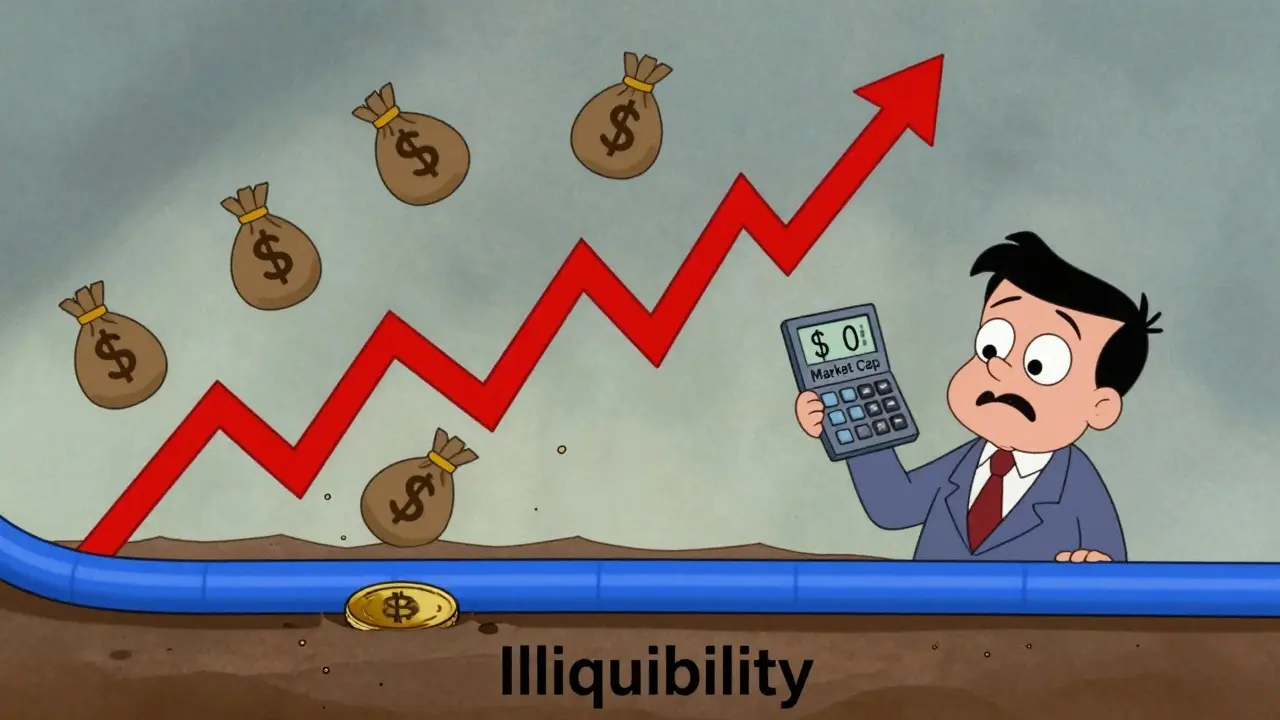
- Extreme Illiquidity: There are almost no buyers or sellers. A single large trade can skew the price wildly because there is no depth in the order book.
- Data Manipulation: The price feeds may be broken or manipulated, showing values that don’t reflect real market activity.
Furthermore, LiveCoinWatch reported a market capitalization of $0.00 for teleBTC during this period. Mathematically, this is impossible unless the circulating supply is effectively zero or the data aggregators are failing to read the contract correctly. When you see a high price paired with a zero market cap, you are looking at a ghost town, not a thriving ecosystem.
| Feature | WBTC (Wrapped Bitcoin) | teleBTC (TELEBTC) |
|---|---|---|
| Price Parity | Maintains 1:1 ratio with BTC | ~100% premium over BTC (Broken) |
| Daily Volume | $1.2 Billion+ | $26 - $800k (Inconsistent/Low) |
| Development Status | Active, audited, widely used | Inactive since 2023 |
| Security Audits | Multiple independent audits | No public audit records |
| Market Rank | Top 25 | #9,549+ (Negligible) |
Technical Architecture and Chain Issues
Let’s dig into the tech stack. The original whitepaper mentioned integration with Polygon. However, the actual token contract operates on Binance Smart Chain (BSC). The contract address is 0xC58C1117DA964aEbe91fEF88f6f5703e79bdA574. This mismatch between claimed functionality (Polygon cross-chain utility) and actual deployment (single-chain BSC token) is confusing for users.
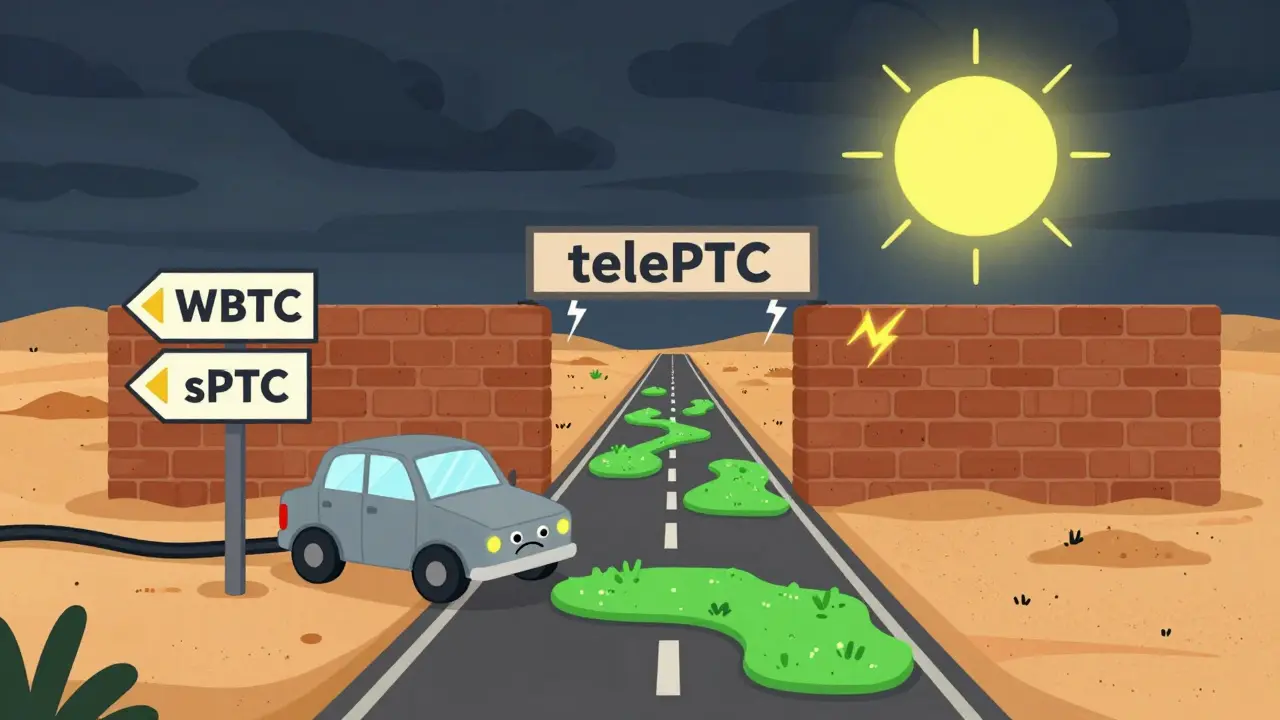
If you try to interact with this token, you will likely face significant hurdles. There is no evidence of integration with major DeFi protocols like Aave, Uniswap, or Curve. Without these integrations, you cannot lend, borrow, or easily swap the token. It sits isolated. For a user trying to move their Bitcoin into DeFi, teleBTC offers none of the promised utility. It is a dead end.
Moreover, the "over-collateralized" security mechanism described in the research paper lacks transparency. We don’t know the collateralization ratios, how liquidations work, or who holds the keys to the vaults. In the world of crypto, if you can’t verify the reserves, you shouldn’t trust them. Unlike WBTC, which publishes regular attestations from BitGo, teleBTC provides no such proof.
Risk Factors: Why Experts Are Warning Against It
You might wonder why nobody talks about this coin. The silence is deafening. Reddit threads on r/CryptoCurrency and r/Bitcoin show zero substantive discussions about teleBTC. Twitter mentions are negligible compared to legitimate projects. This lack of community engagement is a major warning sign. Healthy crypto projects have active communities discussing features, bugs, and governance. TeleBTC has none.
Security experts have raised serious concerns. Wendy O’Connell from Arcane Research noted in her September 2025 report that tokens deviating more than 5% from parity with low volume often indicate honeypot contracts or abandoned projects. TeleBTC fits this description perfectly. Additionally, the Blockchain Transparency Institute classified teleBTC as "Category 5: Non-Functional/High Risk" in October 2025. CoinGecko’s algorithm gave it a risk score of 98 out of 100, where scores above 75 are considered extreme.
Consider the regulatory angle too. The SEC’s guidance in July 2025 stated that any token claiming Bitcoin backing must maintain transparent reserves and 1:1 redeemability. TeleBTC fails both tests. Holding such an asset exposes you to potential regulatory scrutiny and total loss of value.
User Experience: What Happens If You Buy?
Let’s simulate a user journey. Suppose you decide to buy teleBTC anyway. You connect your wallet to a decentralized exchange on BSC. You find a liquidity pool. Here is what typically happens:
- Slippage Shock: Because liquidity is so thin, buying even a small amount causes massive slippage. You pay far more than the listed price.
- Selling Difficulty: When you try to sell, there are no buyers. Your transaction fails, or you sell back at a huge loss.
- Failed Transactions: Users have reported repeated transaction failures when attempting swaps, suggesting the smart contract may have bugs or restrictions preventing sales (a common trait of honeypots).
One user on CoinGecko, "DeFiNewbie," reported trying to swap a tiny amount of BNB for teleBTC and having the transaction fail repeatedly. Another user, "CryptoWatcher42," commented that the price chart looked manipulated. These aren’t isolated incidents; they are symptoms of a broken system.
Alternatives That Actually Work
If your goal is to use Bitcoin in DeFi, you have better, safer options. Don’t risk your capital on unproven, inactive protocols. Instead, consider these established wrapped Bitcoin solutions:
- WBTC (Wrapped Bitcoin): The industry standard. High liquidity, widely supported by all major DeFi platforms, and regularly audited.
- sBTC (sabbathBTC): A decentralized alternative built on sUSD, offering non-custodial wrapping with strong security guarantees.
- renBTC: Allows for decentralized wrapping of Bitcoin to various chains, though it has faced some competition, it remains a viable option for cross-chain needs.
These projects have billions in volume, active development teams, and clear paths for redemption. They respect the fundamental economic principle of parity. TeleBTC does not.
Conclusion: Is teleBTC Worth Your Time?
So, what is teleBTC? It is a theoretical concept that failed to become a functional product. It is a token with a broken price model, no active development, and extreme risk indicators. While the initial academic paper presented an interesting idea for trustless wrapped Bitcoin, the execution never materialized.
For investors, the lesson here is clear: always check the fundamentals. Does the price match the underlying asset? Is there active development? Is there a community? If the answer to any of these is no, walk away. TeleBTC serves as a cautionary tale in the crypto space-a reminder that just because something is on the blockchain doesn’t mean it has value.
Stick to proven protocols like WBTC if you need wrapped Bitcoin. Save your energy and capital for projects that deliver real utility and maintain economic integrity. In the fast-moving world of crypto, safety and liquidity matter more than speculative anomalies.
Is teleBTC a scam?
While we cannot definitively label it a "scam" without legal judgment, teleBTC exhibits many characteristics of high-risk or deceptive projects. These include a broken price model (trading at 100% premium to BTC), zero market capitalization reports, inactive development since 2023, and a risk score of 98/100 from CoinGecko. It fails to function as a wrapped Bitcoin token should, making it extremely dangerous for users.
What blockchain is teleBTC on?
The teleBTC token contract is deployed on Binance Smart Chain (BSC). Its contract address is 0xC58C1117DA964aEbe91fEF88f6f5703e79bdA574. Although the original research paper mentioned Polygon integration, the actual token operates solely on BSC with no evidence of cross-chain functionality.
Why is teleBTC price higher than Bitcoin?
It shouldn't be. A wrapped Bitcoin token should trade at parity with BTC. The fact that teleBTC trades at a ~100% premium indicates severe illiquidity, data manipulation, or a broken oracle. This deviation violates basic economic principles of wrapped assets and suggests the token is not functioning correctly.
Can I redeem teleBTC for real Bitcoin?
There is no clear mechanism for redemption. The project has been inactive since 2023, and there are no documented processes for unwrapping teleBTC back into native Bitcoin. Without active developers and transparent reserves, redemption is highly unlikely and risky.
What is a safer alternative to teleBTC?
If you want to use Bitcoin in DeFi, WBTC (Wrapped Bitcoin) is the safest and most liquid option. Other alternatives include sBTC and renBTC. These projects maintain price parity, have active development, and are integrated with major DeFi protocols like Aave and Uniswap.
Is there any community support for teleBTC?
No. Searches across Reddit, Twitter, and Discord reveal virtually no active community. There are no official Telegram groups or forums with meaningful discussion. This lack of community engagement is a major red flag indicating the project is abandoned or irrelevant.

9 Comments
Terry Hyland
its just another scam to steal money from poor people who dont know better. the whole crypto space is built on lies and greed. i told you all this would happen when i first started warning about these fake tokens. they think they can get away with it but eventually the truth comes out. nobody checks the code anymore. its dangerous and immoral.
Monica Pathammavong
i actually looked at the contract address mentioned in the post and its super sus. why would a legit project have zero volume? also u guys are missing the point that this is probably a honeypot designed to trap retail investors. i checked the github repo myself and its dead since 2023 which is huge red flag. dont buy this trash.
Tim Lefebvre
hey folks just wanted to add some context here. ive been following wrapped btc projects for years and telebtc is definitely not one of the safe ones. wbtc is the standard for a reason. if ur looking to use btc in defi stick to the big names like wbtc or renbtc. this token has no liquidity so u cant even sell it easily. hope this helps someone avoid losing money
Eric Scheinberg
It is imperative that investors exercise due diligence before engaging with any decentralized financial instrument. The data presented herein clearly indicates a fundamental failure of economic parity. One must consider the regulatory implications as well. The SEC guidelines are clear on reserve transparency. This project fails to meet those basic standards. Proceed with extreme caution.
pankaj chawla
I completely agree with the analysis provided here. The price deviation is unacceptable for any wrapped asset. We need more education on how to identify these traps early. I will be sharing this article with my network to ensure everyone stays informed. It is crucial that we support only legitimate protocols that offer real utility and security. Let us work together to clean up this space.
Jessica Lane
This is a very important discussion and I appreciate the detailed breakdown. It is concerning to see how many projects launch without proper oversight. I have seen friends lose money on similar tokens because they did not check the fundamentals. Please keep educating yourself and others. Knowledge is power in this volatile market. Stay safe out there.
Charles Pawlikowski
typical foreign scam trying to take our money :( we should ban these shady tokens right now. america deserves better than this garbage. the government needs to step in and shut down these unregulated exchanges. its disgusting how they prey on honest citizens. stay woke and protect your wealth patriots !!
Andrea Burd
boring read tbh. obviously its a scam who doesnt know that already? the elites always create these complex schemes to confuse the masses. i just ignore anything thats not blue chip. waste of time writing such a long post about something so obvious. move along.
Akeem Whittaker
We need to focus on solutions rather than just pointing out problems. While teleBTC is clearly flawed, the underlying technology for trustless wrapping is still valid. Projects like sBTC are making progress in this area. We should encourage development that prioritizes security and decentralization. Let us guide new developers toward best practices instead of dismissing the entire concept. Education and mentorship are key to growth in this industry.