
Imagine you want to make a movie. You don't need a camera crew, actors, or expensive editing software. You just type a prompt, and an AI generates the video for you. That’s the pitch behind Tell A Tale, a cryptocurrency project that claims to merge artificial intelligence with digital content creation. The native token, TAT, sits at the intersection of two massive hype cycles: AI and blockchain. But here is the kicker-while the concept sounds futuristic, the market data tells a story of extreme volatility and questionable utility.
If you are seeing TAT pop up in your portfolio tracker or hearing whispers about it on social media, you might be wondering if this is the next big thing or just another ghost town. As of late 2025, TAT has seen wild swings, dropping over 95% from its all-time high. Is there real value here, or is it mostly noise? Let's break down what TAT actually is, how it works, and whether it deserves a spot in your watchlist.
The Core Concept: AI Meets Blockchain
Tell A Tale (TAT) is a decentralized platform designed to let users create short movies and videos using artificial intelligence. The idea is simple: democratize filmmaking. Instead of needing technical skills, anyone can become a creator by leveraging AI tools integrated into the TAT ecosystem. The TAT token acts as the fuel for this engine. It is intended to facilitate payments within the platform, allowing users to access premium AI features or trade content.
Technically, TAT operates as an ERC-20 token on the Ethereum blockchain. This means it follows the standard rules for tokens on Ethereum, making it compatible with most major wallets like MetaMask. However, unlike established giants such as Fetch.ai, which powers autonomous agents across various industries, TAT focuses narrowly on video generation. This specialization is its main selling point, but also its biggest risk. If the underlying video technology doesn't gain traction, the token has little reason to exist beyond speculation.
Tokenomics: Supply and Scarcity
When evaluating any crypto asset, you have to look at the numbers. TAT launched with a fixed total supply of 1 billion tokens. There is no inflationary mechanism mentioned in the primary documentation, meaning the maximum supply equals the total supply. This fixed cap is often marketed as a deflationary feature, suggesting scarcity could drive prices up if demand increases.
But here is where things get murky. Multiple sources, including CoinMarketCap and Binance, have reported conflicting data regarding circulating supply. Some reports indicate zero circulating tokens despite active trading, while others show partial circulation. This discrepancy suggests either complex lock-up mechanisms for early investors or reporting errors due to low liquidity. With only around 5,830 holders recorded recently, the community is tiny compared to other projects. For context, top-tier AI coins often have hundreds of thousands of holders. A small holder base makes the price easily manipulated by large trades, known as "whales."
| Metric | Value | Implication |
|---|---|---|
| Total Supply | 1,000,000,000 TAT | Fixed cap; no new tokens will ever be minted. |
| Blockchain | Ethereum (ERC-20) | High compatibility but higher gas fees than Solana or BSC. |
| All-Time High | $0.0157 (March 2025) | Price has dropped ~95% since peak. |
| Holder Count | ~5,830 | Very low adoption; high concentration risk. |
| Market Cap | Near $0 (Micro-cap) | Extremely volatile; susceptible to pump-and-dump schemes. |
Utility: What Can You Actually Do?
So, why would someone buy TAT? The official narrative lists three main use cases:
- Platform Access: Using TAT to pay for AI video generation services within the Tell A Tale app.
- Staking: Locking up TAT tokens on platforms like Bitget Earn to earn passive income.
- Trading: Speculating on price movements due to high volatility.
However, practical implementation lags behind the promise. User reviews suggest that the actual video creation platform is either minimal or hard to verify. Unlike Render Network, which has a verifiable marketplace for GPU rendering, TAT lacks clear evidence of a functioning, widely-used application. Most trading volume seems driven by speculation rather than people actually buying TAT to make movies. If the product isn't being used, the token's long-term value proposition weakens significantly.
Market Performance and Volatility
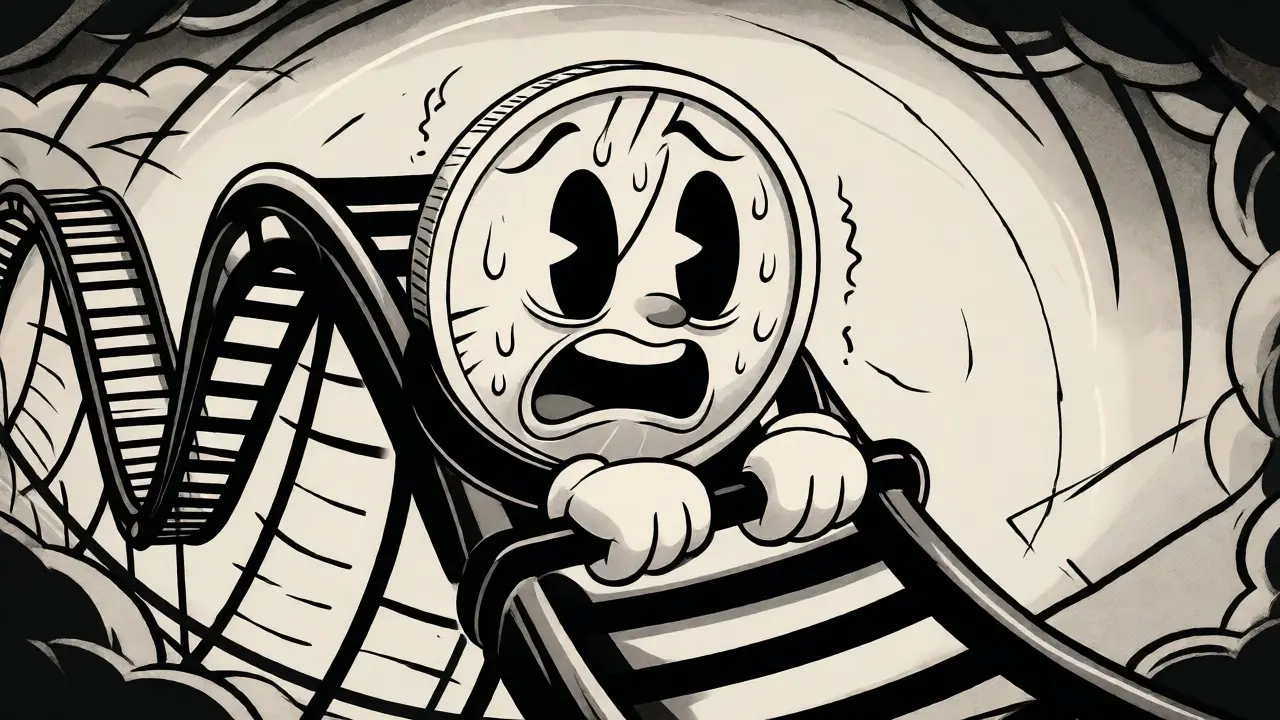
Let's talk about the elephant in the room: volatility. TAT is not for the faint of heart. In March 2025, it hit an all-time high of $0.0157. Just days later, it plummeted. By late 2025, prices were hovering near $0.0005, representing a massive drawdown. Technical indicators like the Relative Strength Index (RSI) have frequently shown oversold conditions, yet the price hasn't rebounded strongly.
Liquidity is another major concern. Trading volumes vary wildly between exchanges. One day, Tapbit might report $4,000 in daily volume; the next, Binance Alpha shows nearly $700,000. These discrepancies raise red flags about wash trading-where fake volume is created to make a token look more popular than it is. Low liquidity means slippage is high. If you try to sell a significant amount of TAT, you might move the price against yourself by 10-15%, eating into your profits.
Risks and Red Flags
If you are considering investing in TAT, you need to weigh the risks carefully. Here are the critical issues identified by analysts and users:
- Lack of Transparency: There is no easily accessible whitepaper detailing the technical architecture of their AI models. How does their AI differ from Runway ML or Sora? We don't know.
- Development Activity: Public repositories show minimal recent commits. In crypto, code is law. If developers aren't pushing updates, the project may be stagnant.
- Regulatory Uncertainty: The SEC has cracked down on unregistered securities. Tokens with unclear utility, like TAT, face potential legal hurdles.
- Community Engagement: Social sentiment is largely negative. Reddit threads warn of "questionable volume" and "no real utility." Trustpilot ratings for exchanges listing TAT reflect frustration with execution quality.
Expert forecasts are split. Some optimistic projections see TAT recovering to $0.0025 by 2031, assuming steady growth. Bearish models predict further declines, citing the broader trend where 92% of micro-cap AI tokens fail to survive past 18 months. Given TAT's current status, betting on survival is a gamble.
How to Buy and Store TAT
If you still want to take a shot, here is the practical path. TAT is primarily listed on smaller exchanges like Binance Alpha, Bitget, and MEXC. It is not on Coinbase or Kraken, limiting mainstream accessibility.
- Create an Account: Sign up on a supported exchange. Note that some require KYC (Know Your Customer) verification, while others offer limited no-KYC options.
- Fund Your Account: Deposit stablecoins like USDT or ETH. Direct fiat purchases are rare for micro-caps.
- Trade: Search for the TAT/USDT pair. Be mindful of the order book depth. Use limit orders instead of market orders to avoid excessive slippage.
- Withdraw: Send TAT to a self-custody wallet like MetaMask. Since it is an ERC-20 token, ensure you send it to an Ethereum address.
Remember, keeping funds on an exchange exposes you to platform risk. Given the low trading volume, withdrawing to your own wallet gives you better control over your assets.
Final Verdict: Worth the Hype?
Tell A Tale represents the classic micro-cap crypto dilemma: a compelling narrative wrapped in thin fundamentals. The AI video creation space is booming, projected to grow at a 37% CAGR through 2030. But TAT holds negligible market share in this sector. It competes with tech giants who have vastly superior resources and user bases.
For now, TAT looks more like a speculative vehicle than a robust investment. If you believe in the specific team behind TAT and their ability to deliver a unique AI video tool, it might offer asymmetric upside. But for most investors, the lack of verifiable product usage, poor liquidity, and negative sentiment make it a high-risk play. Treat it like lottery ticket money-only invest what you can afford to lose completely.
Is Tell A Tale (TAT) a good investment?
It depends on your risk tolerance. TAT is a micro-cap cryptocurrency with high volatility and low liquidity. While the AI video niche is growing, TAT lacks strong adoption metrics and verified product usage. Experts categorize it as high-risk, with many similar tokens failing to sustain long-term value.
Where can I buy TAT crypto?
You can purchase TAT on exchanges like Binance Alpha, Bitget, MEXC, and Tapbit. It is generally not available on major retail-friendly exchanges like Coinbase or Kraken due to its low market capitalization and liquidity issues.
What is the maximum supply of TAT?
The total and maximum supply of TAT is fixed at 1 billion tokens. No additional tokens can be minted, which theoretically creates scarcity if demand increases.
Does TAT have a working product?
Information is scarce. While the project claims to offer AI-powered video creation, independent verification of a widely-used, functional platform is difficult. Many users report that the token's primary activity remains speculative trading rather than utility-based transactions.
Why is TAT so volatile?
Volatility stems from low liquidity and a small holder base (approx. 5,830 holders). Small buy or sell orders can significantly impact the price. Additionally, inconsistent trading volume across different exchanges contributes to price discrepancies and rapid swings.
