
You saw the notification. A new Chihua Token is dropping free coins, and you’re wondering if it’s the next big thing or just another digital mirage. Here’s the hard truth: as of late 2026, the CHIHUA airdrop remains shrouded in mystery, with conflicting data and zero active trading volume. If you’re hunting for easy money in the crypto wild west, you need more than just hope-you need facts.
| Feature | Status | Implication |
|---|---|---|
| Trading Volume | $0 / Minimal | Liquidty is non-existent; selling may be impossible. |
| Total Supply | Reported as Zero | Data discrepancy suggests deployment issues or outdated tracking. |
| Blockchain | Ethereum (ERC-20) | Contract address exists but activity is dormant. |
| Main Competitor | HUAHUA (Chihuahua Chain) | Frequent name confusion leads to scam risks. |
The Name Game: Confusing CHIHUA with HUAHUA
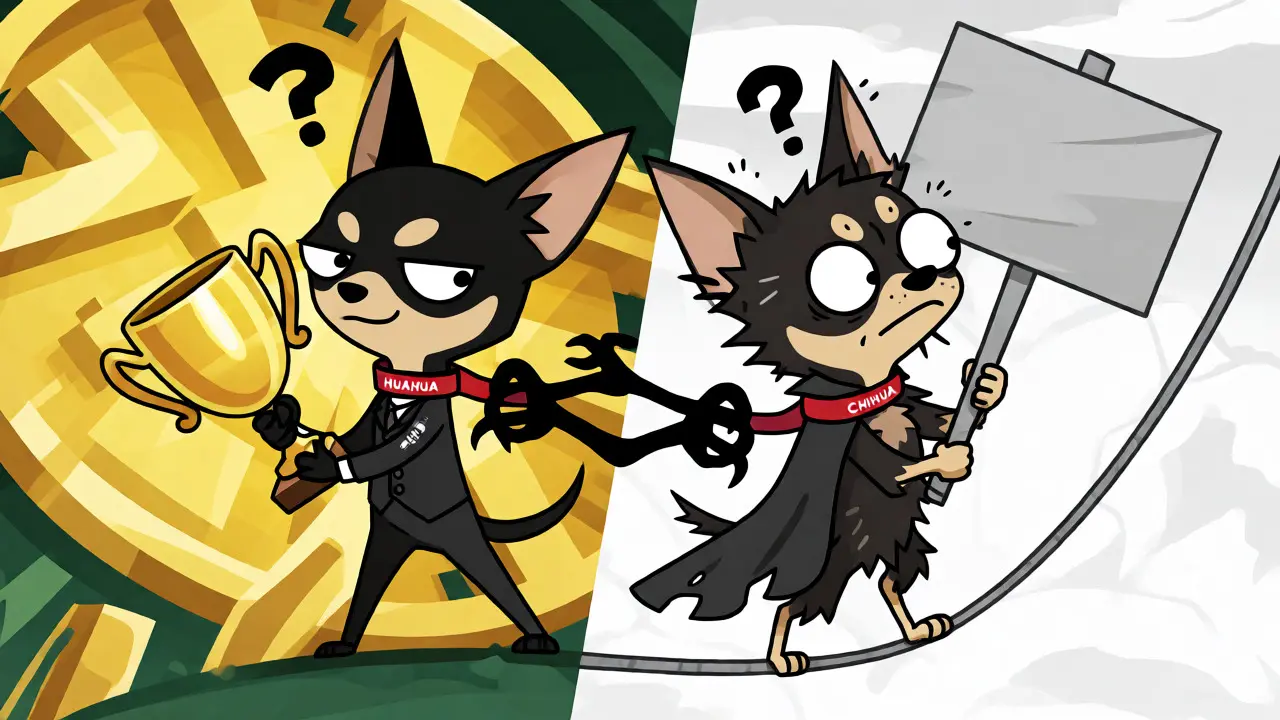
Before you connect your wallet, you must understand who you are actually dealing with. The crypto space is littered with similar-sounding names, and this is where most beginners get burned. There is a significant difference between Chihua Token (CHIHUA) and the older, more established Chihuahua project (HUAHUA).
The HUAHUA token launched back in January 2022 on its own blockchain. It conducted a verified airdrop via MEXC exchange, distributing millions of tokens to users who staked MX tokens. That project had a clear governance model and a community pool. In contrast, the current CHIHUA token claims to be a "community answer" to dog-themed memes like Dogecoin and Shiba Inu. However, unlike HUAHUA, CHIHUA lacks a distinct chain and relies on Ethereum. This distinction matters because scammers often exploit this confusion. They might send you an "airdrop" from a fake contract that looks like CHIHUA but isn't linked to any real development team.
Tokenomics: The Burn Strategy Explained
If you dig into the whitepaper claims for CHIHUA, you’ll see aggressive numbers designed to create scarcity. The project states that 51% of the total supply was burned immediately after launch. Another 48% went into Uniswap liquidity pools and was subsequently burned. This leaves only 1% of the original supply available for marketing and future development.
Why does this matter to you? In theory, burning tokens reduces supply, which can drive up price if demand holds steady. The developers claim this makes them "100% rug pull proof" because they don’t hold large amounts of unlocked tokens to dump on investors. But here’s the catch: if 99% of the supply is burned, what exactly are you receiving in an airdrop? Is it part of that remaining 1%, or is it newly minted? Without transparent audit reports confirming these burns on-chain, these figures remain marketing slogans rather than financial guarantees.
Is the Airdrop Real? Checking the Data
As of November 2026, major aggregators like CoinMarketCap list CHIHUA with zero circulating supply and zero trading volume. This is a massive red flag. A legitimate airdrop usually results in immediate trading activity as recipients sell their free tokens. If the volume is flatlined at zero, one of three things is happening:
- The token hasn’t launched yet: You might be looking at a placeholder listing waiting for the actual distribution event.
- The project is dead: Development stalled, and the token is effectively abandoned.
- Data lag: The trackers haven’t updated, though this is rare for months-long gaps.
You should never assume an airdrop is guaranteed based on social media hype alone. Check the official contract address. For CHIHUA, listings point to an Ethereum contract starting with 0x26ff.... Copy this address into Etherscan. If you see no recent transactions involving large distributions, the airdrop likely hasn’t happened or isn’t active.
Risks in the Meme Coin Sector
Meme coins operate on attention, not utility. When attention fades, prices crash. The CHIHUA project positions itself against giants like Shiba Inu and Dogecoin. But those projects have years of brand recognition and massive communities. CHIHUA is fighting for scraps in a crowded market.
Consider the broader context. In 2024 and 2025, billions were distributed in airdrops across DeFi and Web3 gaming sectors. Projects like Hyperliquid and Monad captured attention by offering tangible ecosystem value. Meme coins, however, rely purely on speculation. If you receive CHIHUA tokens, do not expect them to appreciate simply because they are "free." Often, the gas fees required to move or swap low-volume tokens exceed the value of the tokens themselves.
How to Protect Yourself from Scams
Airdrop scams are evolving. Instead of asking for your private key (a classic rookie mistake), modern scams use "approve" transactions. You click a link to claim your CHIHUA airdrop, and a smart contract asks permission to spend your USDC or ETH. Once approved, a bot drains your wallet.
Follow these steps to stay safe:
- Verify the Source: Only trust links from the official X (formerly Twitter) account or Discord server of the Chihua Token team. Ignore DMs.
- Check the Contract: Always cross-reference the token contract address with multiple sources like CoinGecko and Etherscan.
- Use a Burner Wallet: Never connect your main hardware wallet to claim a speculative airdrop. Use a fresh MetaMask account with minimal funds.
- Revoke Permissions: After claiming, use tools like Revoke.cash to remove unlimited approvals from unknown contracts.
What to Do Next
If you already received CHIHUA tokens, check if they are tradeable. Try swapping a tiny amount (like $5 worth) on Uniswap. If the transaction fails due to slippage or lack of liquidity, the token is essentially worthless right now. Hold it if you believe in the long-term community vision, but treat it as a lottery ticket, not an investment.
If you haven’t claimed anything yet, wait for official confirmation. Look for a press release stating the exact date and snapshot block height. Until then, keep your expectations low and your skepticism high. The crypto world rewards those who verify, not those who trust blindly.
Is the Chihua Token airdrop currently active?
As of November 2026, there is no confirmed active airdrop campaign for CHIHUA with verifiable trading volume. Most data shows zero supply and zero volume, suggesting the project is either pre-launch, inactive, or suffering from data reporting errors. Always check official channels before participating.
What is the difference between CHIHUA and HUAHUA?
CHIHUA is an ERC-20 token on Ethereum claiming to be a meme coin alternative. HUAHUA is the native token of the Chihuahua Chain, launched in 2022. They are separate projects with different blockchains, teams, and histories. Scammers often mix them up to confuse investors.
Can I sell my CHIHUA airdrop tokens immediately?
Probably not. With reported zero trading volume, there is no liquidity. Attempting to sell may result in failed transactions or extreme slippage. You would need to find a buyer directly or wait until the project establishes a functional decentralized exchange pool.
Is CHIHUA a rug pull risk?
The team claims it is "rug pull proof" due to burning 99% of the supply. However, without third-party audits verifying these burns and locking mechanisms, the risk remains. Low liquidity and anonymous teams are common indicators of higher risk in meme coins.
Where can I buy CHIHUA tokens?
Historically, CHIHUA has been associated with Uniswap on the Ethereum network. However, given the current lack of volume, you may not find an active pair. Check DEXTools or DexScreener for real-time liquidity pools before attempting to buy.
