
Imagine a company with no CEO, no middle management, and no office address. Instead of a boardroom deciding your salary or the next product launch, thousands of people around the world vote on every major decision using digital tokens. This isn’t a scene from a sci-fi novel; it’s the reality of Decentralized Autonomous Organizations (DAOs), which are blockchain-based entities governed by smart contracts and collective member voting. As we move through 2026, these digital cooperatives have stopped being niche experiments for crypto enthusiasts. They are now influencing global supply chains, managing billions in assets, and challenging the very definition of what a business can be.
From Niche Experiment to Global Standard
Just a few years ago, joining a DAO felt like learning a new language while juggling flaming swords. You needed deep technical knowledge, a tolerance for risk, and a lot of patience. Today, the landscape has shifted dramatically. By 2025, the number of active DAOs surpassed 13,000 worldwide. That is not just growth; that is an explosion of interest and utility. The compound annual growth rate has been substantial, moving these organizations from the fringes of technology into the core of modern commerce.
What changed? Scalability. User experience. And necessity. Traditional corporate structures struggled with remote work, transparency demands, and slow decision-making during crises. DAOs offered a solution: code-enforced rules that allow anyone with an internet connection to participate. You don’t need to live in Silicon Valley or London to have a say. You just need a wallet and a stake in the outcome. This accessibility has turned DAOs into integral components of Web3 social networks, financial services, and even manufacturing processes.
How Governance Actually Works in 2026
The heart of any DAO is its governance model. In the early days, it was simple: one token equals one vote. If you owned more tokens, you had more power. It worked, but it often led to "whale" dominance, where a few large holders could steamroll the community. That era is largely over. By 2026, sophisticated governance mechanisms have become the standard.
Quadratic voting is now a popular alternative. Here, the cost of each additional vote increases exponentially. This limits the influence of big spenders and gives smaller participants a louder voice relative to their holdings. It’s a mathematical way to ensure fairness.
Then there is Reputation-based systems. In these models, your influence isn’t tied to how much money you put in, but to how much value you’ve added. Did you write great documentation? Fix a bug? Mentor new members? Your reputation score goes up, granting you more voting weight. This rewards commitment rather than just capital.
We also see the rise of delegated voting and conviction voting. Delegated voting lets you assign your voting power to someone you trust-like a representative in a democracy. Conviction voting, used by platforms like DAOstack, allows proposals to gain momentum over time. If enough people lock their tokens behind a proposal for a long period, it passes automatically. This reduces the friction of constant voting fatigue.
| Governance Model | Key Mechanism | Best For | Main Drawback |
|---|---|---|---|
| Token-Based Voting | One token = One vote | Simplicity, clear ownership | Whale dominance |
| Quadratic Voting | Exponential cost per extra vote | Fairness, diverse opinions | Complex calculation |
| Reputation-Based | Influence based on contribution | Active communities, meritocracy | Hard to quantify value |
| Delegated Voting | Voting power assigned to reps | Large groups, expert decisions | Centralization risk |
The AI Revolution Within Decentralized Structures
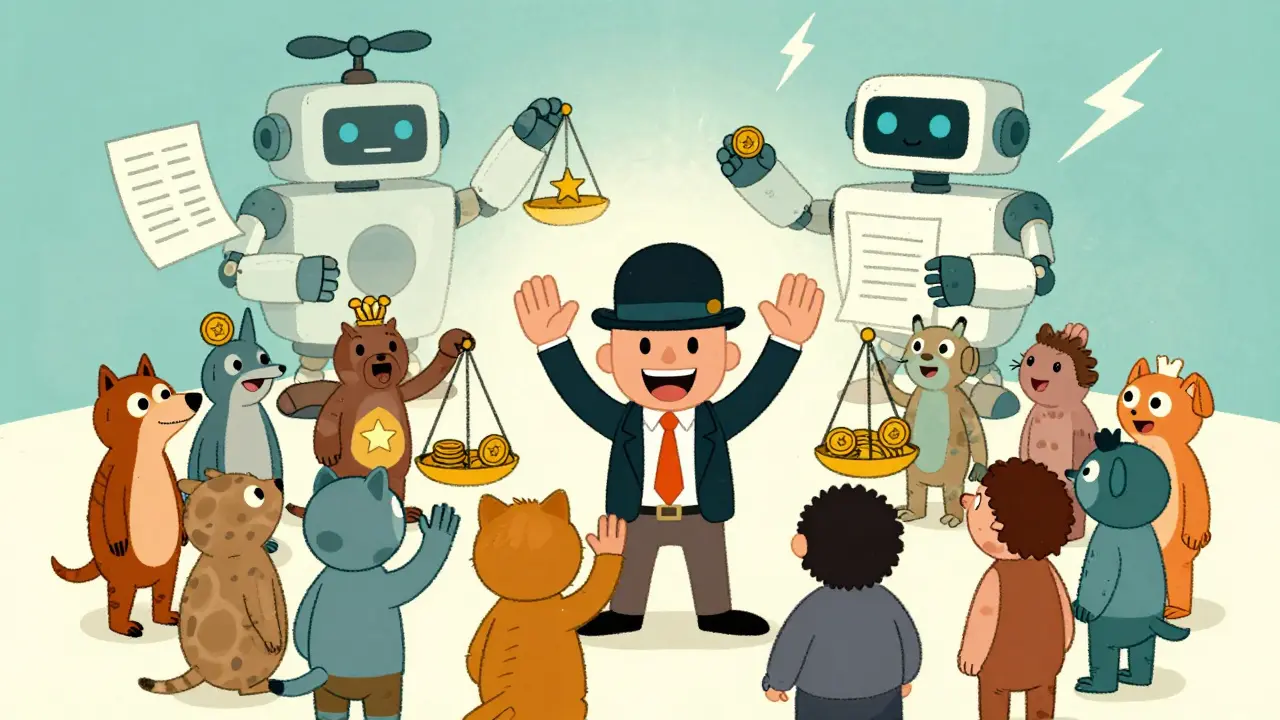
If governance was the engine of DAOs in 2024, artificial intelligence is the turbocharger in 2026. The integration of AI with blockchain is no longer theoretical; it is operational. We are seeing AI-powered smart contracts that can predict outcomes, detect fraud, and automate routine tasks without human intervention.
Consider a supply chain DAO. Traditionally, verifying that goods arrived on time required manual checks and paperwork. Now, AI analyzes data from IoT sensors, weather patterns, and logistics providers. If a delay is predicted, the smart contract can automatically adjust payments or reroute shipments based on pre-agreed parameters. This level of automation enhances security and efficiency, addressing two of the biggest criticisms of early blockchain projects.
AI also helps with voter engagement. Predictive analytics can identify which proposals are likely to pass or fail, helping communities focus their energy where it matters most. It can summarize complex technical proposals into plain language, making participation accessible to non-experts. This synergy between blockchain’s transparency and AI’s intelligence is driving next-generation improvements across multiple industries.
Real-World Impact Beyond Finance
You might think DAOs are only for cryptocurrency trading or NFT collectives. That view is outdated. Enterprise adoption has accelerated dramatically. Companies are integrating DAO structures into healthcare systems, manufacturing, and government services.
In healthcare, patient data ownership is a huge issue. A DAO structure allows patients to control who accesses their medical records and get compensated when their data is used for research. In manufacturing, suppliers and producers can form a DAO to manage inventory and quality control transparently, reducing waste and disputes. Even governments are exploring DAO-like frameworks for local budgeting, allowing citizens to vote directly on how public funds are spent.
This expansion is supported by the rise of Central Bank Digital Currencies (CBDCs). While CBDCs are centralized, they provide a stable, government-backed layer that complements the decentralized nature of DAOs. Banks are partnering with decentralized platforms to create hybrid financial products, blending the stability of traditional finance with the innovation of DeFi.
The Challenges That Remain
It would be naive to say everything is perfect. DAOs still face significant hurdles. The biggest is legal ambiguity. In many jurisdictions, it is unclear whether a DAO is a corporation, a partnership, or something else entirely. This creates risks for members and developers. If a smart contract fails, who is liable? The code writer? The voters? The answer is often "we don't know," which scares off mainstream investors.
Security remains a critical concern. Smart contracts are immutable, meaning once a bug is exploited, the money is gone. Major hacks have resulted in massive financial losses, shaking confidence in the system. While AI-driven security tools are improving detection, the threat landscape evolves constantly.
Then there is the human element: voter apathy. Despite better interfaces, participation rates remain low in many large DAOs. Most decisions are made by a small core group, undermining the promise of decentralization. Scaling decision-making as organizations grow larger is difficult. Internal conflicts are hard to resolve without a traditional hierarchy or HR department. These issues require cultural shifts, not just technological fixes.
Getting Started: What You Need to Know
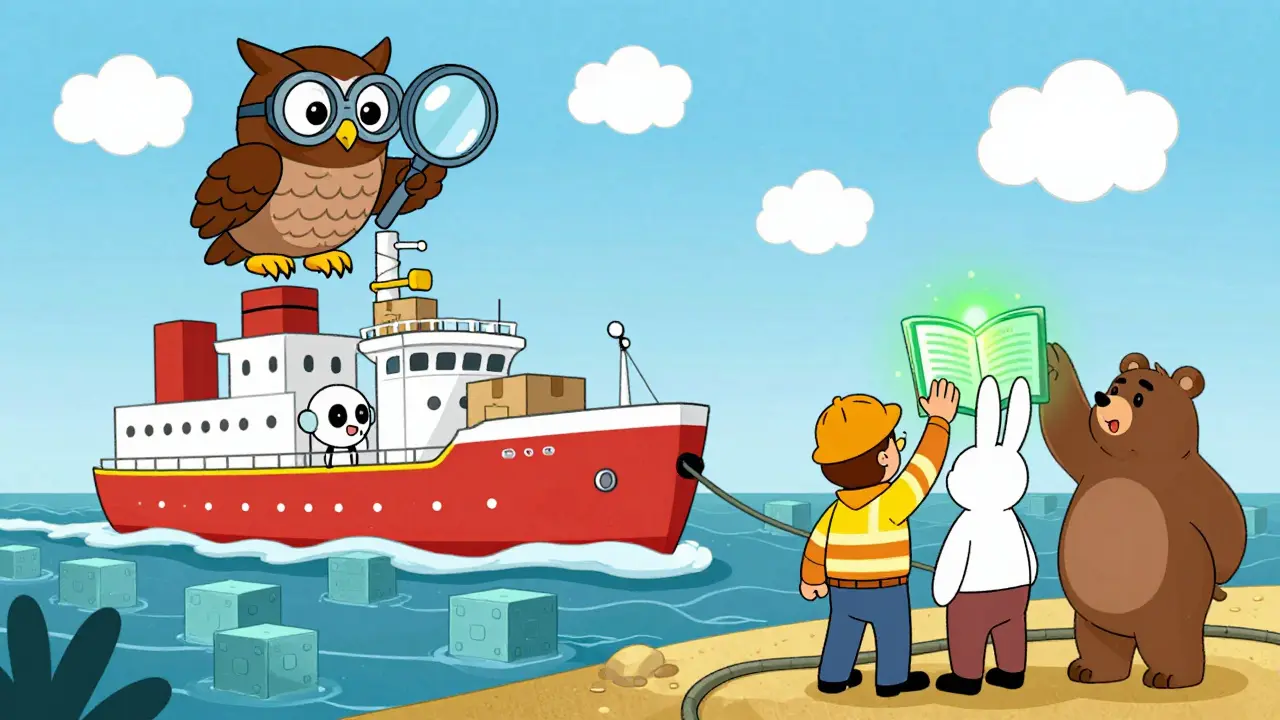
If you want to participate in this future, the barrier to entry has lowered, but it hasn’t disappeared. You still need to understand the basics of blockchain technology. Here is a practical checklist for newcomers:
- Get a Wallet: You need a compatible cryptocurrency wallet like MetaMask or Phantom. This is your identity and bank account in the Web3 world.
- Acquire Tokens: Most DAOs use governance tokens. You buy these on exchanges or earn them by contributing to the project.
- Connect and Vote: Visit the DAO’s governance portal. Connect your wallet. Read proposals carefully. Cast your vote.
- Join the Community: DAOs live in Discord servers and Telegram channels. This is where the real discussion happens. Don’t just vote; engage.
Expect a learning curve. The user interfaces are getting better, but they are still not as intuitive as Facebook or Amazon. Look for DAOs with strong documentation and active support teams. Larger, established organizations generally offer a smoother onboarding experience.
The Road Ahead: Sustainability and Mainstream Adoption
Looking forward, the trajectory points toward mainstream adoption. Regulatory frameworks are maturing. Governments are realizing they cannot ban blockchain, so they are learning how to regulate it. This clarity will bring institutional money and further innovation.
Environmental sustainability is another key focus. Early blockchain networks consumed vast amounts of energy. The industry has largely shifted to Proof-of-Stake and other efficient consensus mechanisms, drastically reducing carbon footprints. This addresses a major criticism and makes DAOs more attractive to eco-conscious businesses and consumers.
As AI continues to integrate, we will see more autonomous operations. Imagine a DAO that manages a renewable energy grid, balancing supply and demand in real-time without human traders. Or a creative collective that distributes royalties instantly to artists based on usage data. The possibilities are limited only by our imagination and coding skills.
The future of decentralized organizations is not about replacing all traditional companies. It is about offering a choice. A choice for transparency, for direct participation, and for global collaboration. Whether you are a developer, an investor, or just a curious citizen, understanding DAOs is becoming essential. The experiment is over. The evolution has begun.
Are DAOs legal in the United States?
The legal status of DAOs in the US is evolving. Some states like Wyoming have passed laws recognizing DAOs as legal entities, providing liability protection for members. However, federal regulations from the SEC are still ambiguous, particularly regarding whether governance tokens are securities. Always consult a legal expert before forming or heavily investing in a DAO.
How do I make money in a DAO?
There are several ways. You can hold governance tokens and hope their value increases as the DAO succeeds. You can provide liquidity to the DAO's treasury and earn fees. Many DAOs also pay contributors in tokens or stablecoins for work like development, marketing, or community management. Be aware that token values can be volatile.
What is the difference between a DAO and a traditional corporation?
A traditional corporation has a hierarchical structure with a CEO and board of directors making decisions. A DAO is flat and governed by code and community voting. Corporations rely on legal contracts enforced by courts; DAOs rely on smart contracts enforced by blockchain. Corporations are centralized; DAOs are decentralized.
Can a DAO be hacked?
Yes. If there is a bug in the smart contract code, hackers can exploit it to drain funds. Unlike a bank, there is no insurance or customer service to reverse transactions. This is why security audits by reputable firms are crucial before joining or funding a DAO. AI-driven security tools are helping to mitigate these risks in 2026.
Do I need to be a programmer to join a DAO?
No. While developers build the infrastructure, most DAOs need writers, designers, marketers, moderators, and strategists. You can contribute your skills and earn tokens or reputation. The technical barrier to entry for users has decreased significantly with better user interfaces and educational resources.

7 Comments
Russ Fincham
Look, I’ve been in tech since the dot-com bubble, and this whole DAO hype cycle feels exactly like Web 2.0 startup culture with extra steps. The article glosses over the sheer administrative nightmare of trying to get consensus from thousands of strangers who don’t even know each other’s real names. You can code your way out of a bug, but you can’t code your way out of human apathy or malicious coordination.
Linda Hilliard
Oh, please. 😒 Your cynicism is just a symptom of your inability to grasp post-scarcity governance models. It’s adorable that you think 'administrative nightmare' applies to algorithmic efficiency. We are talking about immutable truth here, not some middle-manager’s PowerPoint deck. The transition from hierarchical fiat structures to meritocratic code-based sovereignty is inevitable, and those clinging to outdated corporate paradigms will simply be left behind by the vanguard of digital civilization. 📉
DJ Maleko
Linda, you’re missing the point entirely because you’re too busy flexing your jargon muscle. 🧐 Russ isn’t wrong about the human element. You can have the fanciest quadratic voting system in the world, but if the community is toxic or fragmented, the DAO collapses under its own weight. I’ve seen three major DAOs implode last year not because of bad code, but because the 'community managers' were just power-tripping mods who couldn’t handle dissent. It’s not about 'sovereignty,' it’s about basic group dynamics, which apparently requires more than just reading whitepapers. 🤷♂️
Shay Thomson
I feel like we are all shouting past each other here! 😭 It’s so intense. But honestly? I just want to join one of these things and help make decisions. The idea that I can vote on where funds go instead of just accepting what my boss says is... well, it’s kind of magical. I know there are risks, sure, and I know Linda thinks she knows better, and DJ thinks everyone is broken, but maybe we can just try to find common ground? Let’s build something beautiful together, okay? 🌈✨
Kristine Lawson
The notion that 'magic' resolves structural inefficiencies is profoundly naive. Furthermore, the assertion that traditional hierarchies are inherently oppressive ignores the nuanced legal protections they provide. DAOs operate in a regulatory gray zone that exposes participants to unlimited liability in many jurisdictions. To suggest that 'voting' replaces due diligence is not only incorrect; it is dangerously misleading. One must consider the fiduciary responsibilities that are currently absent in these so-called autonomous organizations.
Winston Lacewing
Wow, Kristine, you really need to chill out with the doom-and-gloom rhetoric! 🚫👎 You sound like a tax auditor having a panic attack. People are trying to innovate, to break free from the chains of old-school bureaucracy, and you’re sitting there worrying about 'fiduciary responsibilities'? Get over yourself! If you’re so worried about liability, maybe stay out of it. But don’t come here and lecture us about being 'dangerously misleading.' You’re the one stuck in the past while the rest of us are building the future! 😤🔥
Erika Pozzetto
It appears that the discourse has devolved into emotional posturing rather than substantive analysis of the underlying technological frameworks. While the enthusiasm for decentralized governance is understandable, one must acknowledge that the integration of AI-driven smart contracts introduces complex ethical dilemmas regarding accountability and transparency that have yet to be adequately addressed by current legislative bodies. The potential for algorithmic bias within these autonomous systems poses a significant risk to equitable participation, suggesting that a purely technocratic solution may overlook critical socio-political nuances essential for sustainable organizational development.