
You clicked this because you saw monkeyhaircut (MONK) flashing green on a chart, or maybe a friend mentioned it in a Telegram group. You want to know if this is the next big thing or just another digital ghost. Here is the blunt truth: MONK is a classic example of the high-risk, low-liquidity side of the Solana meme coin ecosystem. It has no utility, no roadmap, and a market cap that fluctuates wildly based on who buys what today. If you are looking for investment-grade fundamentals, you won't find them here. But if you are curious about how speculative assets work on blockchain networks, MONK is a perfect case study.
The Core Identity of MONK
monkeyhaircut is a meme cryptocurrency token launched in 2023 that operates on the Solana blockchain platform. Unlike Bitcoin or Ethereum, which aim to solve specific technological problems like decentralization or smart contract execution, MONK exists primarily for community engagement and speculative trading. Its contract address, FYa25XnBsXQXAdTnsyKBKd5gZ1VZhChBRF57CqfRxJZX, confirms its status as an SPL token (Solana Program Library token). This means it leverages Solana's high-speed, low-cost transaction infrastructure but adds no new code or functionality to the chain itself.
The project’s branding relies heavily on cryptic lore rather than technical whitepapers. The official narrative speaks of "The Hairzone," a mystical place one must walk toward until nearly dead to find. While poetic, this lack of concrete documentation-no GitHub repositories, no development team announcements, no partnership press releases-is a major red flag for serious investors. It positions MONK firmly in the category of "degen" plays, where price action is driven by social sentiment rather than product adoption.
Technical Specs and Supply Mechanics
Understanding the numbers helps you gauge the risk. MONK has a fixed maximum supply of 1,000,000,000 tokens. As of late 2024, nearly all of these tokens were in circulation, with approximately 999 million available. There is no inflationary mechanism; no new tokens are being minted to reward stakers or developers. This static supply model means any price increase must come entirely from new capital entering the market, not from scarcity created by burning mechanisms.
Because it is an SPL token, MONK trades exclusively on decentralized exchanges (DEXs) native to Solana. Raydium and Jupiter serve as the primary liquidity pools. This contrasts sharply with major coins listed on centralized giants like Binance or Coinbase. For you, this means two things: first, you need a Solana-compatible wallet like Phantom or Solflare to trade it; second, you are exposed to slippage risks when buying or selling large amounts due to thin order books.
Market Performance and Volatility
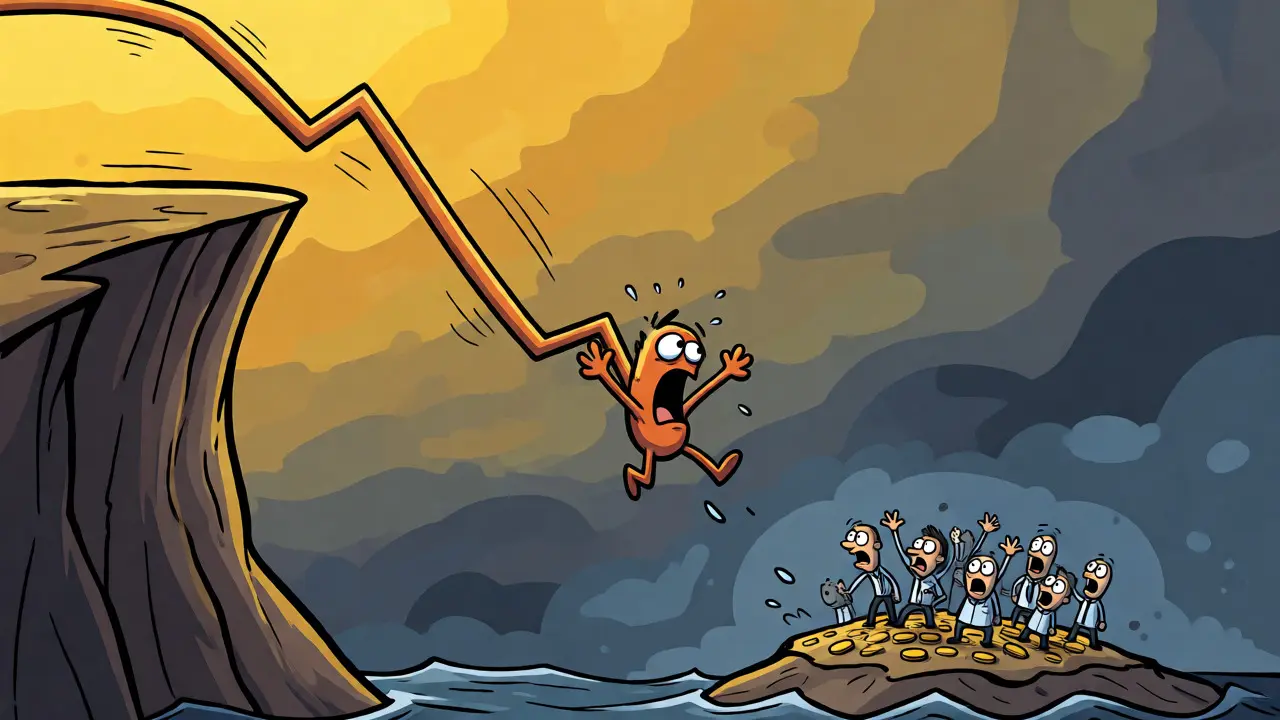
If you look at MONK’s history, you see a pattern common to small-cap meme coins: a sharp pump followed by a long bleed. The token reached its all-time high of $0.02811 in May 2024. Since then, it has suffered a massive drawdown, declining by over 98% from that peak. Current pricing data varies significantly across aggregators like CoinGecko, CoinMarketCap, and CryptoRank, often showing discrepancies between $0.0001 and $0.0005. Why? Because with a daily trading volume hovering around $55,000 to $60,000, a single large buy or sell order can swing the price by several percentage points.
| Metric | Value / Status | Implication |
|---|---|---|
| All-Time High | $0.02811 (May 2024) | Extreme volatility; early buyers are deeply underwater. |
| Current Decline | >98% from ATH | Significant loss of momentum since launch hype. |
| Market Cap Range | $150k - $1.1M | Micro-cap asset; highly susceptible to manipulation. |
| Holder Count | ~4,030 | Small community; limited network effect. |
| Liquidity Provider | Raydium/Jupiter | No centralized exchange listing limits accessibility. |
Comparing MONK to Other Solana Meme Coins
To understand where MONK fits, compare it to established peers like Dogwifhat (WIF) and Bonk (BONK). WIF and BONK have achieved multi-billion dollar market caps, secured listings on major centralized exchanges, and developed distinct brand identities with widespread cultural recognition. MONK, by contrast, remains in the "long tail" of the market. It lacks the marketing budget, the influencer backing, and the user base that allow larger meme coins to sustain value during bearish trends.
Furthermore, unlike some newer projects that attempt to add utility (such as NFT integration or gaming elements), MONK offers none. It is purely a vehicle for speculation. In a bull market, this might be enough to drive prices up as retail investors chase gains. In a sideways or bearish market, however, assets without utility tend to bleed out as traders move capital to more promising narratives.
Risks You Need to Know
Trading MONK isn't like buying stocks. The risks are structural and severe. First, consider liquidity risk. With only about $57,000 in daily volume, exiting a position worth even $500 could incur significant slippage, meaning you receive less than the displayed price. Second, there is information asymmetry. Without a clear team or roadmap, you don't know who holds the majority of the supply. If a few whales decide to dump their bags, the price can collapse instantly.
Additionally, regulatory uncertainty looms over all meme tokens. While no specific legal actions have targeted MONK yet, global regulators increasingly view unregistered securities with suspicion. If a jurisdiction decides to crack down on DEX-traded tokens lacking utility, MONK could face delisting pressures or reduced access. Finally, the technical indicator analysis suggests a neutral-to-bearish trend. Moving averages show the 50-day line crossing below the 200-day line, a signal often interpreted as long-term weakness despite short-term bounces.
How to Buy and Store MONK
If you still want to take the gamble, here is the practical path. You cannot buy MONK directly with credit card on most platforms. You need to follow these steps:
- Set up a Solana Wallet: Download Phantom or Solflare. Secure your seed phrase offline.
- Buy SOL: Purchase Solana (SOL) on a centralized exchange like Coinbase or Kraken, then withdraw it to your wallet.
- Swap for MONK: Go to Jupiter Aggregator or Raydium. Connect your wallet. Paste the MONK contract address (
FYa25...xJZX) to ensure you aren't buying a fake clone. Set your slippage tolerance higher (1-2%) to account for volatility. - Store Safely: Keep your tokens in the wallet. Do not leave them on a DEX interface after trading.
Be prepared for failed transactions if the network is congested or if your slippage settings are too tight. Beginners often get frustrated here, so patience is key.
Is monkeyhaircut (MONK) a good investment?
It depends on your risk tolerance. For conservative investors, no-it lacks utility and has declined over 98% from its peak. For speculators seeking high-risk/high-reward plays within the Solana ecosystem, it offers potential upside if community hype returns, but it carries extreme downside risk.
Where can I buy MONK crypto?
MONK is primarily traded on decentralized exchanges (DEXs) on the Solana blockchain, such as Raydium and Jupiter. It is not widely listed on major centralized exchanges like Binance or Coinbase.
Does MONK have a use case?
No, MONK currently has no apparent utility beyond speculative trading and community engagement. It does not power an app, provide governance rights, or offer yield-generating features.
Why is the price of MONK different on various websites?
Low liquidity causes price discrepancies. With low trading volume, a single trade can skew the average price on one aggregator while others lag behind, leading to variations between CoinGecko, CoinMarketCap, and other trackers.
What wallet do I need for MONK?
You need a Solana-compatible wallet. Popular options include Phantom, Solflare, and Backpack. These wallets support SPL tokens like MONK.
