
For years, Iceland was the holy grail for cryptocurrency miners. You had cheap electricity powered by volcanoes and waterfalls, a climate that kept servers cool without expensive air conditioning, and a government that didn't seem to care much about what you were doing with that power. But if you are looking to set up a new mining farm in Reykjavik today, you will hit a wall. Not a legal ban, exactly, but a hard ceiling on power. By 2024 and 2025, the party was effectively over for expansion. The National Energy Authority reported that crypto mining consumed about 8% of the nation's total energy consumption in 2023. That number might sound small globally, but for a country with a population smaller than many US cities, it is massive.
The core issue isn't that Iceland ran out of energy sources; it’s that they ran out of capacity to deliver it. This article breaks down why the golden age of Icelandic mining has stalled, how the government is reallocating resources, and what this means for the future of the industry in one of the world’s most unique energy landscapes.
The Renewable Trap: Abundance vs. Capacity
Iceland’s energy mix is almost entirely renewable, which sounds like an infinite resource. In reality, it is strictly limited by infrastructure. About 75% of Iceland's electricity comes from hydroelectric facilities, and roughly 25% comes from geothermal plants. These systems rely on physical assets-dams, turbines, and steam vents-that cannot be simply "turned up" when demand spikes.
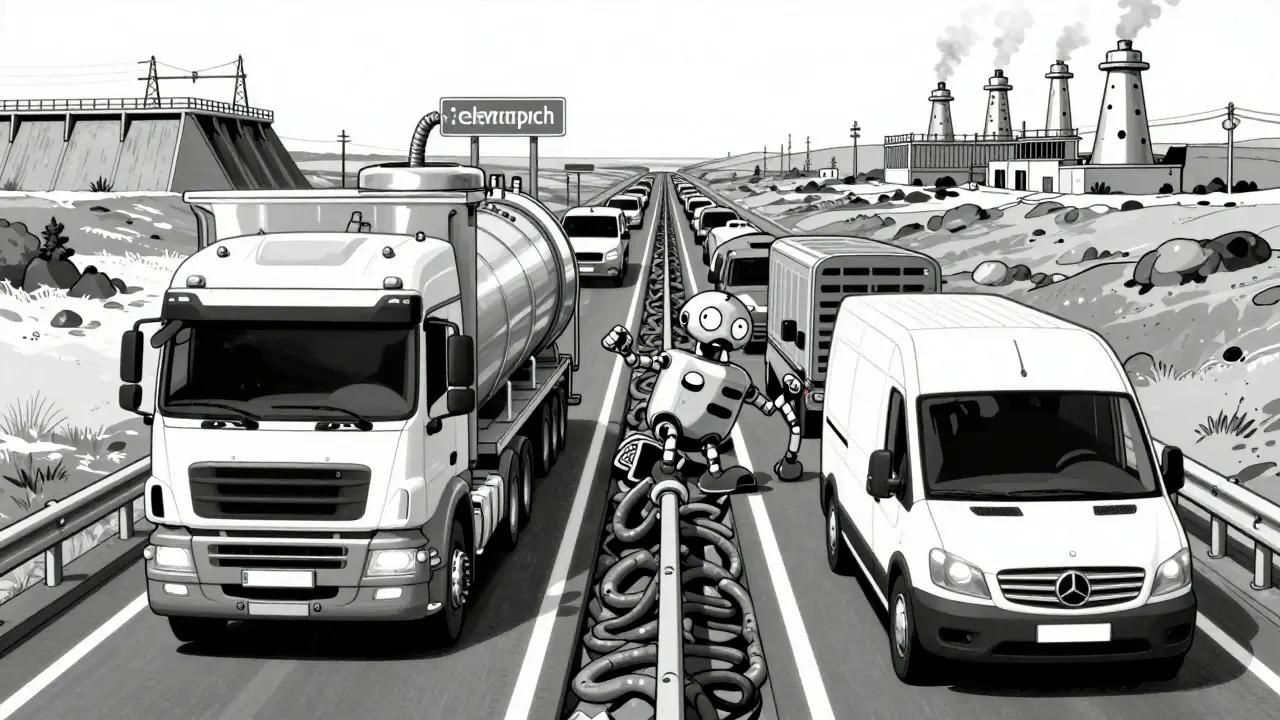
Think of it like a highway. Just because there is plenty of space on the map doesn’t mean there are enough lanes. Iceland’s grid is built for a specific load. For decades, that load was dominated by aluminum smelting. When crypto miners arrived around 2013-2014, they filled in the gaps, using stranded energy that would otherwise go unused. But those gaps have vanished. According to Hashrate Index analysis from 2024, Iceland’s bitcoin mining operations are constrained to approximately 120 megawatts of power allocation. Despite this limit, the country generates well above 1% of Bitcoin's global hashrate, making it likely the largest hashrate generator per capita on Earth.
The problem is that both hydro and geothermal sources are operating near maximum capacity. Waterfalls flow at their natural rate, and volcanoes vent steam at their geological limit. There is no quick way to build more dams or drill deeper wells to meet sudden industrial demand. New power plant construction has been minimal in recent years, creating a bottleneck that affects every new industrial application, not just crypto.
Policy Shift: From Welcome Mat to Red Tape
The political mood in Iceland has shifted dramatically. For nearly a decade, miners operated with little interference, enjoying peace compared to the regulatory chaos in China, Kazakhstan, or other jurisdictions. However, by March 2024, Prime Minister Katrín Jakobsdóttir publicly expressed a desire to reduce cryptocurrency mining activities. This wasn't a call for a total ban, but a clear signal that unlimited growth was no longer acceptable.
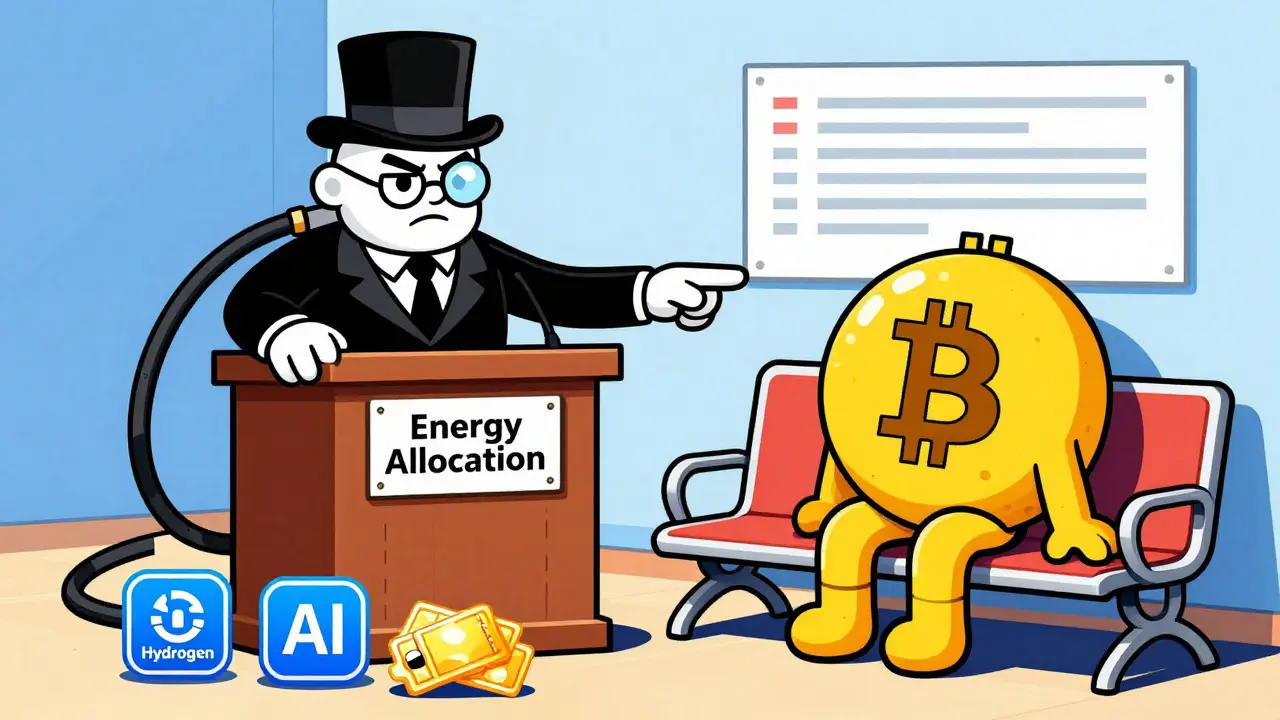
Why the change? It comes down to opportunity cost. While crypto mining contributed an estimated 2% to Iceland's GDP in 2024, it competes directly with other priorities. The government is increasingly focused on fostering broader blockchain industry development rather than energy-intensive proof-of-work mining. They want data centers for artificial intelligence, hydrogen production for clean energy export, and tourism infrastructure. These sectors offer more stable employment and long-term economic benefits per unit of energy consumed than volatile crypto markets.
This shift reflects a maturation of the national strategy. Officials recognize that while 100% renewable energy sounds green, the sheer scale of consumption raises questions about what else that energy could do. The era of "free" power for anyone who asked is gone. Now, the state is actively managing allocation to ensure domestic needs and high-value industries take precedence.
The Zero-Sum Game: Miners vs. Aluminum
To understand the tension, you have to look at Iceland’s traditional heavy hitter: the aluminum industry. Aluminum smelting has historically been the largest consumer of electricity in Iceland. It provides predictable revenue streams and steady jobs. Crypto mining, by contrast, offers foreign currency earnings but creates minimal direct employment and suffers from extreme price volatility.
| Sector | Energy Demand Profile | Economic Impact | Job Creation |
|---|---|---|---|
| Aluminum Smelting | High, Stable | Predictable Revenue | High (Direct & Indirect) |
| Crypto Mining | High, Volatile | Foreign Currency Earnings | Low (Mostly Automated) |
| Data Centers (AI/Web) | Medium, Growing | Tech Sector Growth | Medium-High (Skilled Labor) |
| Hydrogen Production | Very High | Export Potential | Medium |
When energy becomes scarce, governments prioritize stability. If a new hydroelectric project comes online, who gets the power first? Under current policy trends, it is unlikely to be a new Bitcoin farm. The aluminum industry has deep roots and political weight. Data centers supporting AI applications are seen as part of the modern digital economy transition. Crypto mining is increasingly viewed as a legacy user of stranded energy, not a priority for future investment.
Real-World Impact on Miners
If you are an operator, the frustration is palpable. Established players like Genesis Mining, Advania Data Centers, and Verne Global secured power purchase agreements during the early days (2013-2017). They have contracts and infrastructure. They are safe, for now. But new entrants face a nightmare scenario.
Community feedback from Reddit and Bitcoin Talk forums in 2024-2025 highlights several pain points:
- Lengthy Waiting Lists: Grid connections can take years to approve, if they are approved at all.
- Steep Tariff Hikes: Similar to Quebec and Inner Mongolia, Iceland is implementing higher rates for non-priority users to discourage expansion.
- Expansion Blocks: Existing miners trying to upgrade from older ASICs to newer models like the Antminer S19 XP or Whatsminer M50S often find they cannot draw the additional power needed without violating their contracts or stressing local grids.
Daniel Jonsson from Greenblocks noted that while Iceland offers unbeatable political stability, the inability to access new electricity connections has created a hard ceiling. You can’t scale if you can’t plug in. This has led to a stagnation where the total hashrate remains flat, even as global efficiency improves elsewhere.
Future Outlook: Stability Over Growth
So, is Iceland dead for crypto mining? Not exactly, but it is no longer a growth market. The outlook for 2026 and beyond suggests a sector in maintenance mode. Existing operations remain profitable due to low baseline costs and political safety, but expansion is virtually impossible until significant new generation capacity comes online. Current infrastructure timelines suggest this won’t happen before 2030.
The government’s pivot toward Central Bank Digital Currency (CBDC) initiatives and less energy-intensive blockchain applications reinforces this trend. They want the technology without the kilowatt-hour bill. For miners, this means Iceland is becoming a niche jurisdiction: great for stability, terrible for scaling. If you need to double your hashrate next year, look to Texas, Kazakhstan, or Canada. If you want to sleep well knowing your rigs won’t be seized overnight, Iceland still holds value-but only if you already have a plug.
Key Takeaways
- Capacity Limits: Iceland’s grid is maxed out. Hydro and geothermal plants are running at near-full capacity, leaving no room for new large-scale mining projects.
- Policy Shift: The government is actively prioritizing aluminum, AI data centers, and hydrogen production over crypto mining.
- No New Entrants: Securing new power contracts is extremely difficult, with long waitlists and increased scrutiny.
- Stability Remains: Existing miners benefit from political stability and 100% renewable energy, but cannot expand significantly.
- Global Context: Iceland produces >1% of global Bitcoin hashrate but is constrained to ~120 MW of allocated power.
Is crypto mining banned in Iceland?
No, crypto mining is not banned in Iceland. However, the government is restricting new energy allocations for mining operations. Existing miners with contracts can continue operating, but new entrants face severe difficulties securing power due to grid capacity limits and policy shifts favoring other industries.
How much energy does crypto mining use in Iceland?
In 2023, cryptocurrency mining consumed approximately 8% of Iceland's total national energy consumption. This represents a significant portion of the country's limited grid capacity, contributing to the government's decision to prioritize other industrial uses for available power.
Why is Iceland restricting crypto mining?
Iceland is restricting crypto mining because its renewable energy infrastructure is operating at near-maximum capacity. The government wants to allocate scarce electricity to sectors that provide more stable employment and economic benefits, such as aluminum smelting, AI data centers, and hydrogen production, rather than volatile crypto mining.
Can new miners get power in Iceland?
It is extremely difficult for new miners to secure power in Iceland. Most available capacity is tied up in long-term contracts with established companies like Genesis Mining and Advania. New applicants face lengthy waiting lists, steep tariff hikes, and high rejection rates due to grid constraints.
What is the future of crypto mining in Iceland?
The future of crypto mining in Iceland is one of stability without growth. Existing operations will likely remain profitable due to low energy costs and political safety, but significant expansion is unlikely before 2030. The government is shifting focus toward less energy-intensive blockchain technologies and AI infrastructure.

8 Comments
Ruben Michel
It is profoundly amusing to observe the collective amnesia regarding the fundamental economic principles governing resource allocation. The notion that cryptocurrency mining possesses any intrinsic moral right to consume a disproportionate share of a nation's finite energy infrastructure is, frankly, preposterous. Iceland’s decision to prioritize aluminum smelting and emerging AI data centers is not merely a policy shift; it is a rational correction of market inefficiencies. The individuals who flocked to Reykjavik during the speculative bubble of 2013-2017 operated under the delusion that geothermal steam was an infinite commodity rather than a constrained industrial asset. One must acknowledge that the state’s role is to maximize long-term societal utility, not to subsidize volatile digital speculation at the expense of tangible manufacturing sectors. The transition from 'wild west' expansion to regulated capacity management is inevitable in any mature economy.
Gavin Wonnacott
You really think you're smarter than the government? Please. I've been watching these crypto bros fail for years and now they have the audacity to complain about power cuts. It's hilarious. You wanted cheap power? You got it. Now deal with the consequences. The aluminum guys have been there forever and they pay their taxes. You guys just took what you could get while the lights were on. Don't act like victims when the bill comes due. Your greed blinded you to the reality that resources are limited. Grow up and move to Texas if you want to burn fossil fuels all day. Iceland isn't your personal battery bank anymore. Get over yourself.
Samara McCallum
i mean... isn't it interesting how we define value
like... is it the metal or the code
maybe the real issue is our obsession with scarcity
we create artificial limits where none exist
but then again... i'm just a girl who likes clouds
Sheldon Friesen
Oh, absolutely! Because nothing says 'stable investment' like a sector that relies entirely on political whims and grid capacity! 🙄 Let's break this down, shall we?
Firstly, the idea that AI data centers are some sort of noble savior is laughable. They consume massive amounts of water for cooling, which is another scarce resource in many regions. Secondly, the 'job creation' argument is weak because most high-value tech jobs are remote anyway. So why does location matter?
But sure, let's pretend that shifting from Bitcoin to AI magically solves the energy crisis. It doesn't. It just shifts the burden. And guess who pays for it? The consumer. Always the consumer. Brilliant strategy! 👏
H F
This is actually a fantastic development for the industry in the long run! 🌟 Think about it: forced consolidation leads to efficiency. The miners who survive will be the ones with the best technology and lowest operational costs. It’s natural selection in action!
I’m so excited to see how the hydrogen production sector evolves alongside this. Clean energy export potential is huge! Iceland has always been ahead of the curve, and this pivot towards sustainable, high-value industries is exactly what we need globally. Let’s support this transition! 💪🇮🇸
Michael Berggren
Well said, H F! 😊 The key here is understanding that energy is not just a commodity; it’s a strategic national asset. By reallocating power to sectors with higher multipliers-like AI and green hydrogen-Iceland is positioning itself as a leader in the next industrial revolution.
The crypto space needs to adapt. Instead of fighting for raw kilowatt-hours, miners should focus on providing ancillary services to the grid, such as frequency regulation or peak shaving. This creates a symbiotic relationship rather than a zero-sum game. It’s a win-win scenario if approached correctly! 🤝⚡
Kiran CS
One cannot help but feel a certain degree of schadenfreude observing the plight of these so-called 'innovators.' Their reliance on subsidized energy was never a testament to their technological prowess, but rather their ability to exploit regulatory loopholes. The current situation serves as a timely reminder that no enterprise exists in a vacuum. When the tide recedes, one sees who has been swimming naked. Iceland’s prudent recalibration is not an attack on innovation, but a restoration of fiscal sanity. The pretension of the crypto elite crumbles under the weight of basic engineering constraints. How quaint.
Jocelyn Garcia
From a technical standpoint, the bottleneck isn't just generation, it's transmission. The grid topology in Iceland is radial in many areas, meaning adding large loads causes voltage drops and stability issues. Miners often ignore the harmonic distortion their ASICs introduce into the local substation. It's not just about MW, it's about power quality. The regulators are finally enforcing IEEE standards properly. If you can't handle the load factor requirements without destabilizing the feeder, you don't deserve the connection. Simple physics.