
Imagine spending hours editing a video or painting a digital landscape, only to have an algorithm decide you get zero cents for it. For years, this has been the reality for millions of content creators. They build massive audiences on platforms like YouTube, Instagram, or Twitch, but they don't own that audience. The platform does. If the rules change tomorrow, your income vanishes overnight. This vulnerability is exactly why creator token models have exploded in popularity since 2024. These models shift power from Silicon Valley giants back to the individual artist, using blockchain technology to create direct economic relationships between creators and their fans.
You might have heard terms like 'fan tokens' or 'NFT memberships' thrown around, but what actually makes up a creator token model? At its core, it is a system where a creator issues a digital asset-a token-that represents value, access, or ownership within their specific community. Unlike traditional subscriptions where money flows through a middleman who takes a 30% cut, these tokens often operate on decentralized networks. This means the creator retains more profit, and the fan gets something tangible they can potentially trade or sell later. It’s not just about buying a coffee; it’s about building a shared economy.
The Evolution from Subscriptions to Ownership
To understand where we are now, we have to look at how we got here. In the early days of the internet, creators relied on ads. Then came Patreon and Substack, which introduced the subscription model. While better, these were still walled gardens. You paid monthly, but if you stopped paying, you lost everything. There was no equity, no resale value, and no true sense of belonging beyond a badge on a profile.
The first wave of creator tokens arrived around 2021 with platforms like SuperRare and Rarible. Initially, these were mostly about selling one-off digital art pieces as Non-Fungible Tokens (NFTs). But creators quickly realized that one-time sales weren't enough for sustainable income. They needed recurring revenue without the friction of monthly billing.
This led to the second wave: utility-based tokens. Instead of just owning a picture, fans bought tokens that granted them access to private Discord channels, voting rights on future projects, or royalties from secondary sales. By 2025, this had matured into sophisticated ecosystems where tokens functioned as both currency and membership cards simultaneously. The key difference? The token lives on the blockchain, meaning it exists independently of any single app or website.
Core Components of a Creator Token Model
Not all token models are created equal. When analyzing a creator's strategy, you need to look at three main components: utility, scarcity, and governance. These elements determine whether a token is just a hype vehicle or a sustainable business model.
| Token Type | Primary Utility | Scarcity Mechanism | Governance Rights |
|---|---|---|---|
| Fan Tokens | Voting on minor decisions (e.g., jersey design) | Fixed supply cap | Low (advisory only) |
| Membership NFTs | Access to exclusive content/channels | One-of-one or limited edition | Medium (community input) |
| Revenue-Sharing Tokens | Direct percentage of earnings | Dynamic burn mechanisms | High (DAO structure) |
Fan tokens are the simplest form. Think of them like season tickets for a sports team, but for a podcaster or musician. Fans buy them to show support and vote on low-stakes decisions. The value comes from emotional connection rather than financial return. On the other hand, membership NFTs act as keys. Holding the token automatically grants you access to gated content. If you sell the token, the new owner gets the access, and you lose it. This creates a secondary market that can benefit the original holder.
The most complex model involves revenue-sharing tokens. Here, the creator promises a portion of their future earnings to token holders. This requires smart contracts-self-executing code on the blockchain-to distribute payments automatically. It’s risky but highly rewarding for both parties if the creator succeeds. This model turns fans into investors, aligning their interests directly with the creator’s growth.
How Smart Contracts Automate Trust
You don’t need to be a coder to appreciate the magic of Smart Contracts. In traditional finance, if you want to ensure someone pays you royalties every time their song is played, you need lawyers, accountants, and months of negotiation. With smart contracts, this process is automated. The code says: "Every time Token A is sold, send 5% of the proceeds to Address B." No human intervention required. No excuses for late payments.
This automation solves the biggest pain point in the creator economy: transparency. Creators often feel blindsided by platform algorithms changing overnight. With a token model, the rules are written in code and visible to everyone. If a creator promises 10% royalties, the blockchain enforces it. This builds immense trust. Fans know their money isn’t disappearing into a black box; it’s fueling a transparent ecosystem.
However, this introduces technical complexity. Creators must choose the right blockchain. Ethereum offers the most security and liquidity but has higher transaction fees. Solana or Polygon provide faster, cheaper transactions but may have smaller user bases. The choice depends on the target audience. A global gaming community might prefer low-fee chains, while high-end digital artists might stick with Ethereum for prestige and security.
Real-World Examples That Worked (and Failed)
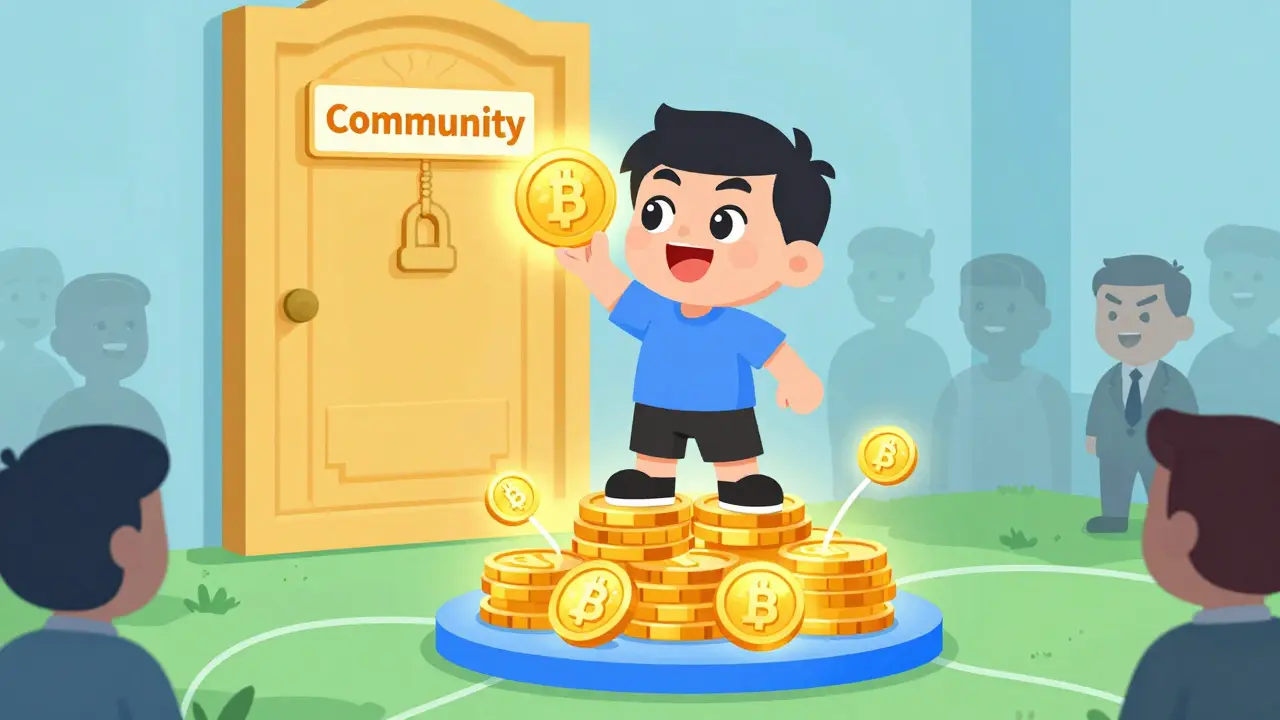
Let’s look at some real scenarios. Consider a fictional independent musician named Alex. In 2024, Alex launched a collection of 1,000 membership tokens. Each token cost $50 and granted access to a private listening party before album releases. Within weeks, demand surged. The secondary market price rose to $150. Early buyers profited, and Alex raised $50,000 upfront to fund recording costs. This is a win-win scenario.
Now consider a different case. A popular gamer issued unlimited tokens promising huge returns. As more tokens were printed, the value diluted rapidly. Fans felt cheated when the price crashed to pennies. This highlights a critical lesson: scarcity matters. Without careful management of supply, a token model collapses under its own weight. Successful creators treat their tokens like products, not lottery tickets.
Another example comes from the world of journalism. A small news outlet struggled with ad blockers and subscription fatigue. They launched a token that allowed readers to tip journalists directly per article. Because the tips were instant and borderless, international readership increased by 40%. The token didn’t replace subscriptions; it complemented them by offering micro-transactions that were previously impossible due to credit card fees.
Risks and Regulatory Hurdles
It’s not all sunshine and rainbows. The regulatory landscape for creator tokens is still evolving. In the United States, the Securities and Exchange Commission (SEC) scrutinizes any token that promises financial returns. If your token looks too much like a stock, you could face legal trouble. Most successful creators avoid this by focusing on utility rather than investment. If the token gives access to a chat room, it’s likely safer than if it promises a share of profits.
Tax implications are another headache. Every time you swap tokens, buy merchandise with them, or receive royalties, it might be a taxable event. In 2026, tax software has improved significantly, but tracking thousands of micro-transactions remains difficult. Creators need robust accounting tools that integrate with their wallets. Ignoring this can lead to surprise bills from the IRS or local tax authorities.
There’s also the risk of smart contract bugs. Code is only as good as the person who wrote it. Several high-profile hacks in 2023 and 2024 resulted in millions of dollars being drained from creator vaults. Always use audited contracts. Never deploy custom code without professional review. Security is non-negotiable.
Building Your Own Token Strategy
If you’re a creator thinking about launching a token, start small. Don’t try to build a decentralized autonomous organization (DAO) on day one. Begin with a simple membership NFT. Define clear benefits: what exactly do holders get? Is it early access? Voting rights? Physical merch?
Next, choose your platform. Tools like Mirror.xyz or Zora make it easy to launch without coding knowledge. They handle the wallet integration and marketplace listing. Focus on community building. Engage with your early adopters. Make them feel like partners, not customers.
Finally, plan for sustainability. How will you keep the token valuable long-term? Regular drops of exclusive content? Quarterly town halls? Rotating governance proposals? The token is just the entry point. The ongoing value comes from the relationship you nurture with your community. Treat it like a living product, not a one-time sale.
The Future: AI Integration and Cross-Chain Mobility
Looking ahead to 2027 and beyond, two trends will dominate. First, AI integration. Imagine a token that uses AI to personalize content for each holder based on their preferences. Or an AI agent that manages your token portfolio, automatically staking assets for rewards. Second, cross-chain mobility. Today, moving tokens between blockchains is clunky. Soon, protocols will allow seamless transfer of your creator tokens across Ethereum, Solana, and Bitcoin networks. This means your fandom won’t be trapped on one specific tech stack.
We’re also seeing the rise of fractionalized ownership. High-value creators might issue tokens representing partial ownership of their intellectual property. Fans could buy a tiny slice of a movie franchise or music catalog. This democratizes investment opportunities that were once reserved for wealthy studios. Of course, this brings heavier regulatory scrutiny, but the potential for mass participation is enormous.
The creator economy is shifting from attention-based to ownership-based. Platforms will always exist, but they will compete to serve token-holding communities, not the other way around. Creators who embrace this shift early will build resilient, loyal, and financially independent businesses. Those who ignore it may find themselves locked out of the next generation of digital commerce.
What is the difference between a fan token and a membership NFT?
A fan token is usually fungible, meaning each token is identical to others, and often used for voting or showing support. A membership NFT is non-fungible, meaning each one is unique, and typically serves as a key to unlock exclusive content or access. Fan tokens focus on engagement; membership NFTs focus on access.
Do I need to know how to code to launch a creator token?
No, you don’t need to code. Platforms like Zora, Mirror, and Foundation provide no-code interfaces that allow you to mint and manage tokens easily. However, understanding basic concepts like gas fees, wallets, and smart contracts is essential for managing your project effectively.
Are creator tokens legal in the United States?
It depends on how the token is structured. If the token promises financial returns, it may be classified as a security by the SEC, requiring registration. If it provides utility, such as access to content or voting rights, it is generally considered safer. Always consult with a legal expert specializing in cryptocurrency law before launching.
How do taxes work for creator token earnings?
In many jurisdictions, including the US, receiving tokens as income is taxable at fair market value on the day received. Selling tokens for a profit triggers capital gains tax. Using tokens to buy goods may also be a taxable event. Keep detailed records of all transactions and consider using crypto-tax software to stay compliant.
Which blockchain is best for creator tokens?
Ethereum is the most established and secure, ideal for high-value assets. Solana and Polygon offer lower fees and faster speeds, making them better for high-volume, low-cost interactions like tipping or frequent voting. Choose based on your audience’s familiarity and your budget for transaction costs.

8 Comments
ELNORA JEFFERSON
another buzzword salad trying to solve a problem that doesnt exist for most people who just want to get paid for their work without learning how to code smart contracts
nancy jarecki
The epistemological framework of this entire post is fundamentally flawed. You are conflating utility tokens with securities in a way that demonstrates a profound lack of understanding regarding the Howey Test and current SEC jurisprudence. The notion that 'smart contracts automate trust' is a naive platitude; code is law only until a reentrancy attack exploits your poorly audited Solidity, at which point your 'trust' is liquidated into thin air. Furthermore, the transaction costs on L1 Ethereum render micro-transactions economically irrational for the average consumer, creating a liquidity trap that benefits early whales while retail investors face negative carry. It is intellectually dishonest to suggest this is a viable model for the mass market when the barrier to entry involves navigating complex wallet infrastructure and gas fee volatility.
Jon Milton
Look, I see where you're coming from with the technical critique, but let's not throw the baby out with the bathwater. The core issue isn't the tech stack, it's the power dynamic. For decades, platforms have held creators hostage with arbitrary algorithm changes. This shift towards ownership, even if clunky right now, represents a fundamental realignment of incentives. We are moving from a rental economy to an ownership economy. Yes, there are bugs. Yes, the regulatory landscape is murky. But ignoring the potential because it's imperfect is like refusing to use the internet in 1995 because email wasn't spam-free yet. We need to engage with the technology, refine it, and push for better standards rather than dismissing it as a scam. The future belongs to those who build, not those who complain.
Abby Martin
Let me tell you something about these so-called experts. They act like they know best but really they are just gatekeeping innovation. I have been following the space since 2017 and I can tell you that the community aspect is what matters most. When fans feel like they are part of the journey, they stick around. It is not about the money, it is about the connection. These platforms allow for a direct line between the artist and the supporter. No middlemen taking their cut. No algorithms hiding your content. Just pure, unadulterated support. And yes, there are risks, but life is full of risks. You do not stay in bed because it might rain outside. You get up and you make your own sunshine. That is what this movement is about. Empowerment. Ownership. Freedom.
John Curry
One must ponder the philosophical implications of digitizing human connection. Is a token truly a representation of loyalty, or merely a financial instrument masquerading as community? There is a certain melancholy in reducing the sacred bond between artist and muse to a tradable asset on a blockchain ledger. Yet, perhaps this is the inevitable commodification of attention in our digital age. We are witnessing the birth of a new social contract, one written in code rather than ink. It is both beautiful and terrifying. The chill observer sees the chaos, but also the order emerging from the noise. Let us watch, learn, and perhaps, participate with open eyes and cautious hearts.
Robert Hundley
This is huge guys!!! Imagine being able to support your favorite creator directly and actually owning a piece of their success! The energy around this is electric!! I have already started looking into some projects and the community vibes are amazing!! Lets gooo!! #Web3 #Creators #Future
Melissa L
i dont get it why cant i just pay them on patreon its easier for me to use my credit card
Nicole Woessner
in many cultures we value the relationship over the transaction but here in the west we try to put everything into a box and sell it. however i see the appeal of having a permanent record of support. it is interesting how different societies approach value. some prefer the fluidity of cash others the permanence of assets. both have their place. we should respect the diversity of approaches to supporting art.