
For years, Bitcoin mining in Pakistan was a shadow economy-illegal on paper, booming in practice, and stuck in a legal grey area that frustrated investors and miners alike. That changed dramatically in mid-2025. If you are looking to set up a rig or scale an operation in this South Asian hub, the rules have shifted from "don't ask, don't tell" to a structured, high-barrier regulatory regime. The Virtual Assets Act, 2025, enacted in July, didn't just legalize mining; it created a new federal watchdog, the Pakistan Virtual Asset Regulatory Authority (PVARA), with specific mandates for electricity usage and taxation.
This isn't just about compliance paperwork. It's about accessing a strategic 2,000-megawatt power allocation designed to turn Pakistan into a global mining heavyweight. But here is the catch: getting access to that cheap surplus energy requires navigating IMF concerns, strict banking restrictions, and a licensing process that favors established international players over local startups. Whether you are a solo miner in Lahore or an institutional operator eyeing Islamabad's grid, understanding these new constraints is critical before you plug in your first ASIC.
The New Regulator: PVARA and the Virtual Assets Act
The cornerstone of the current landscape is the PVARA. This autonomous federal body replaced the fragmented oversight previously handled by the State Bank of Pakistan (SBP) and the Ministry of Finance. Before July 2025, the SBP maintained that cryptocurrencies were not legal tender and prohibited banks from facilitating transactions, creating a paradox where the government promoted adoption while regulators blocked the rails. PVARA now sits at the center of this ecosystem, tasked with licensing all Virtual Asset Service Providers (VASPs), which explicitly includes mining pools and large-scale operations.
PVARA’s mandate goes beyond simple registration. They enforce compliance with international standards, specifically those set by the Financial Action Task Force (FATF) and the International Monetary Fund (IMF). For miners, this means your operation must demonstrate robust anti-money laundering protocols and transparent financial reporting. The authority also introduced regulatory sandboxes for Shariah-compliant mining structures, addressing religious concerns that had previously hindered broader adoption among conservative investors.
| Entity | Role | Key Attribute/Constraint |
|---|---|---|
| PVARA | Federal Regulator | Licensing, FATF compliance, data privacy enforcement |
| State Bank of Pakistan | Monetary Authority | Prohibits banks from dealing in digital assets; does not recognize as legal tender |
| Federal Board of Revenue (FBR) | Tax Collector | Receives transaction data from licensed miners; enforces progressive income tax |
| Pakistan Crypto Council | Strategic Advisor | Promotes adoption; currently under review for ministry transfer to IT sector |
Electricity Allocation: The 2,000 MW Opportunity
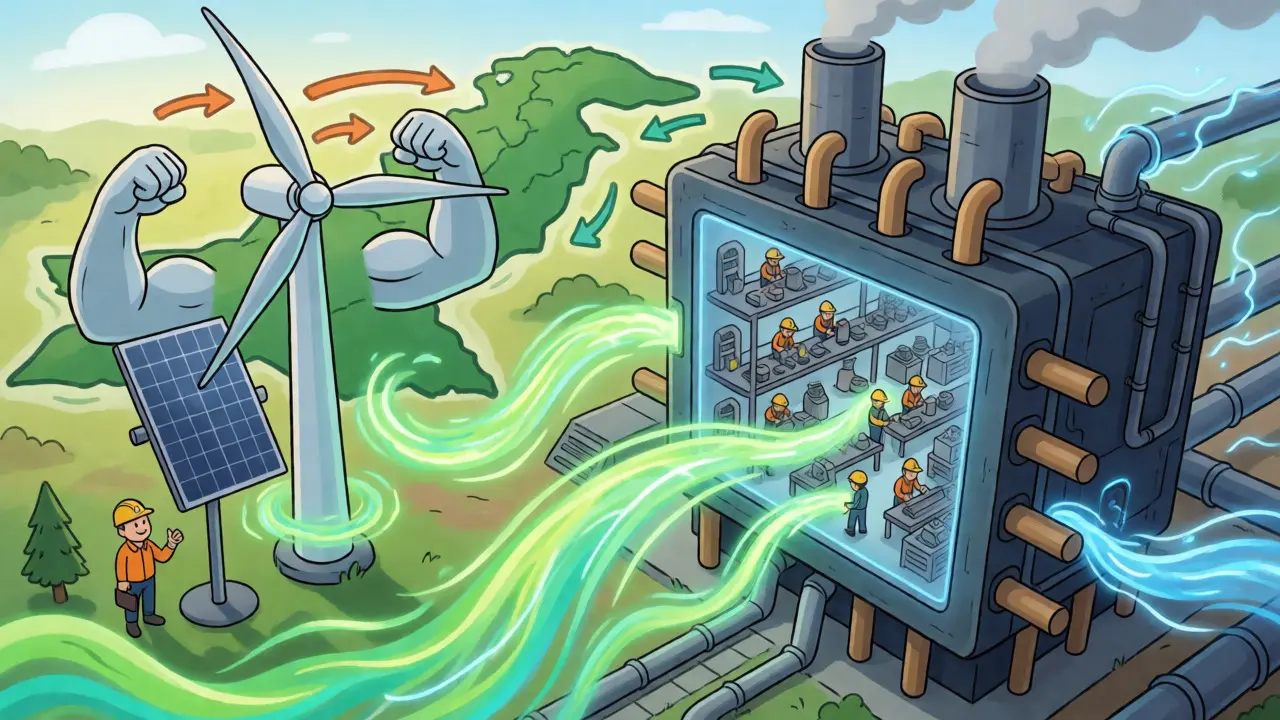
The most tangible benefit of the new regulations is the dedicated power supply. In August 2025, the government allocated 2,000 megawatts (MW) of electricity specifically for Bitcoin mining and AI data centers. This move leverages Pakistan’s unique position as one of the world's largest holders of excess industrial capacity. Much of this power comes from underutilized coal-based stations and regions where economic slowdowns have reduced demand from small and medium enterprises (SMEs).
However, this isn't free lunch. The guidelines released by PVARA on August 28, 2025, strictly prohibit using subsidized residential rates. Commercial mining facilities must operate on industrial tariffs and maintain a minimum connection of 500 kW. Furthermore, there is a looming environmental deadline: by 2027, mining operations must source at least 70% of their energy from renewable or repurposed sources. This clause aims to mitigate the criticism regarding carbon footprints and aligns with global ESG trends.
Technical analysts suggest that if fully deployed using modern ASICs (30-40 joules per terahash), this allocation could add over 60 exahashes per second (EH/s) to the global network. This would catapult Pakistan into the top five mining hubs worldwide, competing directly with traditional leaders like Iran and the United States.
Taxation: What You Actually Pay
Money talks, and in Pakistan, the taxman listens closely. The 2025 reforms clarified how mining revenue is treated, ending previous ambiguities. Income generated from mining activities is taxed as regular income, subject to progressive rates ranging from 5% for earnings up to ₨600,000 to a steep 35% for incomes exceeding ₨12 million. This structure hits large-scale miners hard but offers some breathing room for smaller operators.
Capital gains from selling mined cryptocurrency face a flat 15% tax rate. All mining income must be reported in Form IT-1, with an annual filing deadline of September 30. A critical operational change involves data sharing: registered mining operations automatically share transaction data with the Federal Board of Revenue (FBR). This transparency reduces evasion opportunities but increases administrative overhead for miners who must reconcile on-chain data with fiat accounting records.
Licensing Requirements and Barriers to Entry
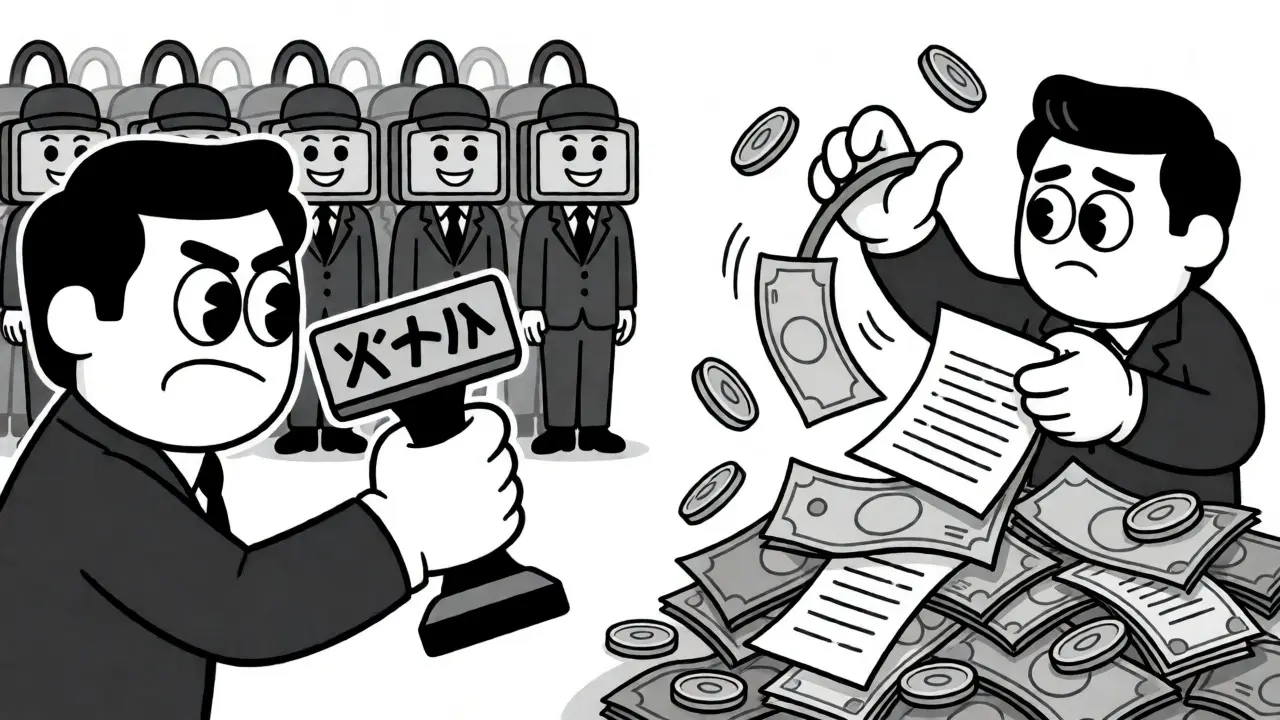
Getting a license from PVARA is not a formality. The application process demands detailed submissions covering technology standards, expected hash rate capacity, energy consumption metrics, and a business model tailored to the Pakistani market. The barrier to entry is intentionally high to prioritize stability and security.
International firms must already hold licenses from recognized jurisdictions such as the US SEC, UK FCA, EU VASP framework, UAE's VARA, or Singapore's MAS. This requirement effectively filters out unregulated offshore entities and protects the local market from fly-by-night operators. Domestic miners face a phased rollout: Phase 1 (Q3-Q4 2025) targeted major international operations with hash rates exceeding 1 EH/s, while Phase 2 (starting Q1 2026) opens doors to domestic small-scale miners with a minimum capacity of 100 PH/s.
- Compliance Track Record: Proof of no prior regulatory violations in home jurisdictions.
- Security Standards: Demonstration of cold storage protocols and cyber-security measures.
- Environmental Plan: Detailed roadmap for meeting the 70% renewable energy target by 2027.
- Conflict of Interest: Board members are barred from insider trading or misusing proprietary information.
The Banking Paradox and Operational Risks
Here is the friction point that keeps many investors cautious: the State Bank of Pakistan still reiterates that digital currencies are not legal tender. While PVARA regulates the asset class, existing banking laws prohibit institutions from dealing in them directly. This creates a logistical headache for miners who need to convert mined BTC into Pakistani Rupees (PKR) to pay for electricity, staff, and maintenance.
Miners often rely on peer-to-peer (P2P) markets or specialized exchange partners to bridge this gap. However, this exposes them to currency volatility and counterparty risk. The IMF has also raised objections regarding fiscal risks, worrying that subsidized energy for miners might strain the national grid or create unfair advantages. These tensions mean that policy details can shift rapidly, so staying updated on Senate committee recommendations-such as moving the Pakistan Crypto Council to the Ministry of Information Technology-is essential for long-term planning.
Why Pakistan? Strategic Advantages Beyond Cheap Power
Pakistan isn't just chasing cheap electricity; it's leveraging demographic momentum. With over 40 million crypto wallets, it ranks as the third-largest adopter globally, trailing only India and the United States. This massive user base provides a ready-made market for services built around mining infrastructure. Additionally, the country's geographic location offers latency advantages for connecting with networks in Europe and Asia.
Bilal bin Saqib, the chair of PVARA, has emphasized that Pakistan aims to establish its own trend rather than following Western models. The goal is to build global-level companies within the region, reducing reliance on tech hubs in the US and Europe. For miners, this political will translates into potential subsidies, infrastructure investments, and a growing ecosystem of support services, from hardware repair shops to legal firms specializing in virtual assets.
FAQ: Common Questions on Crypto Mining in Pakistan
Is Bitcoin mining illegal in Pakistan?
No, it is no longer illegal. Since the enactment of the Virtual Assets Act in July 2025, mining is a regulated activity. However, it requires a license from the Pakistan Virtual Asset Regulatory Authority (PVARA) and compliance with specific energy and tax guidelines.
How much does it cost to get a mining license in Pakistan?
The exact fee varies based on hash rate capacity and company size, but applicants must also budget for significant compliance costs, including audits, legal reviews, and technical assessments required by PVARA. International firms must provide proof of existing licenses in other jurisdictions.
Can I use residential electricity for mining?
Commercial mining operations are prohibited from using subsidized residential rates. Facilities must connect to industrial tariffs with a minimum of 500 kW. Small-scale home miners may face different enforcement levels, but large operations are strictly monitored to prevent fiscal leakage.
What is the tax rate on crypto mining income?
Mining income is taxed as regular income with progressive rates from 5% to 35%, depending on total earnings. Capital gains from selling mined crypto are subject to a flat 15% tax. Annual filings are due by September 30 via Form IT-1.
Are banks allowed to handle crypto transactions?
The State Bank of Pakistan prohibits banks from dealing directly in digital currencies. Miners typically use specialized exchanges or P2P platforms for fiat conversion, which introduces additional operational complexity compared to countries with full banking integration.
What are the environmental requirements for miners?
By 2027, mining operations must source at least 70% of their energy from renewable or repurposed sources. Currently, operations utilize excess power from underutilized coal plants and surplus regional capacity, but future expansion depends on meeting these green energy targets.

9 Comments
Finlay Samms
Interesting read, but the banking paradox is a huge red flag. :/
Idowu Emmanuel
The demographic momentum with 40 million wallets is undeniable and shows real grassroots adoption rather than just top-down regulation. It is encouraging to see a framework that attempts to balance IMF concerns with local economic needs, even if the licensing barriers are steep for small players.
lea terrade
i wonder though if the renewable energy mandate will actually hold up when you look at the actual grid infrastructure there its one thing to write a law saying 70% green by 2027 but another entirely to have the solar or hydro capacity ready to back that up especially when coal plants are currently doing the heavy lifting for surplus power feels like they might just buy certificates instead of actually changing the source which kinda defeats the purpose doesnt it
Sheryl Nelsen Hutton
The regulatory sandbox approach for Shariah-compliant structures is particularly noteworthy as it addresses cultural nuances often overlooked in Western-centric crypto frameworks, potentially unlocking significant capital from conservative investors who previously abstained due to religious ambiguity regarding interest-based financial instruments and speculative trading mechanisms inherent in traditional mining pools.
Furthermore, the strategic allocation of 2,000 MW represents a sophisticated attempt to monetize stranded industrial assets while simultaneously positioning the nation as a geopolitical competitor in the global hash rate distribution, although the reliance on P2P markets for fiat conversion introduces systemic counterparty risks that could undermine the stability promised by the new federal watchdog.
It remains to be seen whether the progressive tax structure will incentivize formalization or drive operations into more opaque layers of the economy, given the historical prevalence of shadow economies in regions with high bureaucratic friction and complex compliance requirements for international entities seeking domestic entry.
Jennifer Brosnan
Oh please, spare me the 'strategic hub' narrative. It’s clearly a cash grab for established international players who already have SEC or FCA licenses, effectively locking out local startups until Phase 2 in 2026. The 'high-barrier regime' is just code for keeping the little guy out so big money can scoop up the cheap energy subsidies before the IMF realizes what’s happening. Typical government overreach disguised as modernization.
sri harni
Good info. India has similar issues with banks. Hope Pakistan gets it right.
Rachel Leet
You're missing the philosophical underpinning here. Mining isn't just about electricity; it's about proof-of-work as a consensus mechanism for truth in a post-truth era. By regulating it heavily, Pakistan is trying to commodify truth itself. If you don't understand that the license is essentially a permit to validate reality, you don't understand why the barriers are so high. It's not bureaucracy; it's ontological gatekeeping.
John Lewis
To add to the technical side: the 500 kW minimum connection requirement is a significant filter for solo miners. Most home rigs won't meet that threshold without significant electrical upgrades. Also, keep an eye on the Form IT-1 filing deadline (Sept 30). Missing that triggers automatic penalties under the new FBR data-sharing protocols, which are quite strict compared to previous years.
Charlotte Richardson
I appreciate the balanced perspective shared here. It is vital that we support emerging markets as they navigate these complex transitions, ensuring that the regulatory frameworks remain inclusive for smaller operators despite the initial high barriers. Let us hope the environmental mandates lead to genuine sustainable practices rather than just administrative checkboxes, fostering a healthier ecosystem for all participants involved.